The Study of Life
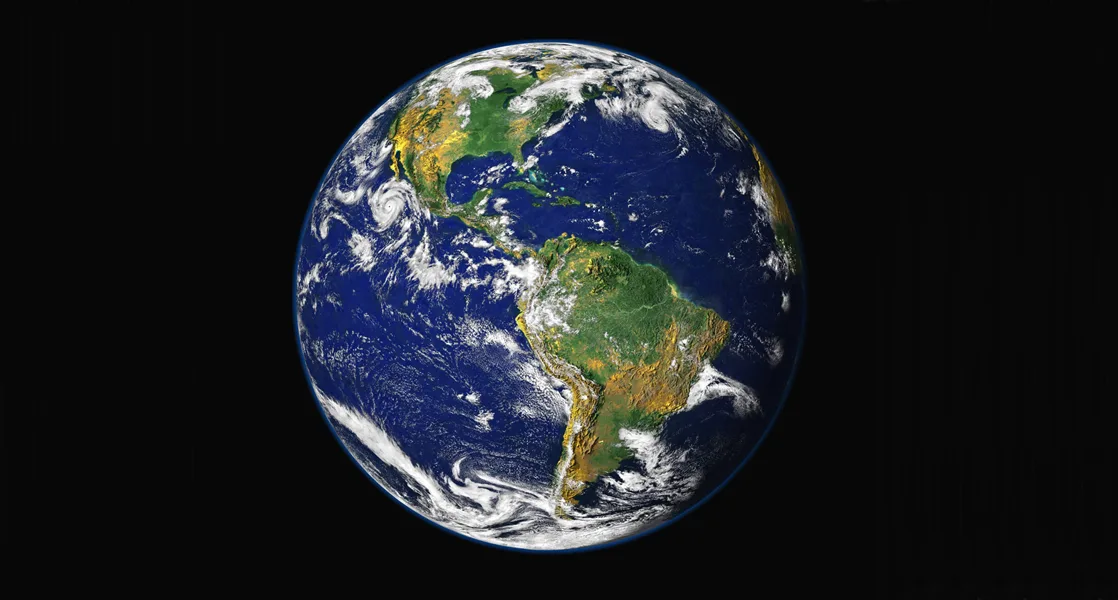
Viewed from space, Earth offers no clues about the diversity of life forms that reside there. Scientists believe that the first forms of life on Earth were microorganisms that existed for billions of years in the ocean before plants and animals appeared. The mammals, birds, and flowers so familiar to us are all relatively recent, originating 130 to 250 million years ago. The earliest representatives of the genus Homo, to which we belong, have inhabited this planet for only the last 2.5 million years, and only in the last 300,000 years have humans started looking like we do today.
Sections
- The Science of Biology — what science is and how it works: natural sciences, inductive and deductive reasoning, the steps of the scientific method, basic and applied science, and how results are reported.
- Themes and Concepts of Biology — the properties all living things share, the levels of biological organization, the three domains of life read from a phylogenetic tree, and the branches of biological study.
This chapter is adapted from Biology 2e, Chapter 1: The Study of Life by Mary Ann Clark, Jung Choi, Matthew Douglas, and OpenStax, © OpenStax, licensed under CC BY-NC-SA 4.0. Access the original for free at openstax.org. Each section page records its own changes from the source. Changes: the chapter-opening photograph is the source’s, re-encoded for the web with its credit kept in the caption.