The Chemical Foundation of Life
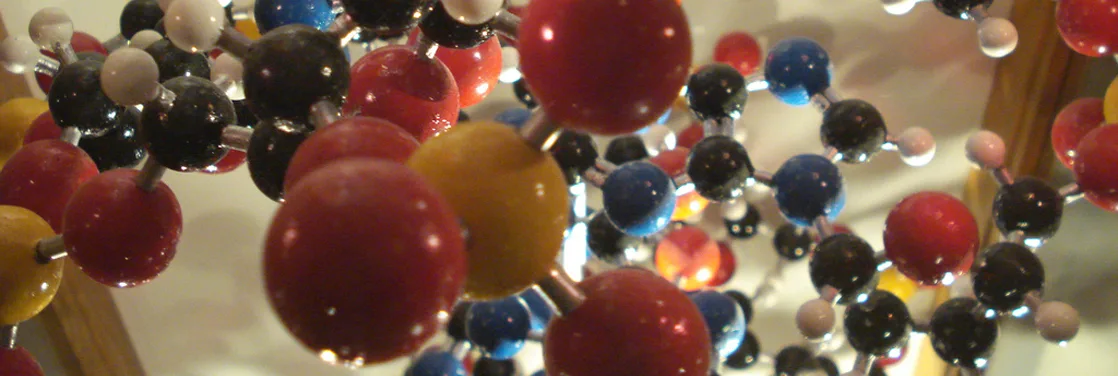
Elements in various combinations comprise all matter, including living things. Some of the most abundant elements in living organisms include carbon, hydrogen, nitrogen, oxygen, sulfur, and phosphorus. These form the nucleic acids, proteins, carbohydrates, and lipids that are the fundamental components of living matter. Biologists must understand these important building blocks and the unique structures of the atoms that comprise molecules, allowing for cells, tissues, organ systems, and entire organisms to form.
All biological processes follow the laws of physics and chemistry, so in order to understand how biological systems work, it is important to understand the underlying physics and chemistry. For example, the flow of blood within the circulatory system follows the laws of physics that regulate the modes of fluid flow. The breakdown of the large, complex molecules of food into smaller molecules—and the conversion of these to release energy to be stored in adenosine triphosphate (ATP)—is a series of chemical reactions that follow chemical laws. The properties of water and the formation of hydrogen bonds are key to understanding living processes. Recognizing the properties of acids and bases is important, for example, to our understanding of the digestive process. Therefore, the fundamentals of physics and chemistry are important for gaining insight into biological processes.
Sections
- Atoms, Isotopes, Ions, and Molecules: The Building Blocks — the structure of the atom, atomic number and mass, isotopes and radiocarbon dating, the periodic table, electron shells and orbitals, chemical reactions, and ionic, covalent, and hydrogen bonds.
- Water — the polarity of water and the hydrogen bonds it forms; water’s high heat capacity and heat of vaporization; why it is an excellent solvent; cohesion, adhesion, and surface tension; and acids, bases, buffers, and the pH scale.
- Carbon — why carbon’s four bonds make it the backbone of life: hydrocarbons and their rings and chains, structural, geometric, and enantiomeric isomers, and the functional groups that give biological molecules their chemistry.
This chapter is adapted from Biology 2e, Chapter 2: The Chemical Foundation of Life by Mary Ann Clark, Jung Choi, Matthew Douglas, and OpenStax, © OpenStax, licensed under CC BY-NC-SA 4.0. Access the original for free at openstax.org. Each section page records its own changes from the source. Changes: the chapter-opening molecular model is the source’s, re-encoded for the web with its credit kept in the caption and its alt text rewritten to describe the photographed model.