Cellular Respiration
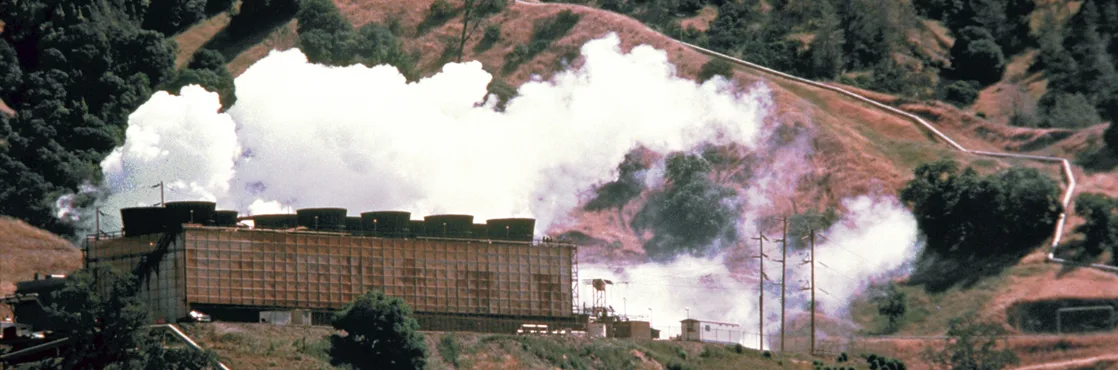
The electrical energy plant above converts energy from one form to another form that can be more easily used. This type of generating plant starts with underground thermal energy (heat) and transforms it into electrical energy that will be transported to homes and factories. Like a generating plant, plants and animals also must take in energy from the environment and convert it into a form that their cells can use. Mass and its stored energy enter an organism’s body in one form and are converted into another form that can fuel the organism’s life functions. In the process of photosynthesis, plants and other photosynthetic producers take in energy in the form of light (solar energy) and convert it into chemical energy in the form of glucose, which stores this energy in its chemical bonds. Then, a series of metabolic pathways, collectively called cellular respiration, extracts the energy from the bonds in glucose and converts it into a form that all living things can use.
Sections
- Energy in Living Systems — the importance of electrons in transferring energy in living systems and how cells use ATP as an energy source.
- Glycolysis — the molecules produced by the chemical breakdown of glucose in glycolysis and its output of ATP and NADH.
- Oxidation of Pyruvate and the Citric Acid Cycle — how the circular citric acid cycle differs from the linear pathway of glycolysis, and how pyruvate is prepared to enter the cycle.
- Oxidative Phosphorylation — how electrons move through the electron transport chain and how it establishes and maintains a proton (H⁺) gradient.
- Metabolism without Oxygen — the difference between anaerobic cellular respiration and fermentation, and the fermentation that occurs in animal cells and what initiates it.
- Connections of Carbohydrate, Protein, and Lipid Metabolic Pathways — how carbohydrate, protein, and lipid metabolic pathways interrelate, and why metabolic pathways are not closed systems.
- Regulation of Cellular Respiration — how feedback inhibition regulates the production of pathway intermediates and products, and what controls the rate of electron transport.
This chapter is adapted from Biology 2e, Chapter 7: Cellular Respiration by Mary Ann Clark, Jung Choi, Matthew Douglas, and OpenStax, © OpenStax, licensed under CC BY-NC-SA 4.0. Access the original for free at openstax.org. Each section page records its own changes from the source. Changes: the chapter-opening photograph is the source’s, re-encoded for the web with its credit kept in the caption and its alt text rewritten to describe the plant and its steam; the opening paragraph’s cross-reference to the figure by number is rendered as “above,” since Hugo does not number figures.