Characteristics and Traits
By the end of this section, you will be able to:
- Explain the relationship between genotypes and phenotypes in dominant and recessive gene systems
- Develop a Punnett square to calculate the expected proportions of genotypes and phenotypes in a monohybrid cross
- Explain the purpose and methods of a test cross
- Identify non-Mendelian inheritance patterns such as incomplete dominance, codominance, recessive lethals, multiple alleles, and sex linkage
Physical characteristics are expressed through genes carried on chromosomes. The genetic makeup of peas consists of two similar, or homologous, copies of each chromosome, one from each parent. Each pair of homologous chromosomes has the same linear order of genes. In other words, peas are diploid organisms in that they have two copies of each chromosome. The same is true for many other plants and for virtually all animals. Diploid organisms produce haploid gametes, which contain one copy of each homologous chromosome that unite at fertilization to create a diploid zygote.
For cases in which a single gene controls a single characteristic, a diploid organism has two genetic copies that may or may not encode the same version of that characteristic. Gene variants that arise by mutation and exist at the same relative locations on homologous chromosomes are called alleles. Mendel examined the inheritance of genes with just two allele forms, but it is common to encounter more than two alleles for any given gene in a natural population.
Phenotypes and Genotypes
Two alleles for a given gene in a diploid organism are expressed and interact to produce physical characteristics. The observable traits expressed by an organism are referred to as its phenotype. An organism’s underlying genetic makeup, consisting of both physically visible and non-expressed alleles, is called its genotype. Mendel’s hybridization experiments demonstrate the difference between phenotype and genotype. When true-breeding plants in which one parent had yellow pods and one had green pods were cross-fertilized, all of the F₁ hybrid offspring had yellow pods. That is, the hybrid offspring were phenotypically identical to the true-breeding parent with yellow pods. However, we know that the allele donated by the parent with green pods was not simply lost because it reappeared in some of the F₂ offspring. Therefore, the F₁ plants must have been genotypically different from the parent with yellow pods.
The P₁ plants that Mendel used in his experiments were each homozygous for the trait he was studying. Diploid organisms that are homozygous at a given gene, or locus, have two identical alleles for that gene on their homologous chromosomes. Mendel’s parental pea plants always bred true because both of the gametes produced carried the same trait. When P₁ plants with contrasting traits were cross-fertilized, all of the offspring were heterozygous for the contrasting trait, meaning that their genotype reflected that they had different alleles for the gene being examined.
Dominant and Recessive Alleles
Our discussion of homozygous and heterozygous organisms brings us to why the F₁ heterozygous offspring were identical to one of the parents, rather than expressing both alleles. In all seven pea-plant characteristics, one of the two contrasting alleles was dominant, and the other was recessive. Mendel called the dominant allele the expressed unit factor; the recessive allele was referred to as the latent unit factor. We now know that these so-called unit factors are actually genes on homologous chromosome pairs. For a gene that is expressed in a dominant and recessive pattern, homozygous dominant and heterozygous organisms will look identical (that is, they will have different genotypes but the same phenotype). The traits of the recessive allele will only be observed in homozygous recessive individuals (see the table below).
Human Inheritance in Dominant and Recessive Patterns
| Dominant Traits | Recessive Traits |
|---|---|
| Achondroplasia | Albinism |
| Brachydactyly | Cystic fibrosis |
| Huntington’s disease | Duchenne muscular dystrophy |
| Marfan syndrome | Galactosemia |
| Neurofibromatosis | Phenylketonuria |
| Widow’s peak | Sickle-cell anemia |
| Wooly hair | Tay-Sachs disease |
Several conventions exist for referring to genes and alleles. For the purposes of this chapter, we will abbreviate genes using the first letter of the gene’s corresponding dominant trait. For example, violet is the dominant trait for a pea plant’s flower color, so the flower-color gene would be abbreviated as V (note that it is customary to italicize gene designations). Furthermore, we will use uppercase and lowercase letters to represent dominant and recessive alleles, respectively. Therefore, we would refer to the genotype of a homozygous dominant pea plant with violet flowers as VV, a homozygous recessive pea plant with white flowers as vv, and a heterozygous pea plant with violet flowers as Vv.
The Punnett Square Approach for a Monohybrid Cross
When fertilization occurs between two true-breeding parents that differ in only one characteristic, the process is called a monohybrid cross, and the resulting offspring are monohybrids. Mendel performed seven monohybrid crosses involving contrasting traits for each characteristic. On the basis of his results in F₁ and F₂ generations, Mendel postulated that each parent in the monohybrid cross contributed one of two paired unit factors to each offspring, and every possible combination of unit factors was equally likely.
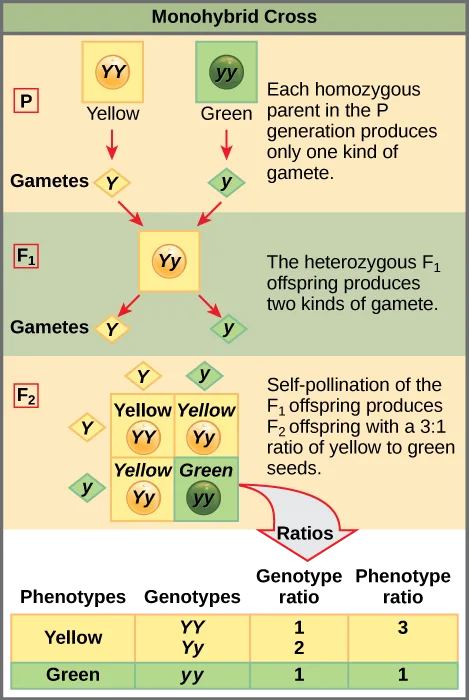
To demonstrate a monohybrid cross, consider the case of true-breeding pea plants with yellow versus green pea seeds. The dominant seed color is yellow; therefore, the parental genotypes were YY for the plants with yellow seeds and yy for the plants with green seeds, respectively. A Punnett square, devised by the British geneticist Reginald Punnett, can be drawn that applies the rules of probability to predict the possible outcomes of a genetic cross or mating and their expected frequencies. To prepare a Punnett square, all possible combinations of the parental alleles are listed along the top (for one parent) and side (for the other parent) of a grid, representing their meiotic segregation into haploid gametes. Then the combinations of egg and sperm are made in the boxes in the table to show which alleles are combining. Each box then represents the diploid genotype of a zygote, or fertilized egg, that could result from this mating. Because each possibility is equally likely, genotypic ratios can be determined from a Punnett square. If the pattern of inheritance (dominant or recessive) is known, the phenotypic ratios can be inferred as well. For a monohybrid cross of two true-breeding parents, each parent contributes one type of allele. In this case, only one genotype is possible. All offspring are Yy and have yellow seeds (see the figure below).
Extended description
The chart has three horizontal bands, top to bottom, labeled P, F₁, and F₂. In the P band, a yellow pea labeled YY sits above a red arrow to ‘Gametes: Y’, and a green pea labeled yy sits above a red arrow to ‘Gametes: y’; text at right notes each homozygous P parent produces only one kind of gamete. In the F₁ band, a single yellow pea labeled Yy sits above red arrows to ‘Gametes: Y’ and ‘Gametes: y’; text at right notes the heterozygous F₁ offspring produces two kinds of gamete. In the F₂ band, a 2 × 2 Punnett square crosses the F₁ gametes Y and y along the top with Y and y down the side: the top-left cell reads YY, the top-right and bottom-left cells both read Yy, and the bottom-right cell reads yy; the YY and Yy cells are shaded yellow and the yy cell is shaded green. Text at right notes self-pollination of F₁ produces F₂ offspring in a 3:1 ratio of yellow to green. Below the grid, a table lists Phenotypes, Genotypes, Genotype ratio, and Phenotype ratio: the yellow row lists genotypes YY and Yy with a genotype ratio of 1 and 2 and a phenotype ratio of 3; the green row lists genotype yy with a genotype ratio of 1 and a phenotype ratio of 1.
A self-cross of one of the Yy heterozygous offspring can be represented in a 2 × 2 Punnett square because each parent can donate one of two different alleles. Therefore, the offspring can potentially have one of four allele combinations: YY, Yy, yY, or yy (see the figure above). Notice that there are two ways to obtain the Yy genotype: a Y from the egg and a y from the sperm, or a y from the egg and a Y from the sperm. Both of these possibilities must be counted. Recall that Mendel’s pea-plant characteristics behaved in the same way in reciprocal crosses. Therefore, the two possible heterozygous combinations produce offspring that are genotypically and phenotypically identical despite their dominant and recessive alleles deriving from different parents. They are grouped together. Because fertilization is a random event, we expect each combination to be equally likely and for the offspring to exhibit a ratio of YY:Yy:yy genotypes of 1:2:1 (as shown above). Furthermore, because the YY and Yy offspring have yellow seeds and are phenotypically identical, applying the sum rule of probability, we expect the offspring to exhibit a phenotypic ratio of 3 yellow:1 green. Indeed, working with large sample sizes, Mendel observed approximately this ratio in every F₂ generation resulting from crosses for individual traits.
Mendel validated these results by performing an F₃ cross in which he self-crossed the dominant- and recessive-expressing F₂ plants. When he self-crossed the plants expressing green seeds, all of the offspring had green seeds, confirming that all green seeds had homozygous genotypes of yy. When he self-crossed the F₂ plants expressing yellow seeds, he found that one-third of the plants bred true, and two-thirds of the plants segregated at a 3:1 ratio of yellow:green seeds. In this case, the true-breeding plants had homozygous (YY) genotypes, whereas the segregating plants corresponded to the heterozygous (Yy) genotype. When these plants self-fertilized, the outcome was just like the F₁ self-fertilizing cross.
The Test Cross Distinguishes the Dominant Phenotype
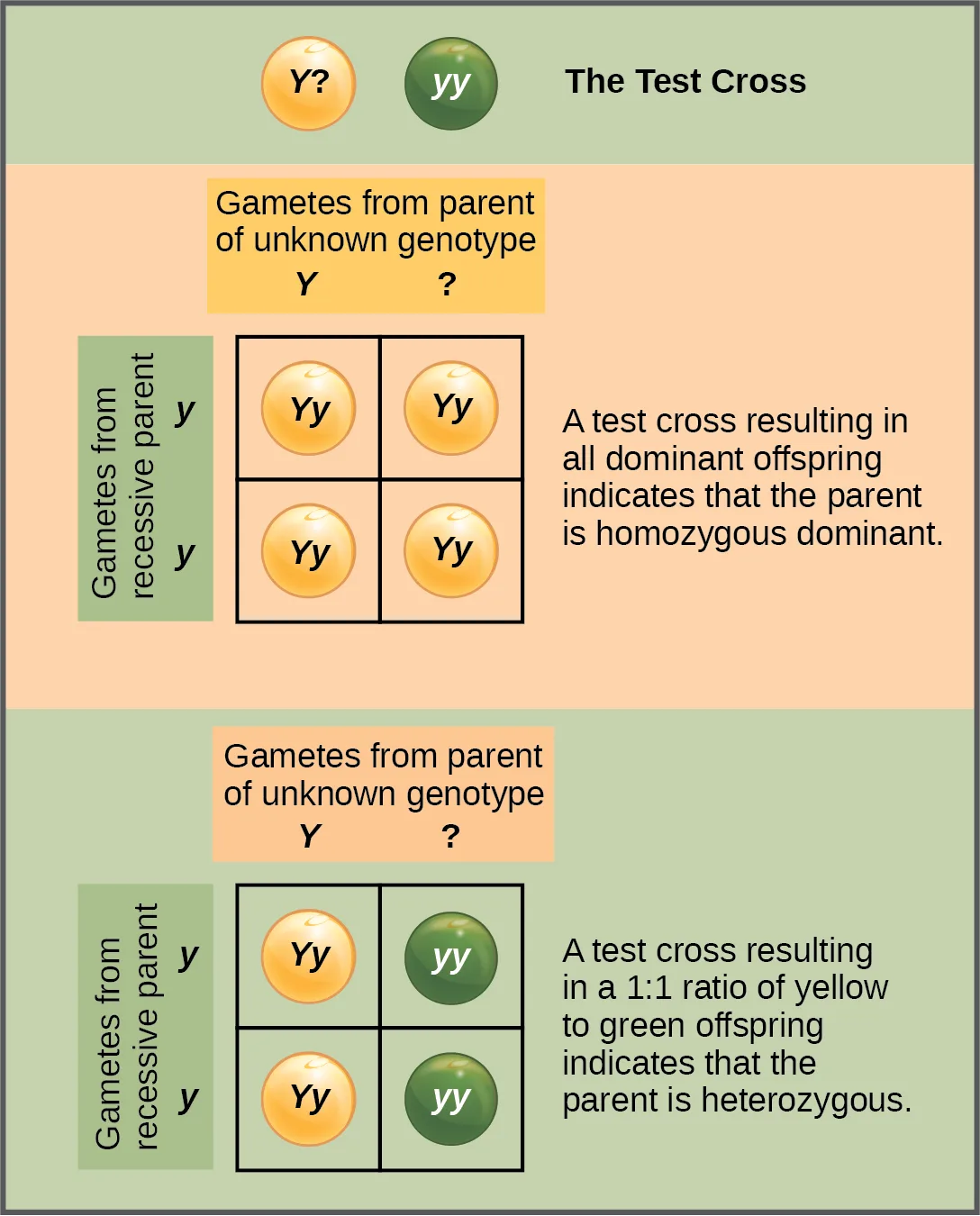
Beyond predicting the offspring of a cross between known homozygous or heterozygous parents, Mendel also developed a way to determine whether an organism that expressed a dominant trait was a heterozygote or a homozygote. Called the test cross, this technique is still used by plant and animal breeders. In a test cross, the dominant-expressing organism is crossed with an organism that is homozygous recessive for the same characteristic. If the dominant-expressing organism is a homozygote, then all F₁ offspring will be heterozygotes expressing the dominant trait (see the figure below). Alternatively, if the dominant expressing organism is a heterozygote, the F₁ offspring will exhibit a 1:1 ratio of heterozygotes and recessive homozygotes (see the figure below). The test cross further validates Mendel’s postulate that pairs of unit factors segregate equally.
Extended description
The figure has two stacked Punnett-square panels, both labeled ‘Gametes from parent of unknown genotype: Y, ?’ along the top and ‘Gametes from recessive parent: y, y’ down the side. In the top panel the four grid cells all read Yy, with a note that a test cross resulting in all dominant offspring indicates the unknown parent is homozygous dominant. In the bottom panel the grid reads Yy, yy, Yy, yy (two of each), with a note that a test cross resulting in a 1:1 ratio of yellow to green offspring indicates the unknown parent is heterozygous.
In pea plants, round peas (R) are dominant to wrinkled peas (r). You do a test cross between a pea plant with wrinkled peas (genotype rr) and a plant of unknown genotype that has round peas. You end up with three plants, all which have round peas. From this data, can you tell if the round pea parent plant is homozygous dominant or heterozygous? If the round pea parent plant is heterozygous, what is the probability that a random sample of 3 progeny peas will all be round?
Show model answer
Did your answer mention:
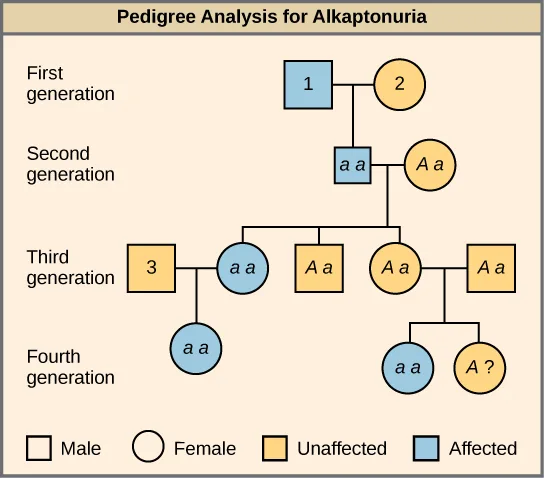
Many human diseases are genetically inherited. A healthy person in a family in which some members suffer from a recessive genetic disorder may want to know if they have the disease-causing gene and what risk exists of passing the disorder on to their offspring. Of course, doing a test cross in humans is unethical and impractical. Instead, geneticists use pedigree analysis to study the inheritance pattern of human genetic diseases (see the figure below).
Extended description
Top to bottom, four generations connected by horizontal marriage lines and vertical descent lines. First generation: a blue square labeled 1 married to a yellow circle labeled 2. Second generation: their child, a blue square labeled aa, married to a yellow circle labeled Aa who married into the family. Third generation: the aa–Aa couple’s three children, all circles — a blue circle labeled aa on the left, married to a yellow square labeled 3 who married into the family; a yellow circle labeled Aa in the middle, unmarried with no children shown; and a yellow circle labeled Aa on the right, married to a yellow square labeled Aa who married into the family. Fourth generation: the child of the aa circle and individual 3 is a blue circle labeled aa; the child of the right-hand third-generation couple is a yellow circle labeled A?.
What are the genotypes of the individuals labeled 1, 2, and 3?
Show model answer
Did your answer mention:
Alternatives to Dominance and Recessiveness
Mendel’s experiments with pea plants suggested that: (1) two “units” or alleles exist for every gene; (2) alleles maintain their integrity in each generation (no blending); and (3) in the presence of the dominant allele, the recessive allele is hidden and makes no contribution to the phenotype. Therefore, recessive alleles can be “carried” and not expressed by individuals. Such heterozygous individuals are sometimes referred to as “carriers.” Further genetic studies in other plants and animals have shown that much more complexity exists, but that the fundamental principles of Mendelian genetics still hold true. In the sections to follow, we consider some of the extensions of Mendelism. If Mendel had chosen an experimental system that exhibited these genetic complexities, it’s possible that he would not have understood what his results meant.
Incomplete Dominance
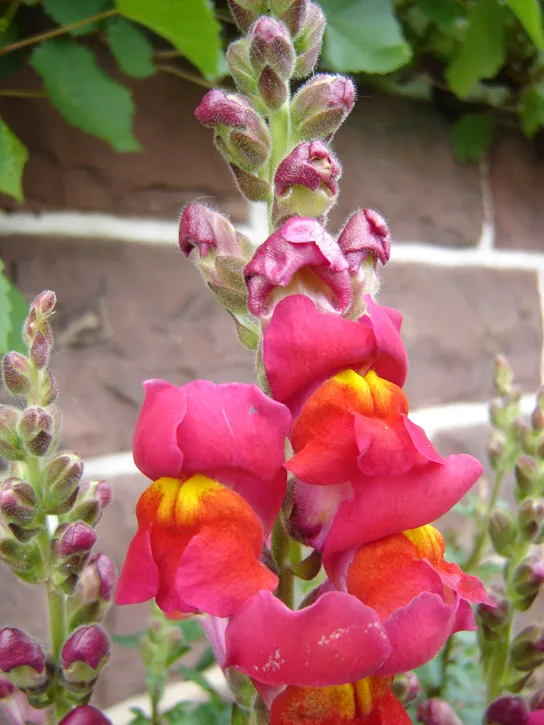
Mendel’s results, that traits are inherited as dominant and recessive pairs, contradicted the view at that time that offspring exhibited a blend of their parents’ traits. However, the heterozygote phenotype occasionally does appear to be intermediate between the two parents. For example, in the snapdragon, Antirrhinum majus (see the figure below), a cross between a homozygous parent with white flowers (CWCW) and a homozygous parent with red flowers (CRCR) will produce offspring with pink flowers (CRCW). (Note that different genotypic abbreviations are used for Mendelian extensions to distinguish these patterns from simple dominance and recessiveness.) This pattern of inheritance is described as incomplete dominance, denoting the expression of two contrasting alleles such that the individual displays an intermediate phenotype. This is a form of gene interaction where neither allele is completely dominant over the other. However, the results of a heterozygote self-cross can still be predicted, just as with Mendelian dominant and recessive crosses. In this case, the genotypic ratio would be 1 CRCR:2 CRCW:1 CWCW, and the phenotypic ratio would be 1:2:1 for red:pink:white.
Codominance
A variation on incomplete dominance is codominance, in which both alleles for the same characteristic are simultaneously expressed in the heterozygote. An example of codominance is the MN blood groups of humans. The M and N alleles are expressed in the form of an M or N antigen present on the surface of red blood cells. Homozygotes (LMLM and LNLN) express either the M or the N allele, and heterozygotes (LMLN) express both alleles equally. In a self-cross between heterozygotes expressing a codominant trait, the three possible offspring genotypes are phenotypically distinct. However, the 1:2:1 genotypic ratio characteristic of a Mendelian monohybrid cross still applies.
Multiple Alleles
Mendel implied that only two alleles, one dominant and one recessive, could exist for a given gene. We now know that this is an oversimplification. Although individual humans (and all diploid organisms) can only have two alleles for a given gene, multiple alleles may exist at the population level such that many combinations of two alleles are observed. Note that when many alleles exist for the same gene, the convention is to denote the most common phenotype or genotype among wild animals as the wild type (often abbreviated “+”); this is considered the standard or norm. All other phenotypes or genotypes are considered variants of this standard, meaning that they deviate from the wild type. The variant may be recessive or dominant to the wild-type allele.
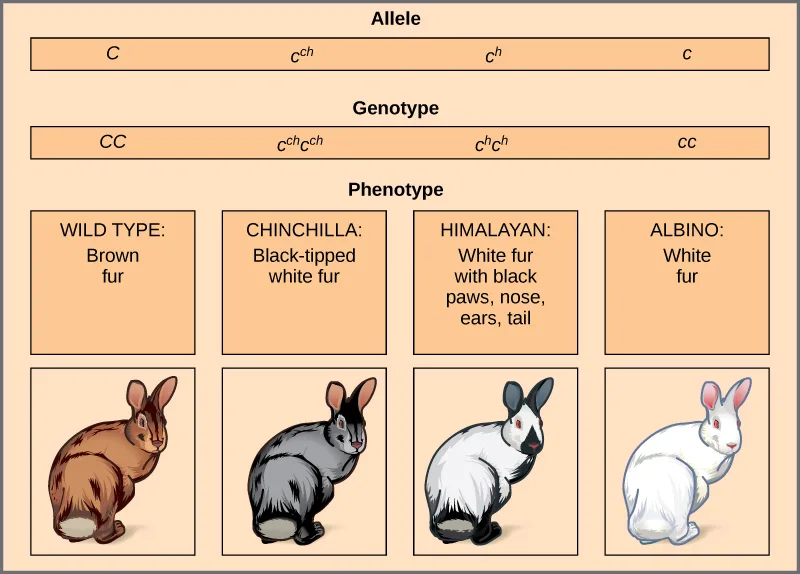
An example of multiple alleles is coat color in rabbits (see the figure below). Here, four alleles exist for the c gene. The wild-type version, C⁺C⁺, is expressed as brown fur. The chinchilla phenotype, cchcch, is expressed as black-tipped white fur. The Himalayan phenotype, chch, has black fur on the extremities and white fur elsewhere. Finally, the albino, or “colorless” phenotype, cc, is expressed as white fur. In cases of multiple alleles, dominance hierarchies can exist. In this case, the wild-type allele is dominant over all the others, chinchilla is incompletely dominant over Himalayan and albino, and Himalayan is dominant over albino. This hierarchy, or allelic series, was revealed by observing the phenotypes of each possible heterozygote offspring.
Extended description
Four columns, left to right, each stacking an allele symbol, genotype, phenotype description, and an illustrated rabbit. Column 1: allele C, genotype CC, phenotype ‘Wild type: Brown fur’, a solid brown rabbit. Column 2: allele cᶜʰ, genotype cᶜʰcᶜʰ, phenotype ‘Chinchilla: Black-tipped white fur’, a gray rabbit with black-tipped fur. Column 3: allele cʰ, genotype cʰcʰ, phenotype ‘Himalayan: White fur with black paws, nose, ears, tail’, a white rabbit with black extremities. Column 4: allele c, genotype cc, phenotype ‘Albino: White fur’, an all-white rabbit with pink eyes.
The complete dominance of a wild-type phenotype over all other mutants often occurs as an effect of “dosage” of a specific gene product, such that the wild-type allele supplies the correct amount of gene product whereas the mutant alleles cannot. For the allelic series in rabbits, the wild-type allele may supply a given dosage of fur pigment, whereas the mutants supply a lesser dosage or none at all. Interestingly, the Himalayan phenotype is the result of an allele that produces a temperature-sensitive gene product that only produces pigment in the cooler extremities of the rabbit’s body.
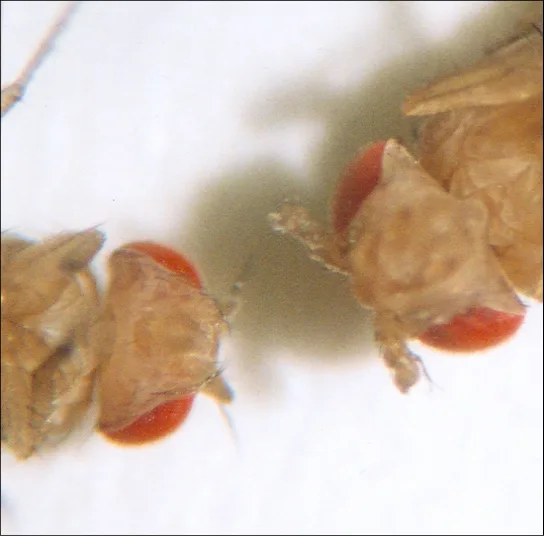
Alternatively, one mutant allele can be dominant over all other phenotypes, including the wild type. This may occur when the mutant allele somehow interferes with the genetic message so that even a heterozygote with one wild-type allele copy expresses the mutant phenotype. One way in which the mutant allele can interfere is by enhancing the function of the wild-type gene product or changing its distribution in the body. One example of this is the Antennapedia mutation in Drosophila (see the figure below). In this case, the mutant allele expands the distribution of the gene product, and as a result, the Antennapedia heterozygote develops legs on its head where its antennae should be.
Evolution Connection. Multiple Alleles Confer Drug Resistance in the Malaria Parasite.
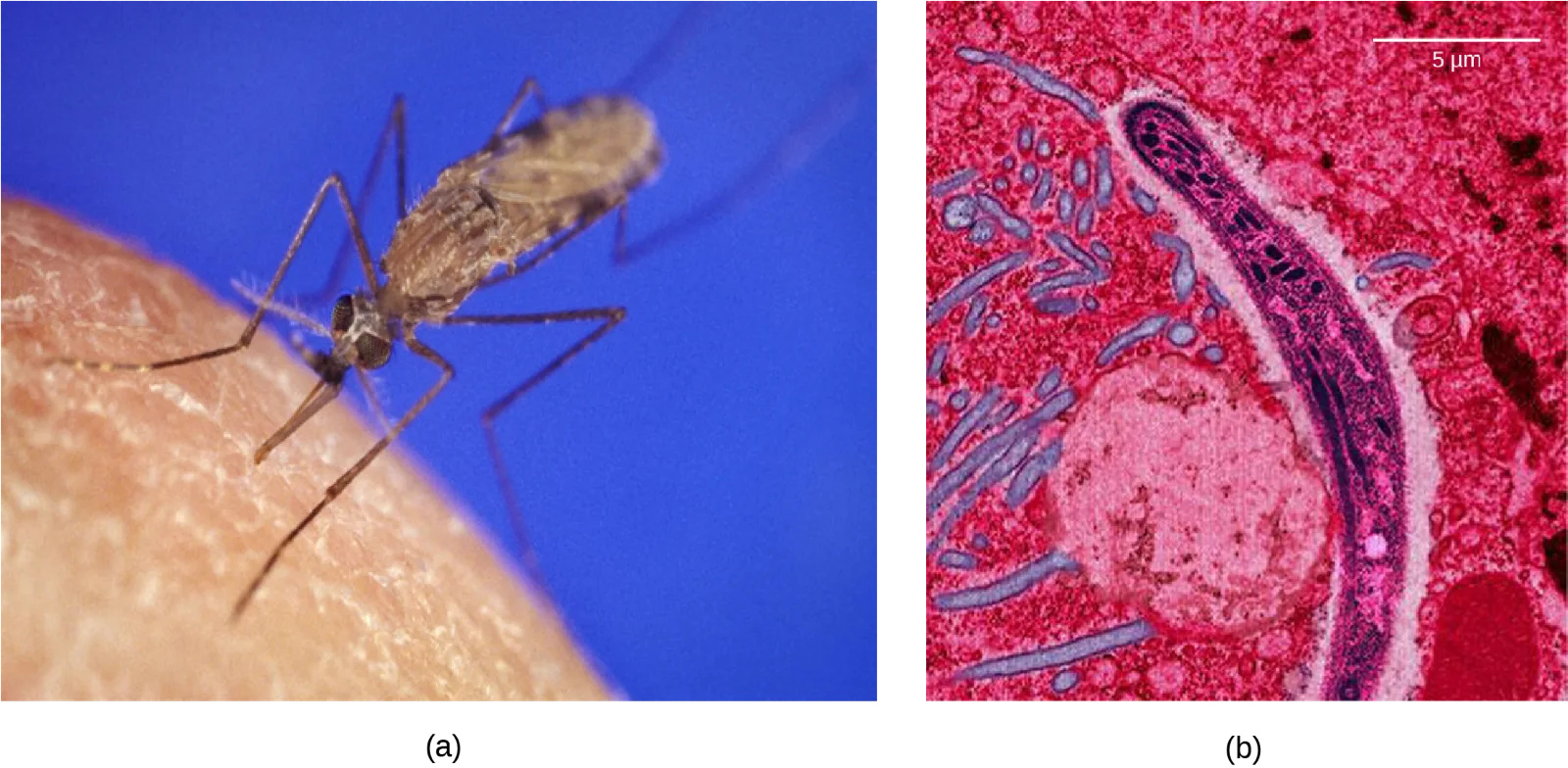
Malaria is a parasitic disease in humans that is transmitted by infected female mosquitoes, including Anopheles gambiae (a), and is characterized by cyclic high fevers, chills, flu-like symptoms, and severe anemia. Plasmodium falciparum and P. vivax are the most common causative agents of malaria, and P. falciparum is the most deadly (b). When promptly and correctly treated, P. falciparum malaria has a mortality rate of 0.1 percent. However, in some parts of the world, the parasite has evolved resistance to commonly used malaria treatments, so the most effective malarial treatments can vary by geographic region.
In Southeast Asia, Africa, and South America, P. falciparum has developed resistance to the anti-malarial drugs chloroquine, mefloquine, and sulfadoxine-pyrimethamine. P. falciparum, which is haploid during the life stage in which it is infectious to humans, has evolved multiple drug-resistant mutant alleles of the dhps gene. Varying degrees of sulfadoxine resistance are associated with each of these alleles. Being haploid, P. falciparum needs only one drug-resistant allele to express this trait.
In Southeast Asia, different sulfadoxine-resistant alleles of the dhps gene are localized to different geographic regions. This is a common evolutionary phenomenon that occurs because drug-resistant mutants arise in a population and interbreed with other P. falciparum isolates in close proximity. Sulfadoxine-resistant parasites cause considerable human hardship in regions where this drug is widely used as an over-the-counter malaria remedy. As is common with pathogens that multiply to large numbers within an infection cycle, P. falciparum evolves relatively rapidly (over a decade or so) in response to the selective pressure of commonly used anti-malarial drugs. For this reason, scientists must constantly work to develop new drugs or drug combinations to combat the worldwide malaria burden. (Sumiti Vinayak, et al., “Origin and Evolution of Sulfadoxine Resistant Plasmodium falciparum,” Public Library of Science Pathogens 6, no. 3 (2010): e1000830, doi:10.1371/journal.ppat.1000830.)
X-Linked Traits
In humans, as well as in many other animals and some plants, the sex of the individual is determined by sex chromosomes. The sex chromosomes are one pair of non-homologous chromosomes. Until now, we have only considered inheritance patterns among non-sex chromosomes, or autosomes. In addition to 22 homologous pairs of autosomes, human females have a homologous pair of X chromosomes, whereas human males have an XY chromosome pair. Although the Y chromosome contains a small region of similarity to the X chromosome so that they can pair during meiosis, the Y chromosome is much shorter and contains many fewer genes. In fact, when Nettie Stevens discovered that the X and Y chromosomes were the determinants of sex, she differentiated them only by size. (Note that in this case and in the description below, the terms X and Y chromosome were not used at the time.) When a gene being examined is present on the X chromosome, but not on the Y chromosome, it is said to be X-linked.
Eye color in Drosophila was one of the first X-linked traits to be identified. Thomas Hunt Morgan mapped this trait to what became known as the X chromosome in 1910. Like humans, Drosophila males have an XY chromosome pair, and females are XX. In flies, the wild-type eye color is red (XW) and it is dominant to white eye color (Xw) (see the figure below). Because of the location of the eye-color gene, reciprocal crosses do not produce the same offspring ratios. Males are said to be hemizygous, because they have only one allele for any X-linked characteristic. Hemizygosity makes the descriptions of dominance and recessiveness irrelevant for XY males. Drosophila males lack a second allele copy on the Y chromosome; that is, their genotype can only be XWY or XwY. In contrast, females have two allele copies of this gene and can be XWXW, XWXw, or XwXw.
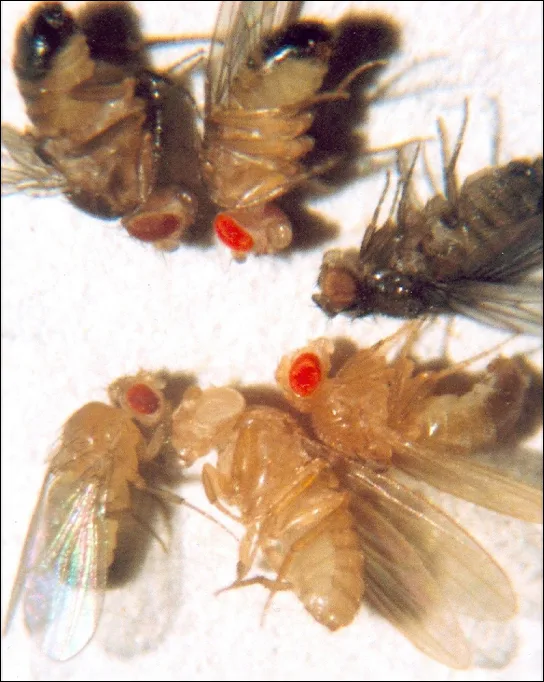
In an X-linked cross, the genotypes of F₁ and F₂ offspring depend on whether the recessive trait was expressed by the male or the female in the P₁ generation. With regard to Drosophila eye color, when the P₁ male expresses the white-eye phenotype and the female is homozygous red-eyed, all members of the F₁ generation exhibit red eyes (see the figure below). The F₁ females are heterozygous (XWXw), and the males are all XWY, having received their X chromosome from the homozygous dominant P₁ female and their Y chromosome from the P₁ male. A subsequent cross between the XWXw female and the XWY male would produce only red-eyed females (with XWXW or XWXw genotypes) and both red- and white-eyed males (with XWY or XwY genotypes). Now, consider a cross between a homozygous white-eyed female and a male with red eyes. The F₁ generation would exhibit only heterozygous red-eyed females (XWXw) and only white-eyed males (XwY). Half of the F₂ females would be red-eyed (XWXw) and half would be white-eyed (XwXw). Similarly, half of the F₂ males would be red-eyed (XWY) and half would be white-eyed (XwY).
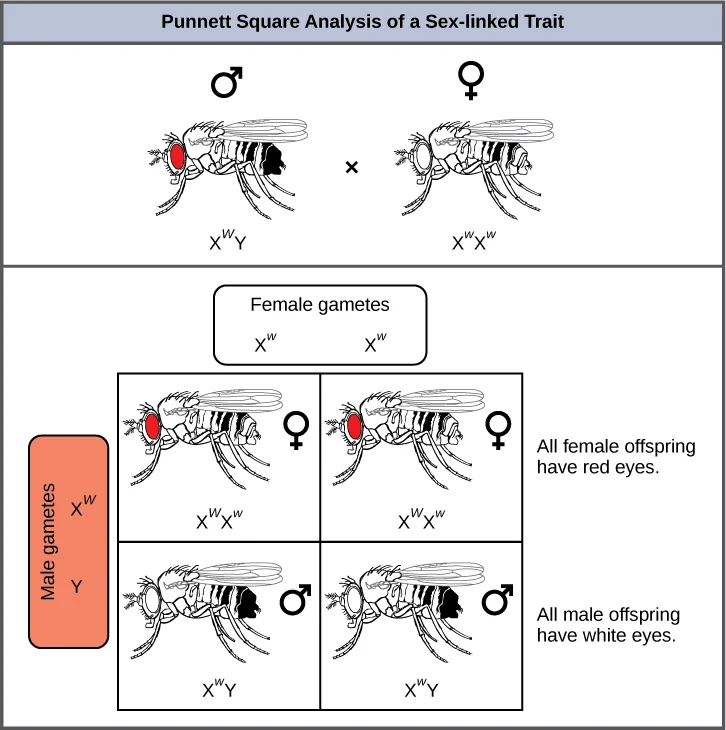
Extended description
At top, an illustrated red-eyed male fly labeled XᵂY is crossed with an illustrated white-eyed female fly labeled XʷXʷ. Below, a grid lists the female’s gametes, Xʷ and Xʷ, across the top, and the male’s gametes, Xᵂ and Y, down the side. The two upper cells each show a red-eyed female fly labeled XᵂXʷ, with a note that all female offspring have red eyes. The two lower cells each show a white-eyed male fly labeled XʷY, with a note that all male offspring have white eyes.
What ratio of offspring would result from a cross between a white-eyed male and a female that is heterozygous for red eye color?
Show model answer
Did your answer mention:
Discoveries in fruit fly genetics can be applied to human genetics. When a female parent is homozygous for a recessive X-linked trait, she will pass the trait on to 100 percent of her offspring. Her male offspring are, therefore, destined to express the trait, as they will inherit their father’s Y chromosome. In humans, the alleles for certain conditions (some forms of color blindness, hemophilia, and muscular dystrophy) are X-linked. Females who are heterozygous for these diseases are said to be carriers and may not exhibit any phenotypic effects. These females will pass the disease to half of their sons and will pass carrier status to half of their daughters; therefore, recessive X-linked traits appear more frequently in males than females.
In some groups of organisms with sex chromosomes, the sex with the non-homologous sex chromosomes is the female rather than the male. This is the case for all birds. In this case, sex-linked traits will be more likely to appear in the female, in which they are hemizygous.
Human Sex-linked Disorders
Sex-linkage studies in Morgan’s laboratory provided the fundamentals for understanding X-linked recessive disorders in humans, which include red-green color blindness, and Types A and B hemophilia. Because human males need to inherit only one recessive mutant X allele to be affected, X-linked disorders are disproportionately observed in males. Females must inherit recessive X-linked alleles from both of their parents in order to express the trait. When they inherit one recessive X-linked mutant allele and one dominant X-linked wild-type allele, they are carriers of the trait and are typically unaffected. Carrier females can manifest mild forms of the trait due to the inactivation of the dominant allele located on one of the X chromosomes. However, female carriers can contribute the trait to their male children, resulting in the male exhibiting the trait, or they can contribute the recessive allele to their female children, resulting in the children being carriers of the trait (see the figure below). Although some Y-linked recessive disorders exist, typically they are associated with infertility in males and are therefore not transmitted to subsequent generations.
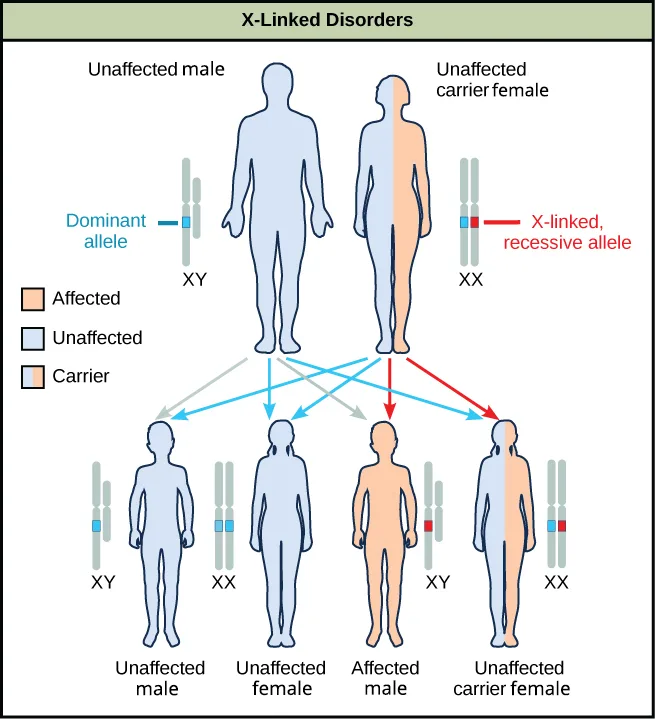
Extended description
At top, an unaffected male (labeled XY) carries a dominant allele on one chromosome icon; an unaffected carrier female (labeled XX) carries an X-linked recessive allele on one of her two X chromosome icons. A legend defines orange as affected, light blue as unaffected, and half-orange/half-blue as carrier. Arrows fan down from the parents to four offspring, left to right: an unaffected male (blue), an unaffected female (blue), an affected male (orange), and an unaffected carrier female (half orange, half blue), each shown with a small chromosome-pair icon matching its genotype.
Lethality
A large proportion of genes in an individual’s genome are essential for survival. Occasionally, a nonfunctional allele for an essential gene can arise by mutation and be transmitted in a population as long as individuals with this allele also have a wild-type, functional copy. The wild-type allele functions at a capacity sufficient to sustain life and is therefore considered to be dominant over the nonfunctional allele. However, consider two heterozygous parents that have a genotype of wild-type/nonfunctional mutant for a hypothetical essential gene. In one quarter of their offspring, we would expect to observe individuals that are homozygous recessive for the nonfunctional allele. Because the gene is essential, these individuals might fail to develop past fertilization, die in utero, or die later in life, depending on what life stage requires this gene. An inheritance pattern in which an allele is only lethal in the homozygous form and in which the heterozygote may be normal or have some altered nonlethal phenotype is referred to as recessive lethal.
For crosses between heterozygous individuals with a recessive lethal allele that causes death before birth when homozygous, only wild-type homozygotes and heterozygotes would be observed. The genotypic ratio would therefore be 2:1. In other instances, the recessive lethal allele might also exhibit a dominant (but not lethal) phenotype in the heterozygote. For instance, the recessive lethal Curly allele in Drosophila affects wing shape in the heterozygote form but is lethal in the homozygote.
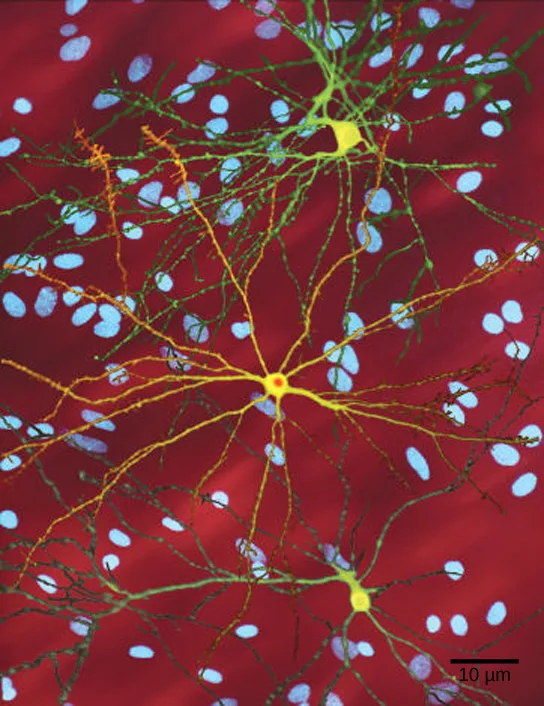
A single copy of the wild-type allele is not always sufficient for normal functioning or even survival. The dominant lethal inheritance pattern is one in which an allele is lethal both in the homozygote and the heterozygote; this allele can only be transmitted if the lethality phenotype occurs after reproductive age. Individuals with mutations that result in dominant lethal alleles fail to survive even in the heterozygote form. Dominant lethal alleles are very rare because, as you might expect, the allele only lasts one generation and is not transmitted. However, just as the recessive lethal allele might not immediately manifest the phenotype of death, dominant lethal alleles also might not be expressed until adulthood. Once the individual reaches reproductive age, the allele may be unknowingly passed on, resulting in a delayed death in both generations. An example of this in humans is Huntington’s disease, in which the nervous system gradually wastes away (see the figure below). People who are heterozygous for the dominant Huntington allele (Hh) will inevitably develop the fatal disease. However, the onset of Huntington’s disease may not occur until age 40, at which point the afflicted persons may have already passed the allele to 50 percent of their offspring.
Summary
When true-breeding or homozygous individuals that differ for a certain trait are crossed, all of the offspring will be heterozygotes for that trait. If the traits are inherited as dominant and recessive, the F₁ offspring will all exhibit the same phenotype as the parent homozygous for the dominant trait. If these heterozygous offspring are self-crossed, the resulting F₂ offspring will be equally likely to inherit gametes carrying the dominant or recessive trait, giving rise to offspring of which one quarter are homozygous dominant, half are heterozygous, and one quarter are homozygous recessive. Because homozygous dominant and heterozygous individuals are phenotypically identical, the observed traits in the F₂ offspring will exhibit a ratio of three dominant to one recessive.
Alleles do not always behave in dominant and recessive patterns. Incomplete dominance describes situations in which the heterozygote exhibits a phenotype that is intermediate between the homozygous phenotypes. Codominance describes the simultaneous expression of both of the alleles in the heterozygote. Although diploid organisms can only have two alleles for any given gene, it is common for more than two alleles of a gene to exist in a population. In humans, as in many animals and some plants, females have two X chromosomes and males have one X and one Y chromosome. Genes that are present on the X but not the Y chromosome are said to be X-linked, such that males only inherit one allele for the gene, and females inherit two. Finally, some alleles can be lethal. Recessive lethal alleles are only lethal in homozygotes, but dominant lethal alleles are fatal in heterozygotes as well.
Key terms
- allele — gene variations that arise by mutation and exist at the same relative locations on homologous chromosomes
- autosomes — any of the non-sex chromosomes
- codominance — in a heterozygote, complete and simultaneous expression of both alleles for the same characteristic
- dominant lethal — inheritance pattern in which an allele is lethal both in the homozygote and the heterozygote; this allele can only be transmitted if the lethality phenotype occurs after reproductive age
- genotype — underlying genetic makeup, consisting of both physically visible and non-expressed alleles, of an organism
- hemizygous — presence of only one allele for a characteristic, as in X-linkage; hemizygosity makes descriptions of dominance and recessiveness irrelevant
- heterozygous — having two different alleles for a given gene on the homologous chromosome
- homozygous — having two identical alleles for a given gene on the homologous chromosome
- incomplete dominance — in a heterozygote, expression of two contrasting alleles such that the individual displays an intermediate phenotype
- monohybrid — result of a cross between two true-breeding parents that express different traits for only one characteristic
- phenotype — observable traits expressed by an organism
- Punnett square — visual representation of a cross between two individuals in which the gametes of each individual are denoted along the top and side of a grid, respectively, and the possible zygotic genotypes are recombined at each box in the grid
- recessive lethal — inheritance pattern in which an allele is only lethal in the homozygous form; the heterozygote may be normal or have some altered, nonlethal phenotype
- sex-linked — any gene on a sex chromosome
- test cross — cross between a dominant expressing individual with an unknown genotype and a homozygous recessive individual; the offspring phenotypes indicate whether the unknown parent is heterozygous or homozygous for the dominant trait
- X-linked — gene present on the X, but not the Y chromosome
Practice
Explain the relationship between genotypes and phenotypes in dominant and recessive gene systems
The observable traits expressed by an organism are described as its ________.
This is what you can observe and measure about an organism, as opposed to its underlying combination of alleles.A recessive trait will be observed in individuals that are ________ for that trait.
A recessive allele’s effect is masked whenever a dominant allele is present on the other homologous chromosome.The gene for flower position in pea plants exists as axial or terminal alleles. Given that axial is dominant to terminal, list all of the possible F₁ and F₂ genotypes and phenotypes from a cross involving parents that are homozygous for each trait. Express genotypes with conventional genetic abbreviations.
Show model answer
Did your answer mention:
Having two different alleles for a given gene on the homologous chromosome describes an organism that is ________ for that gene.
This is the genotype that Mendel’s F₁ hybrid offspring all shared for the trait being crossed.Develop a Punnett square to calculate the expected proportions of genotypes and phenotypes in a monohybrid cross
Use a Punnett square to predict the offspring in a cross between a dwarf pea plant (homozygous recessive) and a tall pea plant (heterozygous). What is the phenotypic ratio of the offspring?
Show model answer
Did your answer mention:
A visual representation of a genetic cross, in which the gametes of each parent are listed along the top and side of a grid and the possible offspring genotypes are recombined at each box, is called a ________.
It was devised by the British geneticist Reginald Punnett.The result of a cross between two true-breeding parents that differ in only one characteristic is called a ________ cross.
Mendel performed seven of these crosses, one for each pea-plant characteristic he studied.Explain the purpose and methods of a test cross
Why is it more efficient to perform a test cross with a homozygous recessive donor than a homozygous dominant donor? How could the same information still be found with a homozygous dominant donor?
Show model answer
Did your answer mention:
A cross between a dominant-expressing individual of unknown genotype and a homozygous recessive individual, used to reveal whether the unknown parent is heterozygous or homozygous, is called a ________.
Mendel used this technique to distinguish a homozygous dominant individual from a heterozygous one.In a test cross, the organism expressing a dominant phenotype is crossed with an organism that is ________ for the same characteristic.
The cross partner’s genotype needs to already be certain, so both of its alleles must be the recessive, non-expressed form.Identify non-Mendelian inheritance patterns such as incomplete dominance, codominance, recessive lethals, multiple alleles, and sex linkage
If black and white true-breeding mice are mated and the result is all gray offspring, what inheritance pattern would this be indicative of?
The offspring phenotype falls between the two parental phenotypes rather than matching one of them exactly.The ABO blood groups in humans are expressed as the IA, IB, and i alleles. The IA allele encodes the A blood group antigen, IB encodes B, and i encodes O. Both A and B are dominant to O. If a heterozygous blood type A parent (IAi) and a heterozygous blood type B parent (IBi) mate, one quarter of their offspring will have AB blood type (IAIB) in which both antigens are expressed equally. Therefore, ABO blood groups are an example of:
Notice that more than two alleles exist in the population for this gene, and that the heterozygote expresses both alleles rather than one masking the other.In a mating between two individuals that are heterozygous for a recessive lethal allele that is expressed in utero, what genotypic ratio (homozygous dominant:heterozygous:homozygous recessive) would you expect to observe in the offspring?
The homozygous recessive class dies before it can be counted among the born offspring, so it drops out of the ratio rather than appearing as a fraction.If the allele encoding polydactyly (six fingers) is dominant why do most people have five fingers?
Consider how common the allele itself would have to be in the population for most people to show it, regardless of dominance.A farmer raises black and white chickens. To his surprise, when the first generation of eggs hatch all the chickens are black with white speckles throughout their feathers. What should the farmer expect when the eggs laid after interbreeding the speckled chickens hatch?
The all-speckled F₁ generation is a clue to the inheritance pattern; work out what a self-cross of two speckled (heterozygous) individuals would produce.Can a human male be a carrier of red-green color blindness?
Show model answer
Did your answer mention:
Having only one allele for a characteristic, as in the X-linked genes of an XY male, is described as being ________ for that characteristic.
This describes a male’s relationship to any gene located on the X chromosome, since he has only one copy.This section is adapted from Biology 2e, Section 12.2: Characteristics and Traits by Mary Ann Clark, Jung Choi, Matthew Douglas, and OpenStax, © OpenStax, licensed under CC BY-NC-SA 4.0. Access the original for free at openstax.org. Changes: figures re-encoded as WebP; five figures re-kinded from the manifest’s file-extension guess after inspection (photo → diagram for the pedigree, the rabbit allele chart, the sex-linked Punnett square, and the X-linked-disorders diagram, all drawn illustrations rather than photographs; diagram → photo for the malaria mosquito-and-parasite pair, which is two photographs); letter-spaced, screen-reader-style source alts on the monohybrid-cross flow chart, the pedigree, the rabbit allele chart, and the sex-linked Punnett square rewritten to plain descriptions, and the test-cross diagram’s and the X-linked-disorders diagram’s plain source alts likewise rewritten to say what each figure shows — each of these six given a longdesc that walks its bands, arrows, grid cells, and labels in reading order; the malaria evolution-connection footnote citing Vinayak et al. (2010) kept as a parenthetical after the sentence it supports; the two feature boxes rendered as callouts (Evolution Connection, Link to Learning) with their titles kept; the three Visual Connection questions rendered as a mediafigure immediately followed by a self-check, in place in the body, rather than moved to the closing Practice block; wild-type “+” alleles set as the Unicode ⁺ superscript and every other allele superscript (XW, IA, cch, and so on) set as an HTML superscript without the source’s italics; the CNXML table transcribed as a Markdown table with its title set as a bold line above it; the end-of-section Review Questions and Critical Thinking Questions adapted into the closing interactive Practice block (multiple choice and self-check, respectively); five key-term recall items (heterozygous, Punnett square, monohybrid, test cross, hemizygous) added from the glossary; and two source defects corrected: the dwarf-by-tall Critical Thinking solution’s Punnett square axis label (“T and T along the top”) corrected to “t and t,” matching both the dwarf parent’s homozygous-recessive genotype and the solution’s own listed offspring genotypes, and a typo in the sex-linked-ratio Visual Connection solution (“withe red yes”) corrected to “with red eyes” — both reported as source defects; rubric checkpoints added to each self-check, decomposing its model answer (the source solution) into check-off clauses with no new claims; and one additional multiple choice written locally, strictly from the section’s own sentence defining a test cross’s homozygous recessive partner, since the module’s Review and Critical Thinking Questions were already fully used and its section summary does not mention test crosses, leaving the third objective (“Explain the purpose and methods of a test cross”) with only two Practice items — disclosed in the ledger.