Biotechnology and Genomics
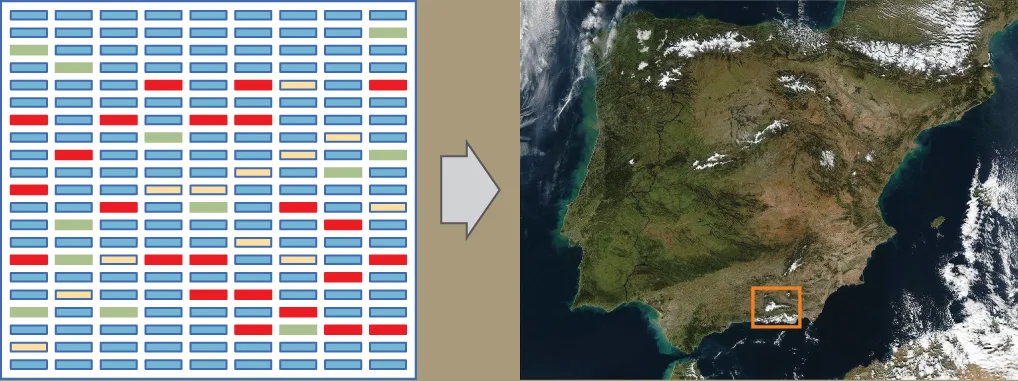
The study of nucleic acids began with the discovery of DNA, progressed to the study of genes and small fragments, and has now exploded to the field of genomics. Genomics is the study of entire genomes, including the complete set of genes, their nucleotide sequence and organization, and their interactions within a species and with other species. DNA sequencing technology has contributed to advances in genomics. Just as information technology has led to Google maps that enable people to obtain detailed information about locations around the globe, researchers use genomic information to create similar DNA maps of different organisms. These findings have helped anthropologists to better understand human migration and have aided the medical field through mapping human genetic diseases. Genomic information can contribute to scientific understanding in various ways and knowledge in the field is quickly growing.
Sections
- Biotechnology — how gel electrophoresis separates DNA fragments, how the polymerase chain reaction amplifies them, how molecular and reproductive cloning create recombinant DNA and transgenic organisms, and how these techniques are applied in medicine and agriculture.
- Mapping Genomes — what genomics and genome mapping are, and how the genetic maps that linkage analysis builds and the physical maps that measure nucleotide distance together build a genome’s complete picture.
- Whole-Genome Sequencing — the chain-termination and next-generation sequencing strategies scientists use to read a genome, and what sequencing model organisms teaches them.
- Applying Genomics — how genomics predicts an individual’s disease risk and guides pharmacogenomics, and how it is applied to metagenomics, biofuels, and agriculture.
- Genomics and Proteomics — how mass spectrometry, X-ray crystallography, and other techniques let scientists study a genome’s proteome and its protein signatures, and how systems biology puts that information together.
This chapter is adapted from Biology 2e, Chapter 17: Biotechnology and Genomics by Mary Ann Clark, Jung Choi, Matthew Douglas, and OpenStax, © OpenStax, licensed under CC BY-NC-SA 4.0. Access the original for free at openstax.org. Each section page records its own changes from the source. Changes: the chapter-opening image is the source’s, re-encoded for the web, with its source alt kept but its two screen-reader “D N A” spellings written as “DNA”.