Prokaryotes: Bacteria and Archaea
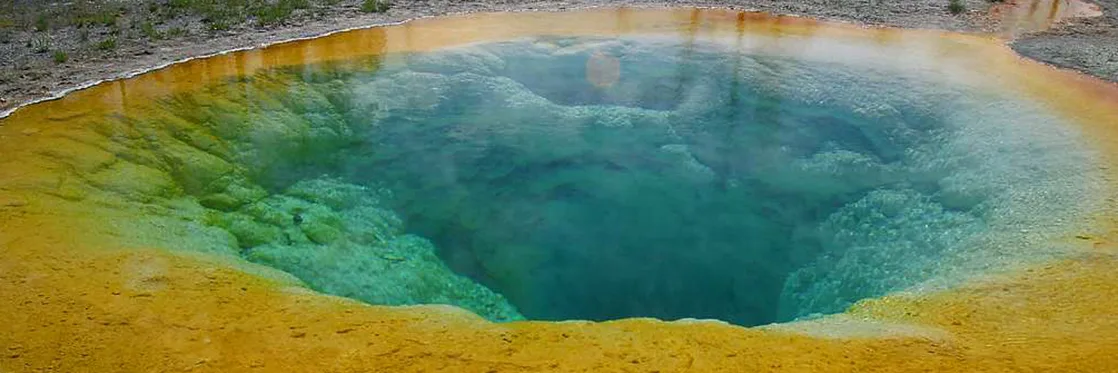
In the recent past, scientists grouped living things into six kingdoms—animalia, plantae, fungi, protista, archea, and bacteria—based on several criteria, such as the absence or presence of a nucleus and other membrane-bound organelles, the absence or presence of cell walls, multicellularity, and so on. In the late 20th century, the pioneering work of Carl Woese and others compared sequences of small-subunit ribosomal RNA (SSU rRNA), which resulted in a more fundamental way to group organisms on Earth. Based on differences in the structure of cell membranes and in rRNA, Woese and his colleagues proposed that all life on Earth evolved along three lineages, called domains. The domain Bacteria comprises all organisms in the kingdom Bacteria, the domain Archaea comprises the rest of the prokaryotes, and the domain Eukarya comprises all eukaryotes—including organisms in the kingdoms Animalia, Plantae, Fungi, and Protista.
Two of the three domains—Bacteria and Archaea—are prokaryotic. Prokaryotes were the first inhabitants on Earth, appearing 3.5 to 3.8 billion years ago. These organisms are abundant and ubiquitous; that is, they are present everywhere. In addition to inhabiting moderate environments, they are found in extreme conditions: from boiling springs to permanently frozen environments in Antarctica; from salty environments like the Dead Sea to environments under tremendous pressure, such as the depths of the ocean; and from areas without oxygen, such as a waste management plant, to radioactively contaminated regions, such as Chernobyl. Prokaryotes reside in the human digestive system and on the skin, are responsible for certain illnesses, and serve an important role in the preparation of many foods.
Sections
- Prokaryotic Diversity — the evolutionary history of prokaryotes, the extremophiles that live in harsh environments, the many microbes that cannot yet be cultured, and how biofilms form and behave.
- Structure of Prokaryotes: Bacteria and Archaea — the shared cell plan of prokaryotes, the cell-wall and membrane differences that separate Bacteria from Archaea, the Gram stain, the major bacterial and archaeal phyla, and how prokaryotes reproduce and exchange genes.
- Prokaryotic Metabolism — the energy and carbon sources that define the nutritional types of prokaryotes, and their roles in the carbon and nitrogen cycles.
- Bacterial Diseases in Humans — the historic and emerging bacterial epidemics, foodborne illness, biofilm infections, and the rise of antibiotic resistance and MRSA.
- Beneficial Prokaryotes — nitrogen fixation, the human microbiome, prokaryotes in food production and biotechnology, and bioremediation.
This chapter is adapted from Biology 2e, Chapter 22: Prokaryotes: Bacteria and Archaea by Mary Ann Clark, Jung Choi, Matthew Douglas, and OpenStax, © OpenStax, licensed under CC BY-NC-SA 4.0. Access the original for free at openstax.org. Each section page records its own changes from the source. Changes: the chapter-opening photograph is the source’s, re-encoded for the web, with its source alt kept since it already says what the photo shows; the source’s introduction paragraphs do not reference the opening figure inline, so no parenthetical figure-reference rendering was needed; the source’s superscripted ordinal, “20th century,” is set as plain text, since this site reserves HTML sub/superscript for chemical and genetic notation, not typographic ordinal suffixes.