Characteristics of Fungi
By the end of this section, you will be able to:
- List the characteristics of fungi
- Describe the composition of the mycelium
- Describe the mode of nutrition of fungi
- Explain sexual and asexual reproduction in fungi
Fungi, once considered plant-like organisms, are more closely related to animals than plants. Fungi are not capable of photosynthesis: they are heterotrophic because they use complex organic compounds as sources of energy and carbon. Fungi share a few other traits with animals. Their cell walls are composed of chitin, which is found in the exoskeletons of arthropods. Fungi produce a number of pigments, including melanin, also found in the hair and skin of animals. Like animals, fungi also store carbohydrates as glycogen. However, like bacteria, fungi absorb nutrients across the cell surface and act as decomposers, helping to recycle nutrients by breaking down organic materials to simple molecules.
Some fungal organisms multiply only asexually, whereas others undergo both asexual reproduction and sexual reproduction with alternation of generations. Most fungi produce a large number of spores, which are haploid cells that can undergo mitosis to form multicellular, haploid individuals.
Fungi often interact with other organisms, forming beneficial or mutualistic associations. For example, most terrestrial plants form symbiotic relationships with fungi. The roots of the plant connect with the underground parts of the fungus, which form mycorrhizae. Through mycorrhizae, the fungus and plant exchange nutrients and water, greatly aiding the survival of both species. Alternatively, lichens are an association between a fungus and its photosynthetic partner (usually an alga).
Fungi also cause serious infections in plants and animals. For example, Dutch elm disease, which is caused by the fungus Ophiostoma ulmi, is a particularly devastating type of fungal infestation that destroys many native species of elm (Ulmus sp.) by infecting the tree’s vascular system. The elm bark beetle acts as a vector, transmitting the disease from tree to tree. Accidentally introduced in the 1900s, the fungus decimated elm trees across the continent. Many European and Asiatic elms are less susceptible to Dutch elm disease than American elms.
In humans, fungal infections are generally considered challenging to treat. Unlike bacteria, fungi do not respond to traditional antibiotic therapy, since they are eukaryotes. Fungal infections may prove deadly for individuals with compromised immune systems.
Fungi have many commercial applications. The food industry uses yeasts in baking, brewing, and cheese and wine making. Many industrial compounds are byproducts of fungal fermentation. Fungi are the source of many commercial enzymes and antibiotics.
Although humans have used yeasts and mushrooms since prehistoric times, until recently, the biology of fungi was poorly understood. In fact, up until the mid-20th century, many scientists classified fungi as plants! Fungi, like plants, are mostly sessile and seemingly rooted in place. They possess a stem-like structure similar to plants, as well as having a root-like fungal mycelium in the soil. In addition, their mode of nutrition was poorly understood. Progress in the field of fungal biology was the result of mycology: the scientific study of fungi. Based on fossil evidence, fungi have been found in the Devonian era, about 410 million years ago. However, new findings might place the appearance of the first fungi during the Neoproterozoic era, about 900 million years ago. Molecular biology analysis of the fungal genome demonstrates that fungi are more closely related to animals than plants. Under some current systematic phylogenies, they continue to be a monophyletic group of organisms.
Career Connection. Mycologist.
Mycologists are biologists who study fungi. Historically, mycology was a branch of microbiology, and many mycologists start their careers with a degree in microbiology. To become a mycologist, a bachelor’s degree in a biological science (preferably majoring in microbiology) and a master’s degree in mycology are minimally necessary. Mycologists can specialize in taxonomy and fungal genomics, molecular and cellular biology, plant pathology, biotechnology, or biochemistry. Some medical microbiologists concentrate on the study of infectious diseases caused by fungi, called mycoses. Mycologists collaborate with zoologists and plant pathologists to identify and control difficult fungal infections, such as the devastating chestnut blight, the mysterious decline in frog populations in many areas of the world, or the deadly epidemic called white nose syndrome, which is decimating bats in the Eastern United States.
Government agencies hire mycologists as research scientists and technicians to monitor the health of crops, national parks, and national forests. Mycologists are also employed in the private sector by companies that develop chemical and biological control products or new agricultural products, and by companies that provide disease control services. Because of the key role played by fungi in the fermentation of alcohol and the preparation of many important foods, scientists with a good understanding of fungal physiology routinely work in the food technology industry. Oenology, the science of wine making, relies not only on the knowledge of grape varietals and soil composition, but also on a solid understanding of the characteristics of the wild yeasts that thrive in different wine-making regions. It is possible to purchase yeast strains isolated from specific grape-growing regions. The great French chemist and microbiologist, Louis Pasteur, made many of his essential discoveries working on the humble brewer’s yeast, thus discovering the process of fermentation.
Cell Structure and Function
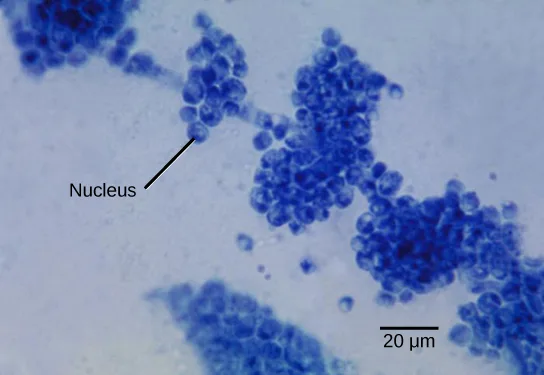
Fungi are eukaryotes, and as such, have a complex cellular organization. As eukaryotes, fungal cells contain a membrane-bound nucleus. The DNA in the nucleus is represented by multiple linear molecules wrapped around histone proteins, as is observed in other eukaryotic cells. A few types of fungi have accessory genomic structures comparable to bacterial plasmids (loops of DNA); however, the horizontal transfer of genetic information that occurs between one bacterium and another rarely occurs in fungi. Fungal cells also contain mitochondria and a complex system of internal membranes, including the endoplasmic reticulum and Golgi apparatus.
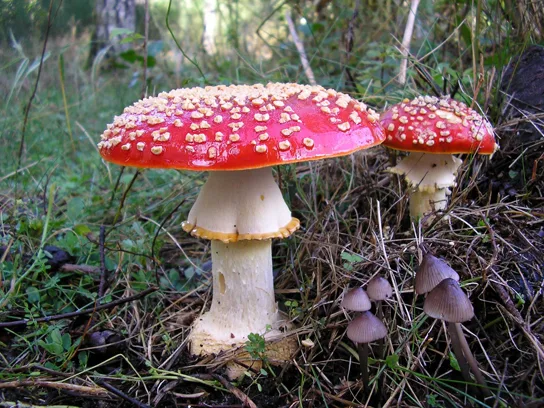
Unlike plant cells, fungal cells do not have chloroplasts or chlorophyll. Many fungi display bright colors arising from other cellular pigments, ranging from red to green to black. The poisonous Amanita muscaria (fly agaric) is recognizable by its bright red cap with white patches (pictured below). Pigments in fungi are associated with the cell wall and play a protective role against ultraviolet radiation. Some fungal pigments are toxic to humans.
Like plant cells, fungal cells have a thick cell wall. The rigid layers of fungal cell walls contain complex polysaccharides called chitin and glucans. Chitin (N-acetyl-D-glucosamine), also found in the exoskeleton of arthropods such as insects, gives structural strength to the cell walls of fungi. The wall provides structural support and protects the cell from desiccation and some predators. Fungi have plasma membranes similar to those of other eukaryotes, except that the structure is stabilized by ergosterol: a steroid molecule that replaces the cholesterol found in animal cell membranes. Most members of the kingdom Fungi are nonmotile. However, flagella are produced by the spores and gametes in the primitive Phylum Chytridiomycota.
Growth
The vegetative body of a fungus is a unicellular or multicellular thallus. Unicellular fungi are called yeasts. Multicellular fungi produce threadlike hyphae (singular hypha). Dimorphic fungi can change from the unicellular to multicellular state depending on environmental conditions. Saccharomyces cerevisiae (baker’s yeast) and Candida species (the agents of thrush, a common fungal infection) are examples of unicellular fungi (pictured below).
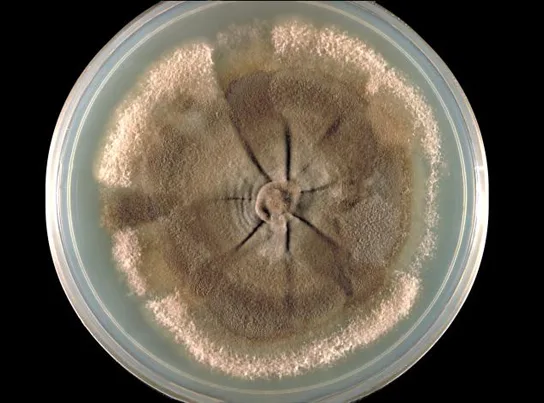
Most fungi are multicellular organisms. They display two distinct morphological stages: the vegetative and reproductive. The vegetative stage consists of a tangle of hyphae, whereas the reproductive stage can be more conspicuous. The mass of hyphae is a mycelium (pictured below). It can grow on a surface, in soil or decaying material, in a liquid, or even on living tissue. Although individual hyphae must be observed under a microscope, the mycelium of a fungus can be very large, with some species truly being “the fungus humongous.” The giant Armillaria solidipes (honey mushroom) is considered the largest organism on Earth, spreading across more than 2,000 acres of underground soil in eastern Oregon; it is estimated to be at least 2,400 years old.
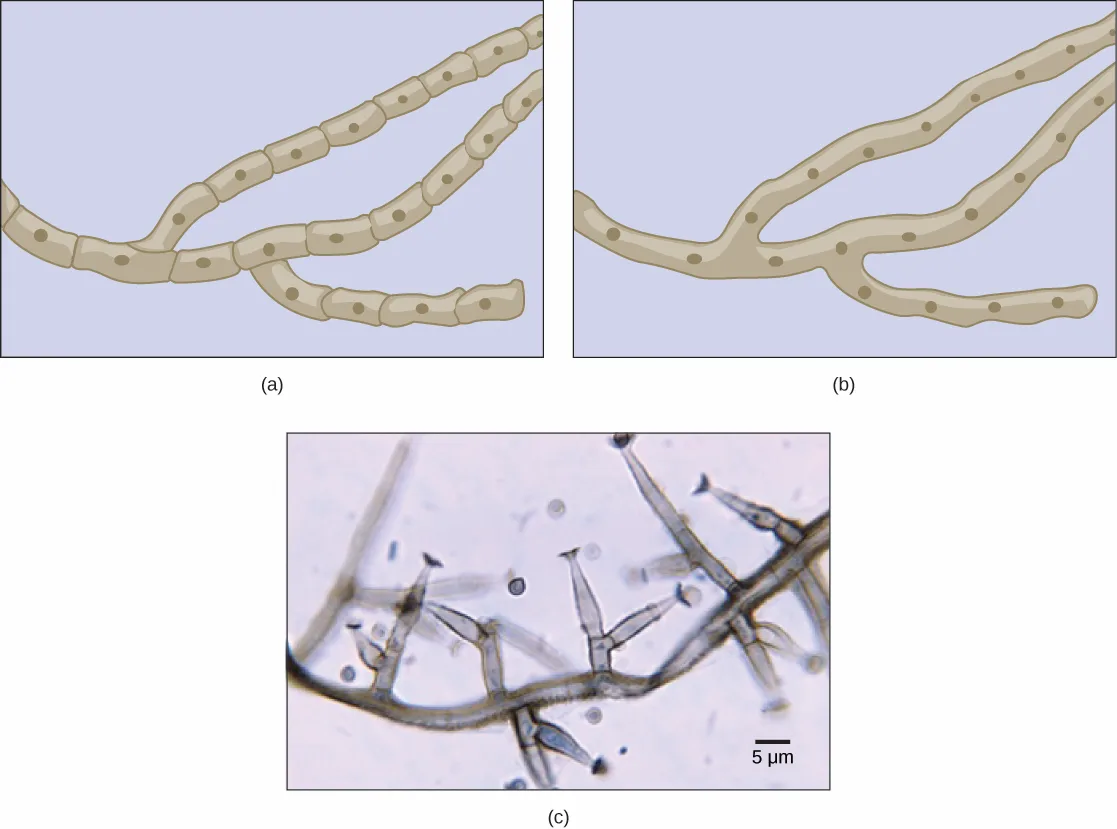
Most fungal hyphae are divided into separate cells by endwalls called septa (singular, septum) (pictured below, a and c). In most phyla of fungi, tiny holes in the septa allow for the rapid flow of nutrients and small molecules from cell to cell along the hypha. They are described as perforated septa. The hyphae in bread molds (which belong to the Phylum Zygomycota) are not separated by septa. Instead, they are formed by large cells containing many nuclei (multinucleate), an arrangement described as coenocytic hyphae (pictured below, b).
Extended description
Panel (a) draws two branching chains of rectangular cells; each cell is outlined separately with its own dark central dot representing a nucleus, and thin lines mark the septum, or cross-wall, between adjacent cells. Panel (b), drawn at the same scale and style, shows similarly branching filaments with no internal cross-walls at all — the outline is one continuous tube — and several dark dots (nuclei) sit loose inside the shared cytoplasm rather than one per cell. Panel (c) is a light micrograph of real hyphae: several long, branching, threadlike filaments cross the field at different angles, each showing faint septa as darker cross-bands, with a 5 µm scale bar at lower right for scale.
Fungi thrive in environments that are moist and slightly acidic, and can grow in dark places or places exposed to light. They vary in their oxygen requirement. Most fungi are obligate aerobes, requiring oxygen to survive. Other species, such as members of the Chytridiomycota that reside in the rumen of cattle, are obligate anaerobes, in that they only use anaerobic respiration because oxygen will disrupt their metabolism or kill them. Yeasts are intermediate, being facultative anaerobes. This means that they grow best in the presence of oxygen using aerobic respiration, but can survive using anaerobic respiration when oxygen is not available. The alcohol produced from yeast fermentation is used in wine and beer production.
Nutrition
Like animals, fungi are heterotrophs; they use complex organic compounds as a source of carbon, rather than fix carbon dioxide from the atmosphere as do some bacteria and most plants. In addition, fungi do not fix nitrogen from the atmosphere. Like animals, they must obtain it from their diet. However, unlike most animals, which ingest food and then digest it internally in specialized organs, fungi perform these steps in the reverse order; digestion precedes ingestion. First, exoenzymes are transported out of the hyphae, where they process nutrients in the environment. Then, the smaller molecules produced by this external digestion are absorbed through the large surface area of the mycelium. As with animal cells, the polysaccharide of storage is glycogen, a branched polysaccharide, rather than amylopectin, a less densely branched polysaccharide, and amylose, a linear polysaccharide, as found in plants.
Fungi are mostly saprobes (saprophyte is an equivalent term): organisms that derive nutrients from decaying organic matter. They obtain their nutrients from dead or decomposing organic material derived mainly from plants. Fungal exoenzymes are able to break down insoluble compounds, such as the cellulose and lignin of dead wood, into readily absorbable glucose molecules. The carbon, nitrogen, and other elements are thus released into the environment. Because of their varied metabolic pathways, fungi fulfill an important ecological role and are being investigated as potential tools in bioremediation of chemically damaged ecosystems. For example, some species of fungi can be used to break down diesel oil and polycyclic aromatic hydrocarbons (PAHs). Other species take up heavy metals, such as cadmium and lead.
Some fungi are parasitic, infecting either plants or animals. Smut and Dutch elm disease affect plants, whereas athlete’s foot and candidiasis (thrush) are medically important fungal infections in humans. In environments poor in nitrogen, some fungi resort to predation of nematodes (small non-segmented roundworms). In fact, species of Arthrobotrys fungi have a number of mechanisms to trap nematodes: One mechanism involves constricting rings within the network of hyphae. The rings swell when they touch the nematode, gripping it in a tight hold. The fungus then penetrates the tissue of the worm by extending specialized hyphae called haustoria. Many parasitic fungi possess haustoria, as these structures penetrate the tissues of the host, release digestive enzymes within the host’s body, and absorb the digested nutrients.
Reproduction
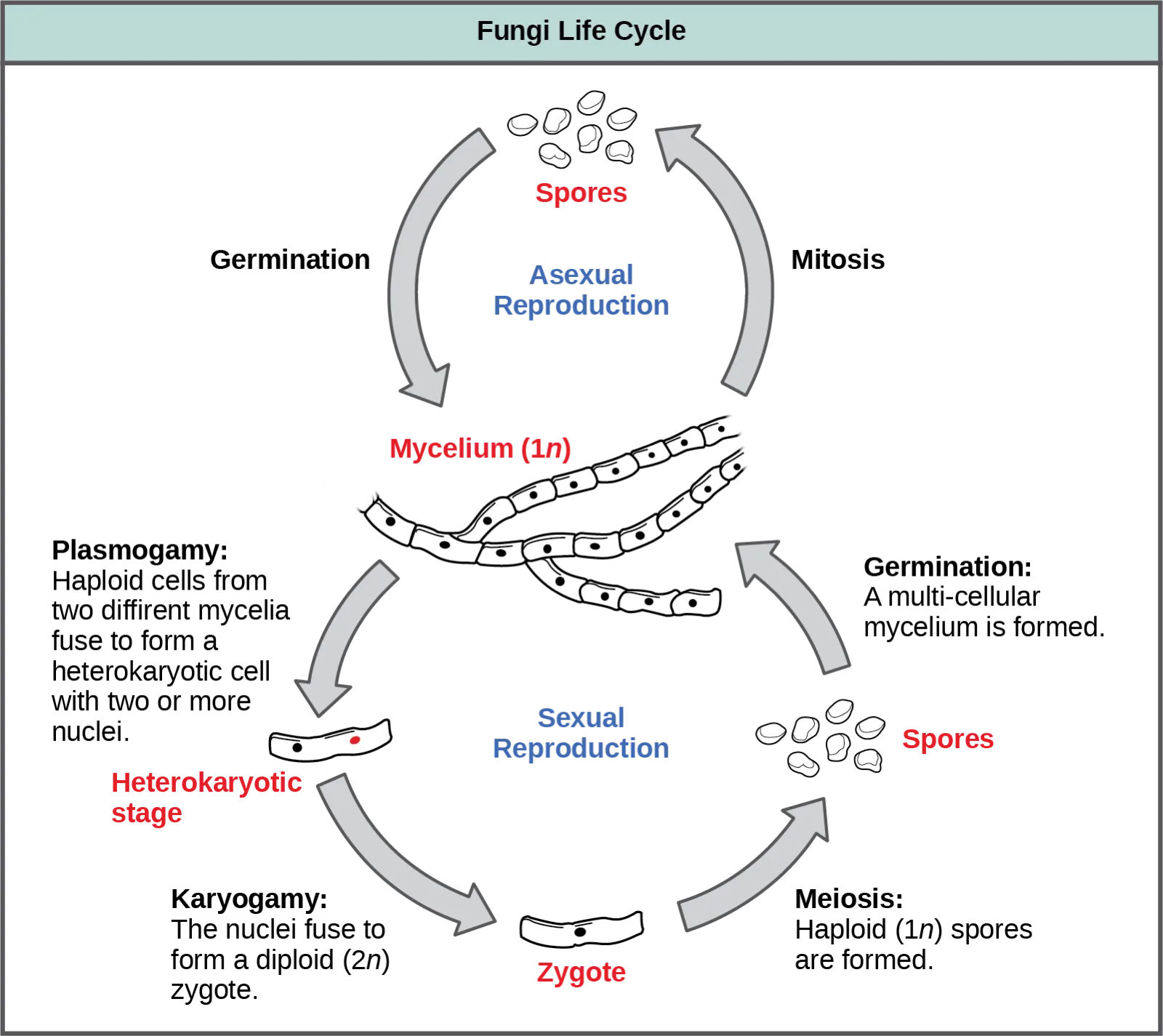
Fungi reproduce sexually and/or asexually. Some fungi reproduce both sexually and asexually, while other fungi reproduce only asexually (by mitosis).
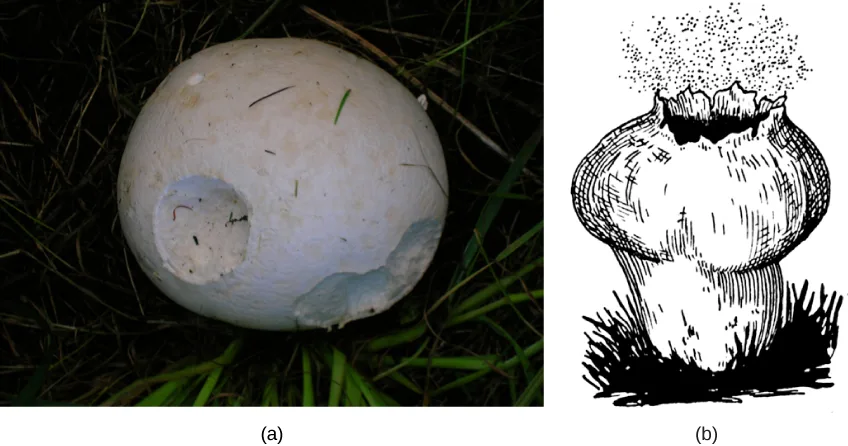
In both sexual and asexual reproduction, fungi produce spores that disperse from the parent organism by either floating on the wind or hitching a ride on an animal. Fungal spores are smaller and lighter than plant seeds. For example, the giant puffball mushroom bursts open and releases trillions of spores in a massive cloud of what looks like finely particulate dust. The huge number of spores released increases the likelihood of landing in an environment that will support growth (pictured below).
Extended description
Panel (a) is a photograph of a smooth, round, off-white puffball resting on dark grass, with two torn openings exposing paler tissue beneath the outer skin. Panel (b) is a pen-and-ink drawing of a puffball drawn as a rounded sac atop a short stalk, both shaded with fine hatched lines; the top of the sac is torn open in a jagged crown, and a scatter of small dots representing spores rises from the opening into the space above the drawing.
Asexual Reproduction
Fungi reproduce asexually by fragmentation, budding, or producing spores. Fragments of hyphae can grow new colonies. Somatic cells in yeast form buds. During budding (an expanded type of cytokinesis), a bulge forms on the side of the cell, the nucleus divides mitotically, and the bud ultimately detaches itself from the mother cell (pictured below).
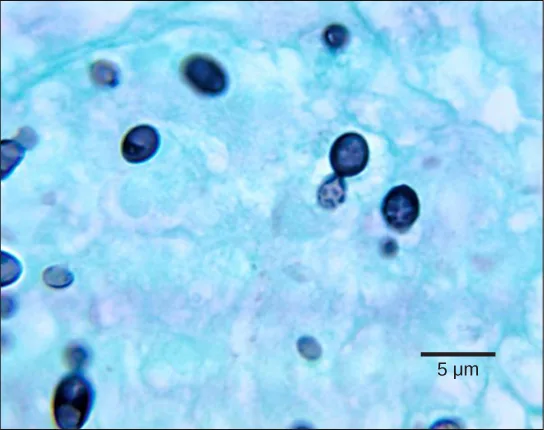
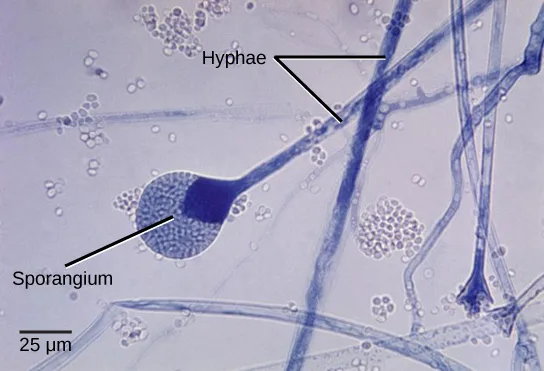
The most common mode of asexual reproduction is through the formation of asexual spores, which are produced by a single individual thallus (through mitosis) and are genetically identical to the parent thallus (pictured below). Spores allow fungi to expand their distribution and colonize new environments. They may be released from the parent thallus either outside or within a special reproductive sac called a sporangium.
Extended description
At the top, a small loop connects a cluster of spores to a drawing of branching, cross-walled hyphae labeled ‘Mycelium (1n)’: an arrow on the right, labeled ‘Mitosis,’ curves up from the mycelium to the spores, and an arrow on the left, labeled ‘Germination,’ curves back down from the spores to the mycelium; the center of this loop is labeled ‘Asexual Reproduction.’ Below the mycelium, a longer loop runs counterclockwise and is labeled ‘Sexual Reproduction’ at its center. An arrow labeled ‘Plasmogamy: Haploid cells from two different mycelia fuse to form a heterokaryotic cell with two or more nuclei’ curves down-left from the mycelium to a short hyphal segment marked with a black dot and a red dot (two nuclei) and labeled ‘Heterokaryotic stage.’ An arrow labeled ‘Karyogamy: The nuclei fuse to form a diploid (2n) zygote’ curves down from there to a hyphal segment with a single black dot, labeled ‘Zygote.’ An arrow labeled ‘Meiosis: Haploid (1n) spores are formed’ curves up-right from the zygote to a second cluster of spores. Finally an arrow labeled ‘Germination: A multi-cellular mycelium is formed’ curves up from those spores back to the mycelium, closing the loop.
There are many types of asexual spores. Conidiospores are unicellular or multicellular spores that are released directly from the tip or side of the hypha. Other asexual spores originate in the fragmentation of a hypha to form single cells that are released as spores; some of these have a thick wall surrounding the fragment. Yet others bud off the vegetative parent cell. In contrast to conidiospores, sporangiospores are produced directly from a sporangium (pictured below).
Sexual Reproduction
Sexual reproduction introduces genetic variation into a population of fungi. In fungi, sexual reproduction often occurs in response to adverse environmental conditions. During sexual reproduction, two mating types are produced. When both mating types are present in the same mycelium, it is called homothallic, or self-fertile. Heterothallic mycelia require two different, but compatible, mycelia to reproduce sexually.
Although there are many variations in fungal sexual reproduction, all include the following three stages (pictured above). First, during plasmogamy (literally, “marriage or union of cytoplasm”), two haploid cells fuse, leading to a dikaryotic stage where two haploid nuclei coexist in a single cell. During karyogamy (“nuclear marriage”), the haploid nuclei fuse to form a diploid zygote nucleus. Finally, meiosis takes place in the gametangia (singular, gametangium) organs, in which gametes of different mating types are generated. At this stage, spores are disseminated into the environment.
Summary
Fungi are eukaryotic organisms that appeared on land more than 450 million years ago, but clearly have an evolutionary history far greater. They are heterotrophs and contain neither photosynthetic pigments such as chlorophyll, nor organelles such as chloroplasts. Fungi that feed on decaying and dead matter are termed saprobes. Fungi are important decomposers that release essential elements into the environment. External enzymes called exoenzymes digest nutrients that are absorbed by the body of the fungus, which is called a thallus. A thick cell wall made of chitin surrounds the cell. Fungi can be unicellular as yeasts, or develop a network of filaments called a mycelium, which is often described as mold. Most species multiply by asexual and sexual reproductive cycles. In one group of fungi, no sexual cycle has been identified. Sexual reproduction involves plasmogamy (the fusion of the cytoplasm), followed by karyogamy (the fusion of nuclei). Following these processes, meiosis generates haploid spores.
Key terms
- coenocytic hypha — single hypha that lacks septa and contains many nuclei
- facultative anaerobes — organisms that can perform both aerobic and anaerobic respiration and can survive in oxygen-rich and oxygen-poor environment
- haustoria — modified hyphae on many parasitic fungi that penetrate the tissues of their hosts, release digestive enzymes, and/or absorb nutrients from the host
- heterothallic — describes when only one mating type is present in an individual mycelium
- homothallic — describes when both mating types are present in mycelium
- hypha — fungal filament composed of one or more cells
- karyogamy — fusion of nuclei
- mycelium — mass of fungal hyphae
- mycology — scientific study of fungi
- mycorrhizae — a mutualistic relationship between a plant and a fungus. Mycorrhizae are connections between fungal hyphae, which provide soil minerals to the plant, and plant roots, which provide carbohydrates to the fungus
- obligate aerobes — organisms, such as humans, that must perform aerobic respiration to survive
- obligate anaerobes — organisms that only perform anaerobic respiration and often cannot survive in the presence of oxygen
- plasmogamy — fusion of cytoplasm
- saprobe — organism that derives nutrients from decaying organic matter; also saprophyte
- septa — cell wall division between hyphae
- sporangium — reproductive sac that contains spores
- spore — a haploid cell that can undergo mitosis to form a multicellular, haploid individual
- thallus — vegetative body of a fungus
- yeast — general term used to describe unicellular fungi
Practice
List the characteristics of fungi
Which polysaccharide is usually found in the cell wall of fungi?
This polysaccharide is also found in the exoskeletons of arthropods such as insects.Which of these organelles is not found in a fungal cell?
This organelle carries the photosynthetic pigments that fungi, like animals, lack.Compare plants, animals, and fungi, considering these components: cell wall, chloroplasts, plasma membrane, food source, and polysaccharide storage. Be sure to indicate fungi’s similarities and differences to plants and animals.
Show model answer
Did your answer mention:
A general term for a unicellular fungus is a ________.
Saccharomyces and Candida are common examples of this kind of unicellular fungus.Fungi that require oxygen to survive, such as humans do, are called ________.
This is the opposite of a fungus that can only respire without oxygen.Describe the composition of the mycelium
The wall dividing individual cells in a fungal filament is called a
This is the cross-wall between individual cells, not the whole filament or the whole mass of filaments.A single fungal filament composed of one or more cells is called a ________.
This structure can be divided into cells by septa, or left undivided as one continuous tube.A single hypha that lacks septa and contains many nuclei is called a ________ hypha.
This kind of hypha has no cross-walls at all, so its many nuclei float freely in one shared cytoplasm.A mass of fungal hyphae is called a ________.
Individual hyphae are microscopic, but a mass of them can be enormous — one specimen in Oregon spans more than 2,000 acres.Describe the mode of nutrition of fungi
Why is the large surface area of the mycelium essential for nutrient acquisition by fungi?
Show model answer
Did your answer mention:
An organism that derives its nutrients from decaying organic matter is called a ________.
Fungi that break down dead wood’s cellulose and lignin play this ecological role.Specialized hyphae that penetrate host tissue, release digestive enzymes, and absorb nutrients in many parasitic fungi are called ________.
Fungi that trap and digest nematodes extend these specialized structures into the worm’s tissue.Explain sexual and asexual reproduction in fungi
During sexual reproduction, a homothallic mycelium contains
The prefix homo- means same — think about what that implies for the mating types present.The life cycles of perfect fungi are most similar to which other organism?
The generalized fungal life cycle spends most of its time in the haploid state, with only a brief diploid zygote stage — think about which organism shares that same pattern.What are the evolutionary advantages for an organism to reproduce both asexually and sexually?
Show model answer
Did your answer mention:
The fusion of cytoplasm from two haploid cells, the first stage of fungal sexual reproduction, is called ________.
Its name literally means marriage or union of cytoplasm.The stage of fungal sexual reproduction in which haploid nuclei fuse to form a diploid zygote nucleus is called ________.
Its name literally means nuclear marriage, and it happens after two cells’ cytoplasm has already fused.This section is adapted from Biology 2e, Section 24.1: Characteristics of Fungi by Mary Ann Clark, Jung Choi, Matthew Douglas, and OpenStax, © OpenStax, licensed under CC BY-NC-SA 4.0. Access the original for free at openstax.org. Changes: figures re-encoded as WebP; two figures (Figure_24_01_04abcf, the septated/coenocytic hyphae drawing, and Figure_24_01_05abf, the puffball) re-kinded from the manifest’s file-extension “photo” guess to “diagram” after inspection, since each pairs a photograph with a drawing that carries the teaching; a longdesc added to those two figures and to the generalized life-cycle diagram (Figure_B24_01_07), whose panel drawings, arrows, and stage labels are not carried by their one-line captions; the nine bare parenthetical figure cross-references with no source link text rendered as “(pictured below)” (eight) and “(pictured above)” (one), since figures are not numbered here; the life-cycle drawing’s own Plasmogamy label is misspelled “diffrent” in the artwork and the longdesc quotes it as “different”; the career note and the interactive note rendered as, respectively, a Career Connection callout and a Link to Learning callout with descriptive link text; the end-of-section Review Questions and Critical Thinking Questions adapted into the closing interactive Practice block (multiple choice and self-check respectively); rubric checkpoints added to each self-check, decomposing its model answer (the source solution) into check-off clauses with no new claims; and nine key-term recall items (yeast, obligate aerobes, hypha, coenocytic hypha, mycelium, saprobe, haustoria, plasmogamy, karyogamy) added from the glossary.