Soil and Plant Nutrition
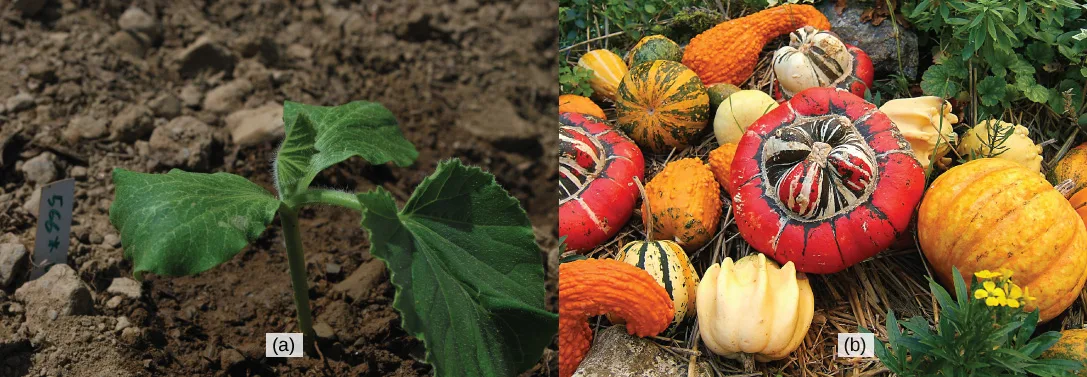
Cucurbitaceae is a family of plants first cultivated in Mesoamerica, although several species are native to North America. The family includes many edible species, such as squash and pumpkin, as well as inedible gourds. In order to grow and develop into mature, fruit-bearing plants, many requirements must be met and events must be coordinated. Seeds must germinate under the right conditions in the soil; therefore, temperature, moisture, and soil quality are important factors that play a role in germination and seedling development. Soil quality and climate are significant to plant distribution and growth. The young seedling will eventually grow into a mature plant, and the roots will absorb nutrients and water from the soil. At the same time, the aboveground parts of the plant will absorb carbon dioxide from the atmosphere and use energy from sunlight to produce organic compounds through photosynthesis. This chapter will explore the complex dynamics between plants and soils, and the adaptations that plants have evolved to make better use of nutritional resources.
Sections
- Nutritional Requirements of Plants — how plants obtain nutrients, the elements and compounds required for proper plant nutrition, and what makes a nutrient essential.
- The Soil — how soils are formed, what soils are composed of, and how a soil profile is structured.
- Nutritional Adaptations of Plants — the nutritional adaptations of plants, mycorrhizae, and nitrogen fixation.
This chapter is adapted from Biology 2e, Chapter 31: Soil and Plant Nutrition by Mary Ann Clark, Jung Choi, Matthew Douglas, and OpenStax, © OpenStax, licensed under CC BY-NC-SA 4.0. Access the original for free at openstax.org. Each section page records its own changes from the source. Changes: the chapter-opening image is the source’s, re-encoded for the web, with its source alt kept since it already says what the two photos show; the source’s own <emphasis> markup (the species name Cucurbita maxima) is italicized per house style.