Plant Reproduction
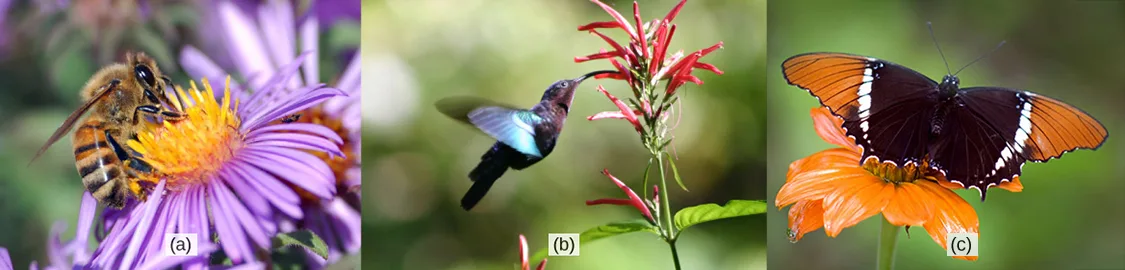
Plants have evolved different reproductive strategies for the continuation of their species. Some plants reproduce sexually, and others asexually, in contrast to animal species, which rely almost exclusively on sexual reproduction. Plant sexual reproduction usually depends on pollinating agents, while asexual reproduction is independent of these agents. Flowers are often the showiest or most strongly scented part of plants. With their bright colors, fragrances, and interesting shapes and sizes, flowers attract insects, birds, and animals to serve their pollination needs. Other plants pollinate via wind or water; still others self-pollinate.
Sections
- Reproductive Development and Structure — the two stages of a plant’s lifecycle, male and female gametophytes and how they form in angiosperms, the reproductive structures of a plant, the components of a complete flower, and the development of microsporangium and megasporangium in gymnosperms.
- Pollination and Fertilization — what must occur for plant fertilization, cross-pollination and the ways it takes place, the process that leads to the development of a seed, and double fertilization.
- Asexual Reproduction — the mechanisms and methods of natural and artificial asexual reproduction, the advantages and disadvantages of each, and plant life spans.
This chapter is adapted from Biology 2e, Chapter 32: Plant Reproduction by Mary Ann Clark, Jung Choi, Matthew Douglas, and OpenStax, © OpenStax, licensed under CC BY-NC-SA 4.0. Access the original for free at openstax.org. Each section page records its own changes from the source. Changes: the chapter-opening image is the source’s, re-encoded for the web, with its source alt kept since it already says what the three photos show.