The Animal Body: Basic Form and Function
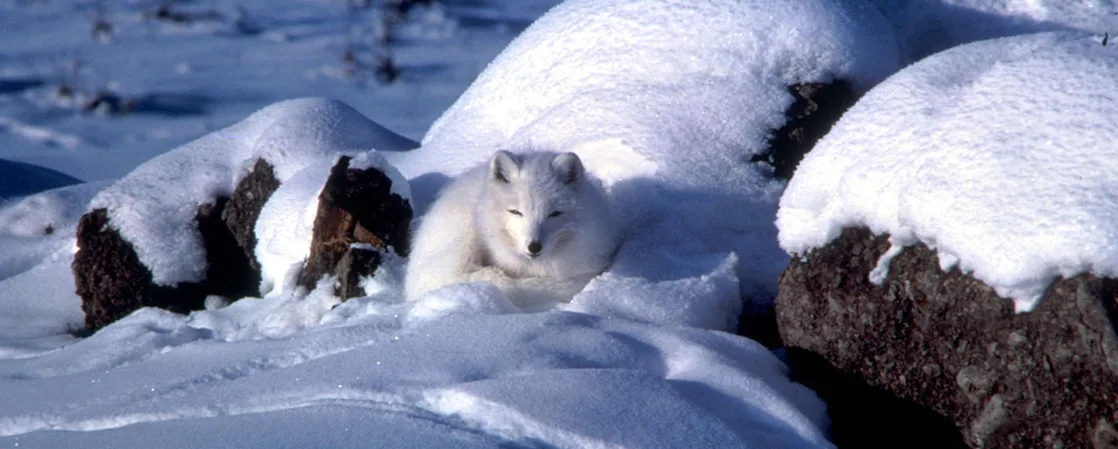
The arctic fox is an example of a complex animal that has adapted to its environment and illustrates the relationships between an animal’s form and function. The structures of animals consist of primary tissues that make up more complex organs and organ systems. Homeostasis allows an animal to maintain a balance between its internal and external environments.
Sections
- Animal Form and Function — the various types of body plans that occur in animals, the limits on animal size and shape, and how bioenergetics relates to body size, levels of activity, and the environment.
- Animal Primary Tissues — epithelial tissues, the different types of connective tissues in animals, the three types of muscle tissues, and nervous tissue.
- Homeostasis — the definition of homeostasis, the factors affecting it, positive and negative feedback mechanisms, and thermoregulation of endothermic and ectothermic animals.
This chapter is adapted from Biology 2e, Chapter 33: The Animal Body: Basic Form and Function by Mary Ann Clark, Jung Choi, Matthew Douglas, and OpenStax, © OpenStax, licensed under CC BY-NC-SA 4.0. Access the original for free at openstax.org. Each section page records its own changes from the source. Changes: the chapter-opening image is the source’s, re-encoded for the web, with its source alt kept since it already says what the photo shows.