Nutrition and Energy Production
By the end of this section, you will be able to:
- Explain why an animal’s diet should be balanced and meet the needs of the body
- Define the primary components of food
- Describe the essential nutrients required for cellular function that cannot be synthesized by the animal body
- Explain how energy is produced through diet and digestion
- Describe how excess carbohydrates and energy are stored in the body
Given the diversity of animal life on our planet, it is not surprising that the animal diet would also vary substantially. The animal diet is the source of materials needed for building DNA and other complex molecules needed for growth, maintenance, and reproduction; collectively these processes are called biosynthesis. The diet is also the source of materials for ATP production in the cells. The diet must be balanced to provide the minerals and vitamins that are required for cellular function.
Food Requirements
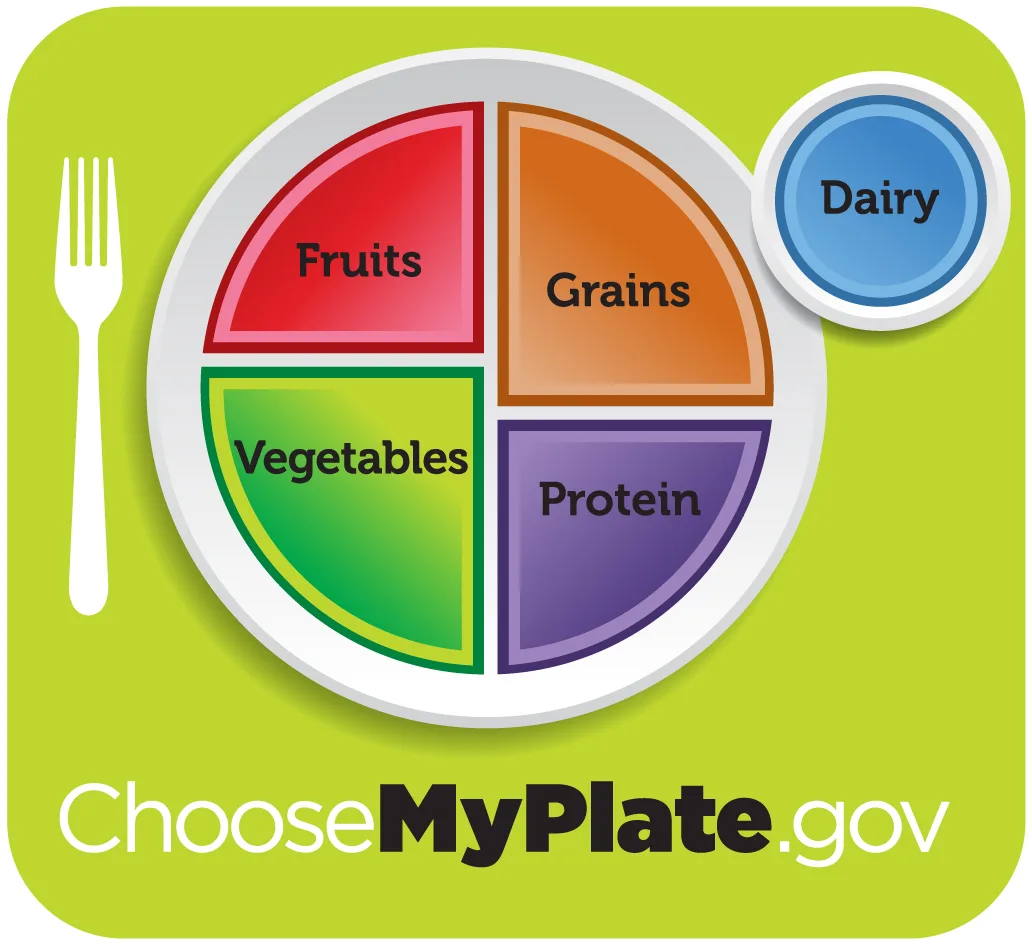
What are the fundamental requirements of the animal diet? The animal diet should be well balanced and provide nutrients required for bodily function and the minerals and vitamins required for maintaining structure and regulation necessary for good health and reproductive capability. These requirements for a human are illustrated graphically below.
Link to Learning
The first step in ensuring that you are meeting the food requirements of your body is an awareness of the food groups and the nutrients they provide. To learn more about each food group and the recommended daily amounts, explore this interactive site by the United States Department of Agriculture.
Everyday Connection
Let’s Move! Campaign
Obesity is a growing epidemic and the rate of obesity among children is rapidly rising in the United States. To combat childhood obesity and ensure that children get a healthy start in life, first lady Michelle Obama has launched the Let’s Move! campaign. The goal of this campaign is to educate parents and caregivers on providing healthy nutrition and encouraging active lifestyles to future generations. This program aims to involve the entire community, including parents, teachers, and healthcare providers to ensure that children have access to healthy foods—more fruits, vegetables, and whole grains—and consume fewer calories from processed foods. Another goal is to ensure that children get physical activity. With the increase in television viewing and stationary pursuits such as video games, sedentary lifestyles have become the norm. Learn more at https://letsmove.obamawhitehouse.archives.gov.
Organic Precursors
The organic molecules required for building cellular material and tissues must come from food. Carbohydrates or sugars are the primary source of organic carbons in the animal body. During digestion, digestible carbohydrates are ultimately broken down into glucose and used to provide energy through metabolic pathways. Complex carbohydrates, including polysaccharides, can be broken down into glucose through biochemical modification; however, humans do not produce the enzyme cellulase and lack the ability to derive glucose from the polysaccharide cellulose. In humans, these molecules provide the fiber required for moving waste through the large intestine and a healthy colon. The intestinal flora in the human gut are able to extract some nutrition from these plant fibers. The excess sugars in the body are converted into glycogen and stored in the liver and muscles for later use. Glycogen stores are used to fuel prolonged exertions, such as long-distance running, and to provide energy during food shortage. Excess glycogen can be converted to fats, which are stored in the lower layer of the skin of mammals for insulation and energy storage. Excess digestible carbohydrates are stored by mammals in order to survive famine and aid in mobility.
Another important requirement is that of nitrogen. Protein catabolism provides a source of organic nitrogen. Amino acids are the building blocks of proteins and protein breakdown provides amino acids that are used for cellular function. The carbon and nitrogen derived from these become the building block for nucleotides, nucleic acids, proteins, cells, and tissues. Excess nitrogen must be excreted as it is toxic. Fats add flavor to food and promote a sense of satiety or fullness. Fatty foods are also significant sources of energy because one gram of fat contains nine calories. Fats are required in the diet to aid the absorption of fat-soluble vitamins and the production of fat-soluble hormones.
Essential Nutrients
While the animal body can synthesize many of the molecules required for function from the organic precursors, there are some nutrients that need to be consumed from food. These nutrients are termed essential nutrients, meaning they must be eaten, and the body cannot produce them.
The omega-3 alpha-linolenic acid and the omega-6 linoleic acid are essential fatty acids needed to make some membrane phospholipids. Vitamins are another class of essential organic molecules that are required in small quantities for many enzymes to function and, for this reason, are considered to be coenzymes. Absence or low levels of vitamins can have a dramatic effect on health, as outlined in the tables below. Both fat-soluble and water-soluble vitamins must be obtained from food. Minerals, listed further below, are inorganic essential nutrients that must be obtained from food. Among their many functions, minerals help in structure and regulation and are considered cofactors. Certain amino acids also must be procured from food and cannot be synthesized by the body. These amino acids are the “essential” amino acids. The human body can synthesize only 11 of the 20 required amino acids; the rest must be obtained from food. The essential amino acids are listed below.
Water-soluble Essential Vitamins
| Vitamin | Function | Deficiencies Can Lead To | Sources |
|---|---|---|---|
| Vitamin B₁ (Thiamine) | Needed by the body to process lipids, proteins, and carbohydrates; coenzyme removes CO₂ from organic compounds | Muscle weakness, Beriberi: reduced heart function, CNS problems | Milk, meat, dried beans, whole grains |
| Vitamin B₂ (Riboflavin) | Takes an active role in metabolism, aiding in the conversion of food to energy (FAD and FMN) | Cracks or sores on the outer surface of the lips (cheilosis); inflammation and redness of the tongue; moist, scaly skin inflammation (seborrheic dermatitis) | Meat, eggs, enriched grains, vegetables |
| Vitamin B₃ (Niacin) | Used by the body to release energy from carbohydrates and to process alcohol; required for the synthesis of sex hormones; component of coenzyme NAD⁺ and NADP⁺ | Pellagra, which can result in dermatitis, diarrhea, dementia, and death | Meat, eggs, grains, nuts, potatoes |
| Vitamin B₅ (Pantothenic acid) | Assists in producing energy from foods (lipids, in particular); component of coenzyme A | Fatigue, numbness or burning sensation in hands and feet | Meat, whole grains, milk, fruits, vegetables |
| Vitamin B₆ (Pyridoxine) | The principal vitamin for processing amino acids and lipids; also helps convert nutrients into energy | Irritability, depression, confusion, mouth sores or ulcers, anemia, muscular twitching | Meat, dairy products, whole grains, orange juice |
| Vitamin B₇ (Biotin) | Used in energy and amino acid metabolism, fat synthesis, and fat breakdown; helps the body use blood sugar | Hair loss, dermatitis, depression, numbness and tingling in the extremities; neuromuscular disorders | Meat, eggs, legumes and other vegetables |
| Vitamin B₉ (Folic acid) | Assists the normal development of cells, especially during fetal development; helps metabolize nucleic and amino acids | Deficiency during pregnancy is associated with birth defects, such as neural tube defects and anemia | Leafy green vegetables, whole wheat, fruits, nuts, legumes |
| Vitamin B₁₂ (Cobalamin) | Maintains healthy nervous system and assists with blood cell formation; coenzyme in nucleic acid metabolism | Anemia, neurological disorders, numbness, loss of balance | Meat, eggs, animal products |
| Vitamin C (Ascorbic acid) | Helps maintain connective tissue: bone, cartilage, and dentin; boosts the immune system | Scurvy, which results in bleeding, hair and tooth loss; joint pain and swelling; delayed wound healing | Citrus fruits, broccoli, tomatoes, red sweet bell peppers |
Fat-soluble Essential Vitamins
| Vitamin | Function | Deficiencies Can Lead To | Sources |
|---|---|---|---|
| Vitamin A (Retinol) | Critical to the development of bones, teeth, and skin; helps maintain eyesight, enhances the immune system, fetal development, gene expression | Night-blindness, skin disorders, impaired immunity | Dark green leafy vegetables, yellow-orange vegetables, fruits, milk, butter |
| Vitamin D | Critical for calcium absorption for bone development and strength; maintains a stable nervous system; maintains a normal and strong heartbeat (Source note: the source row adds “helps in blood clotting,” the function this table’s own vitamin K row assigns to vitamin K) | Rickets, osteomalacia, immunity | Cod liver oil, milk, egg yolk |
| Vitamin E (Tocopherol) | Lessens oxidative damage of cells and prevents lung damage from pollutants; vital to the immune system | Deficiency is rare; anemia, nervous system degeneration | Wheat germ oil, unrefined vegetable oils, nuts, seeds, grains |
| Vitamin K (Phylloquinone) | Essential to blood clotting | Bleeding and easy bruising | Leafy green vegetables, tea |
Minerals and Their Function in the Human Body
| Mineral | Function | Deficiencies Can Lead To | Sources |
|---|---|---|---|
| *Calcium | Needed for muscle and neuron function; heart health; builds bone and supports synthesis and function of blood cells; nerve function | Osteoporosis, rickets, muscle spasms, impaired growth | Milk, yogurt, fish, green leafy vegetables, legumes |
| *Chlorine | Needed for production of hydrochloric acid (HCl) in the stomach and nerve function; osmotic balance | Muscle cramps, mood disturbances, reduced appetite | Table salt |
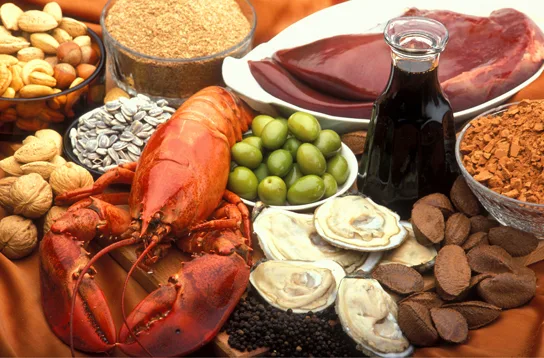
| Copper (trace amounts) | Required component of many redox enzymes, including cytochrome c oxidase; cofactor for hemoglobin synthesis | Copper deficiency is rare | Liver, oysters, cocoa, chocolate, sesame, nuts |
| Iodine | Required for the synthesis of thyroid hormones | Goiter | Seafood, iodized salt, dairy products |
| Iron | Required for many proteins and enzymes, notably hemoglobin, to prevent anemia | Anemia, which causes poor concentration, fatigue, and poor immune function | Red meat, leafy green vegetables, fish (tuna, salmon), eggs, dried fruits, beans, whole grains |
| *Magnesium | Required cofactor for ATP formation; bone formation; normal membrane functions; muscle function | Mood disturbances, muscle spasms | Whole grains, leafy green vegetables |
| Manganese (trace amounts) | A cofactor in enzyme functions; trace amounts are required | Manganese deficiency is rare | Common in most foods |
| Molybdenum (trace amounts) | Acts as a cofactor for three essential enzymes in humans: sulfite oxidase, xanthine oxidase, and aldehyde oxidase | Molybdenum deficiency is rare | |
| *Phosphorus | A component of bones and teeth; helps regulate acid-base balance; nucleotide synthesis | Weakness, bone abnormalities, calcium loss | Milk, hard cheese, whole grains, meats |
| *Potassium | Vital for muscles, heart, and nerve function | Cardiac rhythm disturbance, muscle weakness | Legumes, potato skin, tomatoes, bananas |
| Selenium (trace amounts) | A cofactor essential to activity of antioxidant enzymes like glutathione peroxidase; trace amounts are required | Selenium deficiency is rare | Common in most foods |
| *Sodium | Systemic electrolyte required for many functions; acid-base balance; water balance; nerve function | Muscle cramps, fatigue, reduced appetite | Table salt |
| Zinc (trace amounts) | Required for several enzymes such as carboxypeptidase, liver alcohol dehydrogenase, and carbonic anhydrase | Anemia, poor wound healing, can lead to short stature | Common in most foods |
*Greater than 200mg/day required
Essential Amino Acids
| Amino acids that must be consumed | Amino acids anabolized by the body |
|---|---|
| isoleucine | alanine |
| leucine | selenocysteine |
| lysine | aspartate |
| methionine | cysteine |
| phenylalanine | glutamate |
| tryptophan | glycine |
| valine | proline |
| histidine* | serine |
| threonine | tyrosine |
| arginine* | asparagine |
*The human body can synthesize histidine and arginine, but not in the quantities required, especially for growing children.
Food Energy and ATP
Animals need food to obtain energy and maintain homeostasis. Homeostasis is the ability of a system to maintain a stable internal environment even in the face of external changes to the environment. For example, the normal body temperature of humans is 37 °C (98.6 °F). Humans maintain this temperature even when the external temperature is hot or cold. It takes energy to maintain this body temperature, and animals obtain this energy from food.
The primary source of energy for animals is carbohydrates, mainly glucose. Glucose is called the body’s fuel. The digestible carbohydrates in an animal’s diet are converted to glucose molecules through a series of catabolic chemical reactions.
Adenosine triphosphate, or ATP, is the primary energy currency in cells; ATP stores energy in phosphate ester bonds. ATP releases energy when the phosphodiester bonds are broken and ATP is converted to ADP and a phosphate group. ATP is produced by the oxidative reactions in the cytoplasm and mitochondrion of the cell, where carbohydrates, proteins, and fats undergo a series of metabolic reactions collectively called cellular respiration. For example, glycolysis is a series of reactions in which glucose is converted to pyruvic acid and some of its chemical potential energy is transferred to NADH and ATP.
ATP is required for all cellular functions. It is used to build the organic molecules that are required for cells and tissues; it provides energy for muscle contraction and for the transmission of electrical signals in the nervous system. When the amount of ATP is available in excess of the body’s requirements, the liver uses the excess ATP and excess glucose to produce molecules called glycogen. Glycogen is a polymeric form of glucose and is stored in the liver and skeletal muscle cells. When blood sugar drops, the liver releases glucose from stores of glycogen. Skeletal muscle converts glycogen to glucose during intense exercise. The process of converting glucose and excess ATP to glycogen and the storage of excess energy is an evolutionarily important step in helping animals deal with mobility, food shortages, and famine.
Everyday Connection
Obesity
Obesity is a major health concern in the United States, and there is a growing focus on reducing obesity and the diseases it may lead to, such as type-2 diabetes, cancers of the colon and breast, and cardiovascular disease. How does the food consumed contribute to obesity?
Fatty foods are calorie-dense, meaning that they have more calories per unit mass than carbohydrates or proteins. One gram of carbohydrates has four calories, one gram of protein has four calories, and one gram of fat has nine calories. Animals tend to seek lipid-rich food for their higher energy content.
The signals of hunger (“time to eat”) and satiety (“time to stop eating”) are controlled in the hypothalamus region of the brain. Foods that are rich in fatty acids tend to promote satiety more than foods that are rich only in carbohydrates.
Excess carbohydrate and ATP are used by the liver to synthesize glycogen. The pyruvate produced during glycolysis is used to synthesize fatty acids. When there is more glucose in the body than required, the resulting excess pyruvate is converted into molecules that eventually result in the synthesis of fatty acids within the body. These fatty acids are stored in adipose cells—the fat cells in the mammalian body whose primary role is to store fat for later use.
It is important to note that some animals benefit from obesity. Polar bears and seals need body fat for insulation and to keep them from losing body heat during Arctic winters. When food is scarce, stored body fat provides energy for maintaining homeostasis. Fats prevent famine in mammals, allowing them to access energy when food is not available on a daily basis; fats are stored when a large kill is made or lots of food is available.
Summary
Animal diet should be balanced and meet the needs of the body. Carbohydrates, proteins, and fats are the primary components of food. Some essential nutrients are required for cellular function but cannot be produced by the animal body. These include vitamins, minerals, some fatty acids, and some amino acids. Food intake in more than necessary amounts is stored as glycogen in the liver and muscle cells, and in fat cells. Excess adipose storage can lead to obesity and serious health problems. ATP is the energy currency of the cell and is obtained from the metabolic pathways. Excess carbohydrates and energy are stored as glycogen in the body.
Key terms
- essential nutrient — nutrient that cannot be synthesized by the body; it must be obtained from food.
- mineral — inorganic, elemental molecule that carries out important roles in the body.
- vitamin — organic substance necessary in small amounts to sustain life.
Practice
Explain why an animal’s diet should be balanced and meet the needs of the body
There are several nations where malnourishment is a common occurrence. What may be some of the health challenges posed by malnutrition?
Show model answer
Did your answer mention:
Animal diet should be ________ and meet the needs of the body.
This is the quality a diet needs to provide everything the body requires — not just abundant food, but food proportioned across groups.The diet must be balanced to provide the minerals and vitamins that are required for ________.
This is what minerals and vitamins are ultimately needed for — the ongoing work every one of the body’s cells must carry out.Define the primary components of food
In the 1990s fat-free foods became popular among people trying to lose weight. However, many dieticians now conclude that the fat-free trend made people less healthy and heavier. Describe how this could occur.
Show model answer
Did your answer mention:
During digestion, digestible carbohydrates are ultimately broken down into ________ and used to provide energy through metabolic pathways.
The simple sugar the section later calls the body’s fuel.Carbohydrates, proteins, and fats are the ________ of food.
These three organic molecule classes are what the diet is mostly built from — unlike the essential nutrients, which the body needs only in small quantities.Describe the essential nutrients required for cellular function that cannot be synthesized by the animal body
Which of the following statements is not true?
Re-read the definition of an essential nutrient in this section for what makes it ’essential.'Which of the following is a water-soluble vitamin?
Three of these four options are fat-soluble, listed together in the section’s second vitamin table.What are essential nutrients?
Show model answer
Did your answer mention:
What is the role of minerals in maintaining good health?
Show model answer
Did your answer mention:
A nutrient that cannot be synthesized by the body and must be obtained from food is called an ________.
Vitamins and minerals are both examples of this kind of nutrient.An inorganic, elemental molecule that carries out important roles in the body is called a ________.
Calcium, sodium, and potassium are examples, each obtained from food rather than made by the body.An organic substance necessary in small amounts to sustain life is called a ________.
This class of essential organic molecule acts as a coenzyme and comes in both fat-soluble and water-soluble forms.Sort each vitamin into the category the section lists it under.
Water-soluble
Fat-soluble
Explain how energy is produced through diet and digestion
What is the primary fuel for the body?
This class of molecule is the primary source of energy for animals; the section calls it the body’s fuel.Generally describe how a piece of bread can power your legs as you walk up a flight of stairs.
Show model answer
Did your answer mention:
ATP is the ________ of the cell and is obtained from the metabolic pathways.
This term describes ATP’s role using a financial metaphor — it is what a cell spends to power its activities.Describe how excess carbohydrates and energy are stored in the body
Excess glucose is stored as ________.
This polymeric form of glucose is stored in the liver and skeletal muscle cells for later use.Many distance runners “carb load” the day before a big race. How does this eating strategy provide an advantage to the runner?
Think about where the extra carbohydrates end up overnight, ready to be converted back to glucose during the race.Discuss why obesity is a growing epidemic.
Show model answer
Did your answer mention:
This section is adapted from Biology 2e, Section 34.2: Nutrition and Energy Production by Mary Ann Clark, Jung Choi, Matthew Douglas, and OpenStax, © OpenStax, licensed under CC BY-NC-SA 4.0. Access the original for free at openstax.org. Changes: figures re-encoded as WebP; Figure_B34_02_01 re-kinded from the manifest’s file-extension “photo” guess to “diagram” (a flat plate infographic/logo, not a captured photograph); both figure references in the prose (“illustrated graphically in [link],” “listed in [link]”) rewritten as descriptive references to the figure or table below rather than a print number; the Link to Learning note and both Everyday Connection notes (Let’s Move! Campaign, Obesity) rendered as callouts, each Everyday Connection keeping its bold name followed by its source title in italics; the Let’s Move! note’s link kept pointing at the module’s own openstax.org/l/Letsmove redirect, with the visible link text set to the destination URL the module itself prints as the link’s wording; the four vitamin/mineral/amino-acid tables (34.1–34.4) transcribed in full as Markdown tables, each preceded by its source spanning title row rendered as a bold line (Markdown tables cannot span a header cell across columns); the asterisk footnote below Table 34.3 ("*Greater than 200mg/day required") and below Table 34.4 (the histidine/arginine note) kept as plain text below their tables rather than as a table row, for the same reason; vitamin B-numbers set as Unicode subscripts and NAD/NADP charges as a trailing Unicode superscript, matching the book’s chemical-notation convention; the end-of-section Review Questions and Critical Thinking Questions adapted into the closing interactive Practice block (multiple choice and self-check respectively); rubric checkpoints added to each self-check, decomposing its model answer (the source solution) into check-off clauses with no new claims; three key-term recall items (essential nutrient, mineral, vitamin) added from the glossary; two cloze recall items (balanced; energy currency) and one select-the-term multiple choice (“primary components”) added from the section summary to strengthen the “balanced diet” and “primary components” objectives, which the glossary and exercise sets do not test directly; two local cloze items built strictly from the section’s own sentences — “cellular function” from its opening sentence, to cover the “balanced diet” objective a third time since the module keys only one Critical Thinking question to it, and “glucose” from its digestion sentence, to cover the “primary components” objective a third time; a sortbins exercise added, built from the fat-soluble/water-soluble split across Tables 34.1 and 34.2 (ten of the thirteen listed vitamins, interleaved), per the module’s own category distinction between the two tables. One table cell is corrected with a visible Source note: blood clotting is dropped from the vitamin D row, where the table’s own vitamin K row places it (erratum 441).