The Immune System
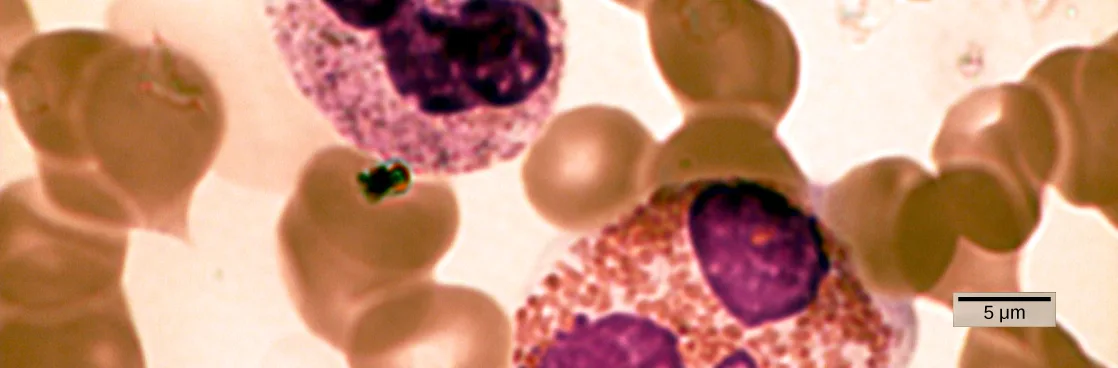
The environment consists of numerous pathogens, which are agents, usually microorganisms, that cause diseases in their hosts. A host is the organism that is invaded and often harmed by a pathogen. Pathogens include bacteria, protists, fungi and other infectious organisms. We are constantly exposed to pathogens in food and water, on surfaces, and in the air. Mammalian immune systems evolved for protection from such pathogens; they are composed of an extremely diverse array of specialized cells and soluble molecules that coordinate a rapid and flexible defense system capable of providing protection from a majority of these disease agents.
Components of the immune system constantly search the body for signs of pathogens. When pathogens are found, immune factors are mobilized to the site of an infection. The immune factors identify the nature of the pathogen, strengthen the corresponding cells and molecules to combat it efficiently, and then halt the immune response after the infection is cleared to avoid unnecessary host cell damage. The immune system can remember pathogens to which it has been exposed to create a more efficient response upon reexposure. This memory can last several decades. Features of the immune system, such as pathogen identification, specific response, amplification, retreat, and remembrance are essential for survival against pathogens. The immune response can be classified as either innate or adaptive. The innate immune response is always present and attempts to defend against all pathogens rather than focusing on specific ones. Conversely, the adaptive immune response stores information about past infections and mounts pathogen-specific defenses.
Key terms
- pathogen — an agent, usually a microorganism, that causes disease in the organisms that it invades.
- host — an organism that is invaded by a pathogen or parasite.
Sections
- Innate Immune Response — physical and chemical immune barriers, immediate and induced innate immune responses, natural killer cells, major histocompatibility complex I molecules, and how the proteins of the complement system destroy extracellular pathogens.
- Adaptive Immune Response — adaptive immunity, how it compares with innate immunity, cell-mediated and humoral immune response, and immune tolerance.
- Antibodies — cross-reactivity, the structure and function of antibodies, and antibody production.
- Disruptions in the Immune System — hypersensitivity and autoimmunity.
This chapter is adapted from Biology 2e, Chapter 42: The Immune System by Mary Ann Clark, Jung Choi, Matthew Douglas, and OpenStax, © OpenStax, licensed under CC BY-NC-SA 4.0. Access the original for free at openstax.org. Each section page records its own changes from the source. Changes: the chapter-opening image is the source’s, re-encoded for the web, with its source alt kept since it already says what the micrograph shows; the introduction’s glossary (pathogen, host) is transcribed as a ## Key terms list, as no other intro module in this book carries one.