Animal Reproduction and Development
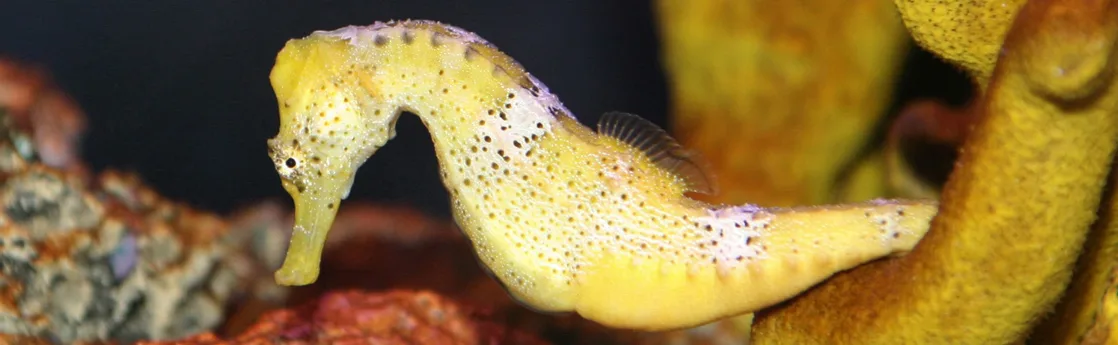
Animal reproduction is necessary for the survival of a species. In the animal kingdom, there are innumerable ways that species reproduce. Asexual reproduction produces genetically identical organisms (clones), whereas in sexual reproduction, the genetic material of two individuals combines to produce offspring that are genetically different from their parents.
Generally, the producers of sperm (the small gamete) are called males, producers of the eggs (the large gamete) are called females. Any other characteristics that may often be associated with sex, such as parental care or sexual behavior, are not universal throughout the animal kingdom. During sexual reproduction the male gamete (sperm) may be placed inside the female’s body for internal fertilization, or the sperm and eggs may be released into the environment for external fertilization. Seahorses, like the one shown above, provide an example of the latter. Following a mating dance, the female lays eggs in the male seahorse’s abdominal brood pouch where they are fertilized. The eggs hatch and the offspring develop in the pouch for several weeks.
Sections
- Reproduction Methods — the advantages and disadvantages of asexual and sexual reproduction, and the methods each uses.
- Fertilization — internal and external fertilization, how animals support offspring development during gestation, and the anatomical adaptations that facilitate reproduction.
- Human Reproductive Anatomy and Gametogenesis — human male and female reproductive anatomy, the human sexual response, and how spermatogenesis and oogenesis compare.
- Hormonal Control of Human Reproduction — the roles of the male and female reproductive hormones, how the ovarian and menstrual cycles interact, and the process of menopause.
- Human Pregnancy and Birth — fetal development across the three trimesters of gestation, labor and delivery, the efficacy and duration of different types of contraception, and the causes of infertility and its therapeutic options.
- Fertilization and Early Embryonic Development — how fertilization occurs, how the zygote develops into an embryo, and the roles of cleavage and gastrulation in animal development.
- Organogenesis and Vertebrate Axis Formation — the process of organogenesis and the anatomical axes formed in vertebrate development.
This chapter is adapted from Biology 2e, Chapter 43: Animal Reproduction and Development by Mary Ann Clark, Jung Choi, Matthew Douglas, and OpenStax, © OpenStax, licensed under CC BY-NC-SA 4.0. Access the original for free at openstax.org. Each section page records its own changes from the source. Changes: the chapter-opening image is the source’s, re-encoded for the web, with its source alt kept since it already says what the photo shows; the source’s in-text figure reference (“the one shown in [Figure 43.1]”) is rendered as “the one shown above” since this site does not number figures.