Threats to Biodiversity
By the end of this section, you will be able to:
- Identify significant threats to biodiversity
- Explain the effects of habitat loss, the introduction of exotic species, and hunting on biodiversity
- Identify the early and predicted effects of climate change on biodiversity
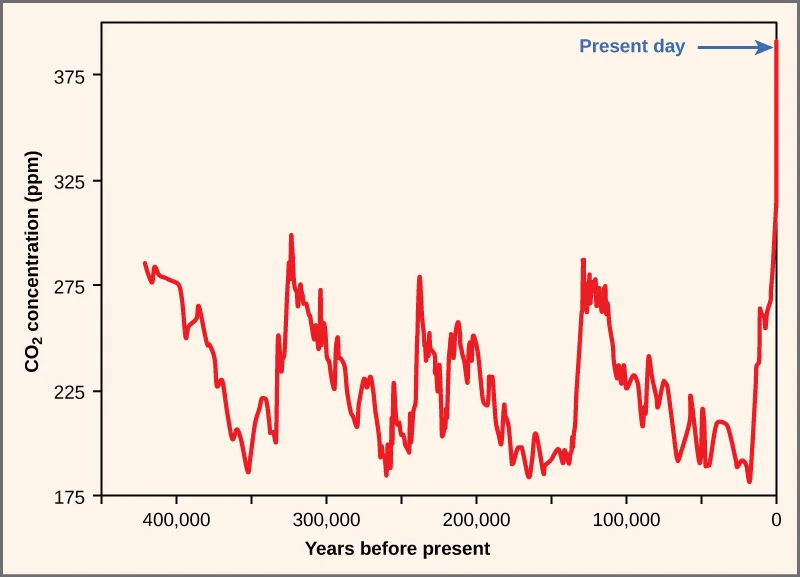
The core threat to biodiversity on the planet, and therefore a threat to human welfare, is the combination of human population growth and resource exploitation. The human population requires resources to survive and grow, and those resources are being removed unsustainably from the environment. The three greatest proximate threats to biodiversity are habitat loss, overharvesting, and the introduction of exotic species. The first two of these are a direct result of human population growth and resource use. The third results from increased mobility and trade. A fourth major cause of extinction, anthropogenic climate change, has not yet had a large impact, but it is predicted to become significant during this century. Global climate change is also a consequence of human population needs for energy and the use of fossil fuels to meet those needs, shown below. Environmental issues, such as toxic pollution, have specific targeted effects on species, but they are not generally seen as threats at the magnitude of the others.
Extended description
The x-axis runs from about 425,000 years before present on the left to 0 (the present) on the right, so time decreases moving rightward; the y-axis is CO₂ concentration in ppm, gridlined at 175, 225, 275, 325, and 375. Reading left to right, the curve completes four broad swings: it opens near 280 ppm, falls to a trough near 190 ppm around 350,000 years ago, rises to the graph’s highest point, about 300 ppm, near 320,000 years ago, then falls to a trough near 190 ppm around 260,000 years ago; it rises again to about 280 ppm near 240,000 years ago and falls to a trough near 185 ppm around 155,000 years ago; it rises to about 290 ppm near 128,000 years ago, then falls and fluctuates mostly between about 190 and 250 ppm for an extended stretch, before dropping to the lowest trough on the graph, about 180 ppm, around 20,000 years ago. From that trough the line climbs sharply, crossing above every earlier peak, to about 395 ppm at the right edge, where a blue arrow labeled “Present day” marks the endpoint.
Habitat Loss
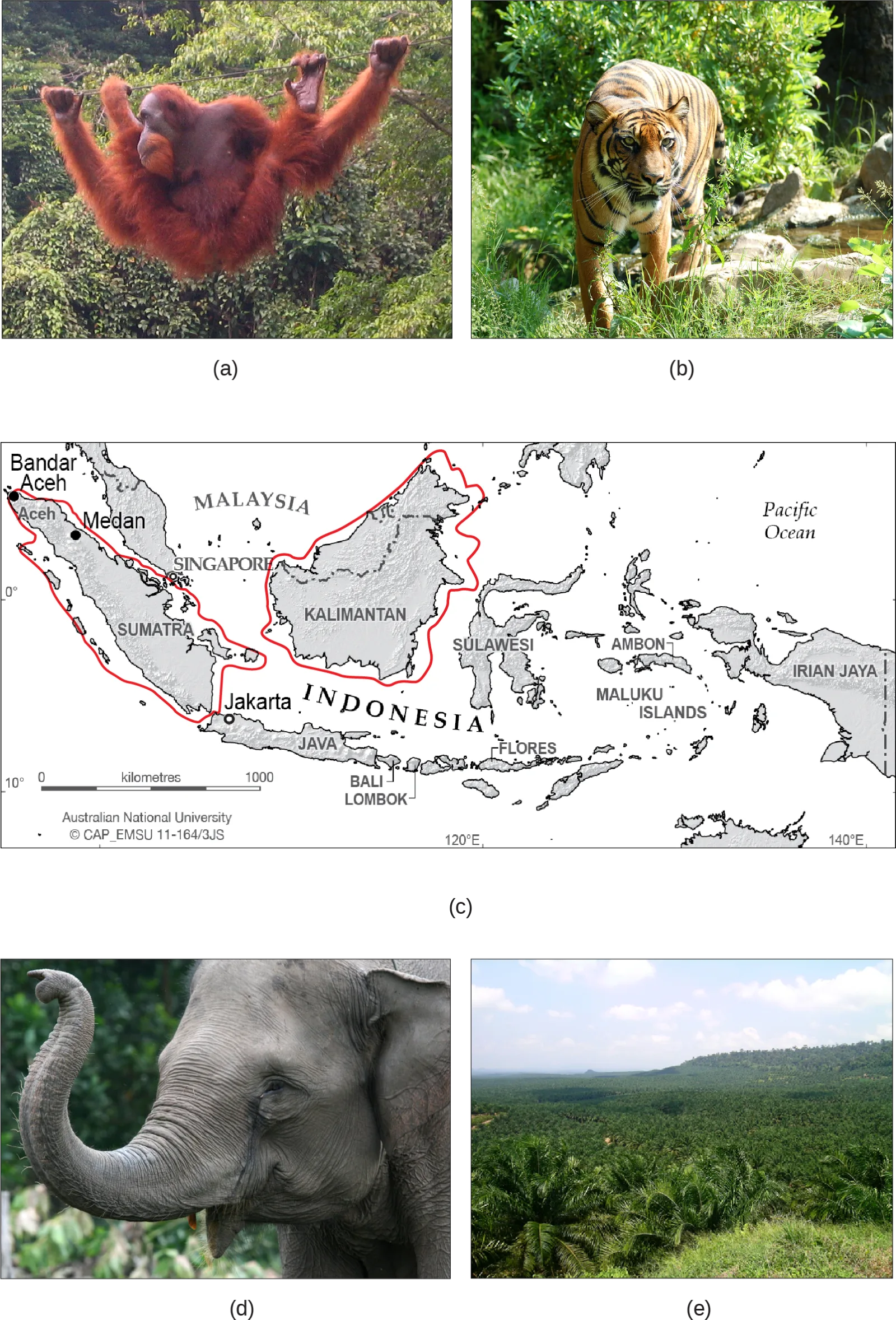
Humans rely on technology to modify their environment and replace certain functions that were once performed by the natural ecosystem. Other species cannot do this. Elimination of their ecosystem—whether it is a forest, a desert, a grassland, a freshwater estuarine, or a marine environment—will kill the individuals belonging to the species. The species will become extinct if we remove the entire habitat within the range of a species. Human destruction of habitats accelerated in the latter half of the twentieth century. Consider the exceptional biodiversity of Sumatra: it is home to one species of orangutan, a species of critically endangered elephant, and the Sumatran tiger, but half of Sumatra’s forest is now gone. The neighboring island of Borneo, home to the other species of orangutan, has lost a similar area of forest. Forest loss continues in protected areas of Borneo. All three species of orangutan are now listed as endangered by the International Union for Conservation of Nature (IUCN), but they are simply the most visible of thousands of species that will not survive the disappearance of the forests in Sumatra and Borneo. The forests are removed for timber and to plant palm oil plantations, shown below. Palm oil is used in many products including food products, cosmetics, and biodiesel in Europe. A five-year estimate of global forest cover loss for the years 2000–2005 was 3.1 percent. In the humid tropics where forest loss is primarily from timber extraction, 272,000 km² was lost out of a global total of 11,564,000 km² (or 2.4 percent). In the tropics, these losses certainly also represent the extinction of species because of high levels of endemism—species unique to a defined geographic location, and found nowhere else.
Everyday Connection. Preventing Habitat Destruction with Wise Wood Choices
Most consumers are not aware that the home improvement products they buy might be contributing to habitat loss and species extinctions. Yet the market for illegally harvested tropical timber is huge, and the wood products often find themselves in building supply stores in the United States. One estimate is that 10 percent of the imported timber stream in the United States, which is the world’s largest consumer of wood products, is potentially illegally logged. In 2006, this amounted to $3.6 billion in wood products. Most of the illegal products are imported from countries that act as intermediaries and are not the originators of the wood.
How is it possible to determine if a wood product, such as flooring, was harvested sustainably or even legally? The Forest Stewardship Council (FSC) certifies sustainably harvested forest products, therefore, looking for their certification on flooring and other hardwood products is one way to ensure that the wood has not been taken illegally from a tropical forest. Certification applies to specific products, not to a producer; some producers’ products may not have certification while other products are certified. While there are other industry-backed certifications other than the FSC, these are unreliable due to lack of independence from the industry. Another approach is to buy domestic wood species. While it would be great if there was a list of legal versus illegal wood products, it is not that simple. Logging and forest management laws vary from country to country; what is illegal in one country may be legal in another. Where and how a product is harvested and whether the forest from which it comes is being maintained sustainably all factor into whether a wood product will be certified by the FSC. If you are in doubt, it is always a good idea to ask questions about where a wood product came from and how the supplier knows that it was harvested legally.
Habitat destruction can affect ecosystems other than forests. Rivers and streams are important ecosystems that are frequently modified through land development, damming, channelizing, or water removal. Damming affects the water flow to all parts of a river, which can reduce or eliminate populations that had adapted to the natural flow of the river. For example, an estimated 91 percent of United States rivers have been altered in some way. Modifications include dams, to create energy or store water; levees, to prevent flooding; and dredging or rerouting, to create land that is more suitable for human development. Many fish and amphibian species and numerous freshwater clams in the United States have seen declines caused by river damming and habitat loss. Habitat destruction, even when undertaken on behalf of humans, can lead to negative effects for us as well. Excessive soil erosion after forest removal, for example, can remove fertile soil and make river water toxic. Scientists and conservationists such as Wangari Maathai, who founded the Green Belt movement in Kenya, focus on replanting trees to repair habitats and prevent damage from deforestation. Maathai was awarded a Nobel Prize for her work, but unfortunately passed away in 2011.
Overharvesting
Overharvesting is a serious threat to many species, but particularly to aquatic (both marine and freshwater) species. Despite regulation and monitoring, there are recent examples of fishery collapse. The western Atlantic cod fishery is the among the most significant. While it was a hugely productive fishery for 400 years, the introduction of modern factory trawlers in the 1980s caused it to become unsustainable. Fisheries collapse as a result of both economic and political factors. Fisheries are managed as a shared international resource even when the fishing territory lies within an individual country’s territorial waters. Common resources are subject to an economic pressure known as the tragedy of the commons, in which essentially no fisher has a motivation to exercise restraint in harvesting a fishery when it is not owned by that fisher. Overexploitation is a common outcome. This overexploitation is exacerbated when access to the fishery is open and unregulated and when technology gives fishers the ability to overfish. In a few fisheries, the biological growth of the resource is less than the potential growth of the profits made from fishing if that time and money were invested elsewhere. In these cases—whales are an example—economic forces will always drive toward fishing the population to extinction.
Link to Learning
Explore a U.S. Fish & Wildlife Service interactive map of critical habitat for endangered and threatened species in the United States. To begin, select “Visit the online mapper.”
For the most part, fishery extinction is not equivalent to biological extinction—the last fish of a species is rarely fished out of the ocean. At the same time, fishery extinction is still harmful to fish species and their ecosystems. There are some instances in which true extinction is a possibility. Whales have slow-growing populations due to low reproductive rates, and therefore are at risk of complete extinction through hunting. There are some species of sharks with restricted distributions that are at risk of extinction. The groupers are another population of generally slow-growing fishes that, in the Caribbean, includes a number of species that are at risk of extinction from overfishing.
Coral reefs are extremely diverse marine ecosystems that face immediate peril from several processes. Reefs are home to 1/3 of the world’s marine fish species—about 4,000 species—despite making up only 1 percent of marine habitat. Most home marine aquaria are stocked with wild-caught organisms, not cultured organisms. Although no species is known to have been driven extinct by the pet trade in marine species, there are studies showing that populations of some species have declined in response to harvesting, indicating that the harvest is not sustainable at those levels. There are concerns about the effect of the pet trade on some terrestrial species such as turtles, amphibians, birds, plants, and even the orangutan.
Link to Learning
View a brief video discussing the role of marine ecosystems in supporting human welfare and the decline of ocean ecosystems.
Bush meat is the generic term used for wild animals killed for food. Hunting is practiced throughout the world, but hunting practices, particularly in equatorial Africa and parts of Asia, are believed to threaten a number of species with extinction. Traditionally, bush meat in Africa was hunted to feed families directly; however, recent commercialization of the practice now has bush meat available in grocery stores, which has increased harvest rates to the level of unsustainability. Additionally, human population growth has increased the need for protein foods that are not being met from agriculture. Species threatened by the bush meat trade are mostly mammals including many primates living in the Congo basin.
Exotic Species
Exotic species are species that have been intentionally or unintentionally introduced into an ecosystem in which they did not evolve. For example, Kudzu (Pueraria lobata), which is native to Japan, was introduced in the United States in 1876. It was later planted for soil conservation. Problematically, it grows too well in the southeastern United States—up to a foot a day. It is now an invasive pest species and covers over 7 million acres in the southeastern United States. If an introduced species is able to survive in its new habitat, that introduction is now reflected in the observed range of the species. Human transportation of people and goods, including the intentional transport of organisms for trade, has dramatically increased the introduction of species into new ecosystems, sometimes at distances that are well beyond the capacity of the species to ever travel itself and outside the range of the species’ natural predators.
Most exotic species introductions probably fail because of the low number of individuals introduced or poor adaptation to the ecosystem they enter. Some species, however, possess pre-adaptations that can make them especially successful in a new ecosystem. These exotic species often undergo dramatic population increases in their new habitat and reset the ecological conditions in the new environment, threatening the species that exist there. For this reason, exotic species are also called invasive species. Exotic species can threaten other species through competition for resources, predation, or disease. For example, the Eurasian star thistle, also called spotted knapweed, has invaded and rendered useless some of the open prairies of the western states. However, it is a great nectar-bearing flower for the production of honey and supports numerous pollinating insects, including migrating monarch butterflies in the north-central states such as Michigan.
Link to Learning
Explore an interactive global database of exotic or invasive species.
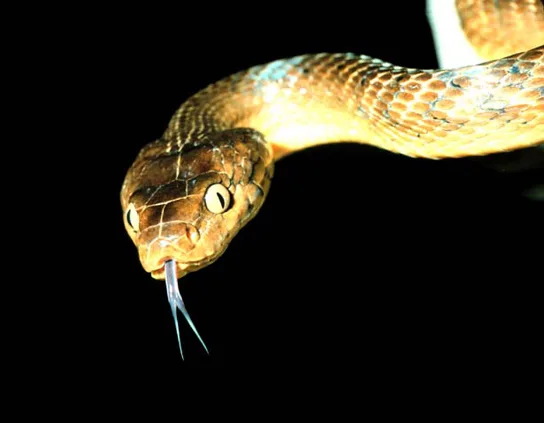
Lakes and islands are particularly vulnerable to extinction threats from introduced species. In Lake Victoria, as mentioned earlier, the intentional introduction of the Nile perch was largely responsible for the extinction of about 200 species of endemic cichlids. The accidental introduction of the brown tree snake via aircraft, shown below, from the Solomon Islands to Guam in 1950 has led to the extinction of three species of birds and three to five species of reptiles endemic to the island. Several other species are still threatened. The brown tree snake is adept at exploiting human transportation as a means to migrate; one was even found on an aircraft arriving in Corpus Christi, Texas. Constant vigilance on the part of airport, military, and commercial aircraft personnel is required to prevent the snake from moving from Guam to other islands in the Pacific, especially Hawaii. Islands do not make up a large area of land on the globe, but they do contain a disproportionate number of endemic species because of their isolation from mainland ancestors.
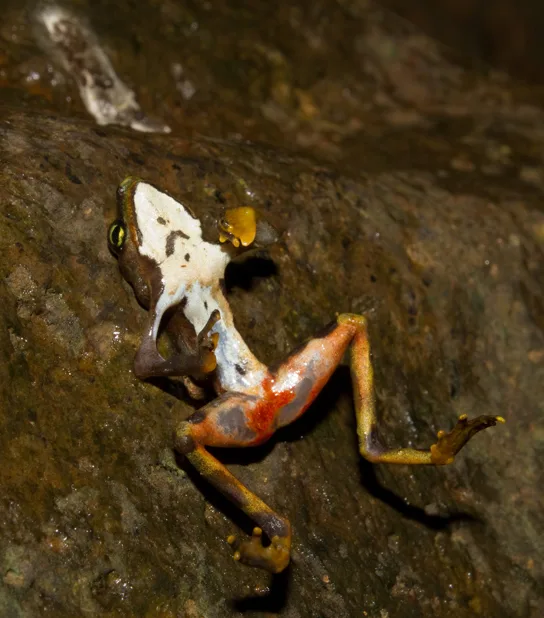
It now appears that the global decline in amphibian species recognized in the 1990s is, in some part, caused by the fungus Batrachochytrium dendrobatidis, which causes the disease chytridiomycosis, shown below. There is evidence that the fungus is native to Africa and may have been spread throughout the world by transport of a commonly used laboratory and pet species: the African clawed toad (Xenopus laevis). It may well be that biologists themselves are responsible for spreading this disease worldwide. The North American bullfrog, Rana catesbeiana, which has also been widely introduced as a food animal but which easily escapes captivity, survives most infections of Batrachochytrium dendrobatidis, and can act as a reservoir for the disease. It also is a voracious predator in freshwater lakes.
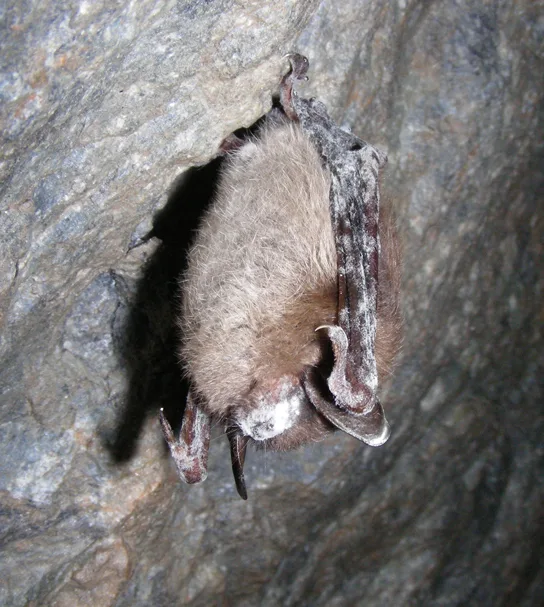
Early evidence suggests that another fungal pathogen, Geomyces destructans, introduced from Europe is responsible for white-nose syndrome, which infects cave-hibernating bats in eastern North America and has spread from a point of origin in western New York State, shown below. The disease has decimated bat populations and threatens extinction of species already listed as endangered: the Indiana bat, Myotis sodalis, and potentially the Virginia big-eared bat, Corynorhinus townsendii virginianus. How the fungus was introduced is unclear, but one logical presumption would be that recreational cavers unintentionally brought the fungus on clothes or equipment from Europe.
Climate Change
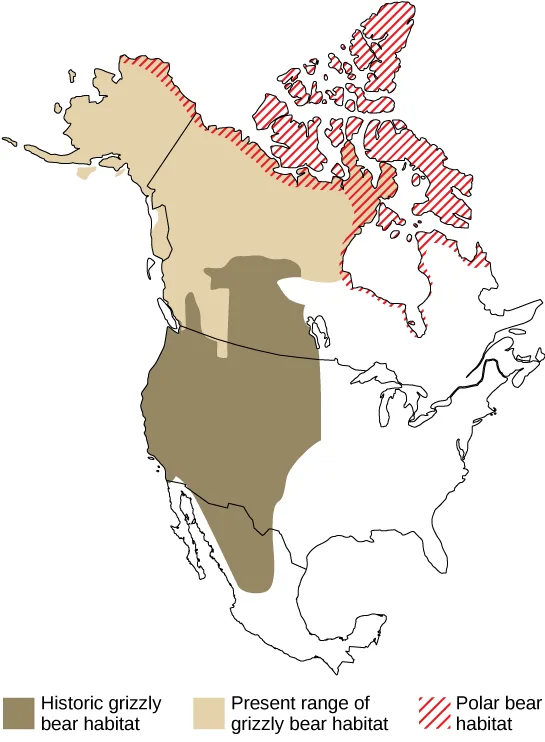
Climate change, and specifically the anthropogenic (meaning, caused by humans) warming trend presently escalating, is recognized as a major extinction threat, particularly when combined with other threats such as habitat loss and the expansion of disease organisms. Scientists disagree about the likely magnitude of the effects, with extinction rate estimates ranging from 15 percent to 40 percent of species destined for extinction by 2050. Scientists do agree, however, that climate change will alter regional climates, including rainfall and snowfall patterns, making habitats less hospitable to the species living in them, in particular, the endemic species. The warming trend will shift colder climates toward the north and south poles, forcing species to move with their adapted climate norms while facing habitat gaps along the way. The shifting ranges will impose new competitive regimes on species as they find themselves in contact with other species not present in their historic range. One such unexpected species contact is between polar bears and grizzly bears. Previously, these two distinct species had separate ranges. Now, their ranges are overlapping and there are documented cases of these two species mating and producing viable offspring, which may or may not be viable crossing back to either parental species. Changing climates also throw off species’ delicate timed adaptations to seasonal food resources and breeding times. Many contemporary mismatches to shifts in resource availability and timing have already been documented.
Extended description
The map’s legend lists three regions: historic grizzly bear range (dark brown), present-day grizzly bear range (tan), and polar bear range (red diagonal hatching). The dark-brown historic range covers the western United States, from the Mexican border north through the Rocky Mountain states into the mid-latitudes of Canada. The tan present-day range encloses that entire historic area and extends much farther north, covering all of Alaska and most of Canada up to the Arctic coastline and islands. The red-hatched polar bear range covers the Canadian Arctic islands and the northern coastline of Alaska and Canada, overlapping the northern edge of the tan present-day grizzly range along that coastline.
Range shifts are already being observed: for example, some European bird species ranges have moved 91 km northward. The same study suggested that the optimal shift based on warming trends was double that distance, suggesting that the populations are not moving quickly enough. Range shifts have also been observed in plants, butterflies, other insects, freshwater fishes, reptiles, and mammals.
Climate gradients will also move up mountains, eventually crowding species higher in altitude and eliminating the habitat for those species adapted to the highest elevations. Some climates will completely disappear. The accelerating rate of warming in the arctic significantly reduces snowfall and the formation of sea ice. Without the ice, species like polar bears cannot successfully hunt seals, which are their only reliable source of food. Sea ice coverage has been decreasing since observations began in the mid-twentieth century, and the rate of decline observed in recent years is far greater than previously predicted.
Finally, global warming will raise ocean levels due to meltwater from glaciers and the greater volume of warmer water. Shorelines will be inundated, reducing island size, which will have an effect on some species, and a number of islands will disappear entirely. Additionally, the gradual melting and subsequent refreezing of the poles, glaciers, and higher elevation mountains—a cycle that has provided freshwater to environments for centuries—will also be jeopardized. This could result in an overabundance of salt water and a shortage of fresh water.
Summary
The core threats to biodiversity are human population growth and unsustainable resource use. To date, the most significant causes of extinctions are habitat loss, introduction of exotic species, and overharvesting. Climate change is predicted to be a significant cause of extinctions in the coming century. Habitat loss occurs through deforestation, damming of rivers, and other disruptive human activities. Overharvesting is a threat particularly to aquatic species, while the taking of bush meat in the humid tropics threatens many species in Asia, Africa, and the Americas. Exotic species have been the cause of a number of extinctions and are especially damaging to islands and lakes. Exotic species’ introductions are increasing damaging native ecosystems around the world because of the increased mobility of human populations and growing global trade and transportation. Climate change is forcing range changes that may lead to extinction. It is also affecting adaptations to the timing of resource availability that negatively affects species in seasonal environments. The impacts of climate change are greatest in the arctic. Global warming will also raise sea levels, eliminating some islands and reducing the area of all others.
Key terms
- bush meat — wild-caught animal used as food (typically mammals, birds, and reptiles); usually referring to hunting in the tropics of sub-Saharan Africa, Asia, and the Americas
- chytridiomycosis — disease of amphibians caused by the fungus Batrachochytrium dendrobatidis; thought to be a major cause of the global amphibian decline
- exotic species — (also, invasive species) species that has been introduced to an ecosystem in which it did not evolve
- tragedy of the commons — economic principle that resources held in common will inevitably be overexploited
- white-nose syndrome — disease of cave-hibernating bats in the eastern United States and Canada associated with the fungus Geomyces destructans
Practice
Identify significant threats to biodiversity
Converting a prairie to a farm field is an example of ________.
This section’s opening paragraph names the elimination of an ecosystem a species depends on as one of the three greatest proximate threats — what happens to that ecosystem when the land itself is converted to a different use?Describe the mechanisms by which human population growth and resource use causes increased extinction rates.
Show model answer
Did your answer mention:
A species that has been intentionally or unintentionally introduced into an ecosystem in which it did not evolve is called a(n) ________.
Organisms of this kind often undergo dramatic population increases in a new environment because they left their natural predators behind — what two-word term does this section use for such organisms?Sort each event described in this section into the threat to biodiversity it illustrates.
Habitat Loss
Overharvesting
Exotic Species
Climate Change
Explain the effects of habitat loss, the introduction of exotic species, and hunting on biodiversity
Which two extinction risks may be a direct result of the pet trade?
One paragraph on aquarium fish and another on turtles, amphibians, and birds both point to the same two mechanisms — taking too many individuals from the wild, and moving them somewhere they do not belong.Exotic species are especially threatening to what kind of ecosystem?
This section explains that this kind of ecosystem holds a disproportionate number of endemic species because of its isolation from mainland ancestors — think about what that isolation means once a new predator or competitor arrives.The generic term for a wild-caught animal used as food, typically referring to hunting in the tropics of sub-Saharan Africa, Asia, and the Americas, is ________.
This section says the practice was traditionally used to feed families directly, before commercialization made it available in grocery stores.The economic principle that resources held in common will inevitably be overexploited is called the ________.
This section applies the idea to a fishery nobody personally owns, where no individual fisher has a reason to hold back.The disease of amphibians caused by the fungus Batrachochytrium dendrobatidis, thought to be a major cause of the global amphibian decline, is called ________.
This section names the African clawed toad as a possible carrier that spread this fungal disease worldwide.The disease of cave-hibernating bats in the eastern United States and Canada associated with the fungus Geomyces destructans is called ________.
This section traces its spread from a point of origin in western New York State, carried unintentionally by cavers.Identify the early and predicted effects of climate change on biodiversity
Explain what extinction threats a frog living on a mountainside in Costa Rica might face.
Show model answer
Did your answer mention:
The Summary states that which of the following threats is predicted to be a significant cause of extinctions in the coming century?
This is the one of the four threats this section says has not yet had a large impact, unlike the other three.According to this section’s Summary, the impacts of climate change are greatest in the ________.
The Summary’s sentence on where climate-change impacts are greatest names one of the two polar regions.This section is adapted from Biology 2e, Section 47.3: Threats to Biodiversity by Mary Ann Clark, Jung Choi, Matthew Douglas, and OpenStax, © OpenStax, licensed under CC BY-NC-SA 4.0. Access the original for free at openstax.org. Changes: six figures re-encoded as WebP; kind set explicitly on every one after looking at the image — two of the manifest’s file-extension guesses were wrong and corrected here (the atmospheric CO₂ line graph and the grizzly/polar-bear range map are both diagrams, not photos, despite being JPEGs), while the five-panel Sumatra/Borneo composite (already guessed diagram because one panel is a map) and the three wildlife photographs (snake, frog, bat) needed no change; a longdesc added to the CO₂ graph, walking its reversed time axis and its four labeled swings between roughly 180 and 300 ppm before the modern rise to about 395 ppm, and to the grizzly/polar-bear map, walking its three-region legend and where the ranges overlap — the other four figures need no longdesc, since their captions already carry what they show; three source alts that opened “Photo shows…” rewritten as plain descriptions of what is visible (the snake, the frog, and the bat), disclosed here rather than as an erratum since these are locally authored accessibility fields; in-text figure pointers (“Figure 47.10” through “Figure 47.14”) replaced with “shown below” or dropped where the source itself carried no inline pointer (the grizzly/polar-bear map), since Hugo does not number figures; the section’s one everyday note and three interactive notes rendered as an Everyday Connection and three Link to Learning callouts, keeping the module’s own openstax.org/l/habitat_map, /l/ocean_matters, and /l/exotic_invasive redirect URLs; the module’s own “Visual Connection Questions” item (fs-idp115769792, keyed B, habitat loss), both Review Questions, and both Critical Thinking Questions adapted into the closing interactive Practice block — the module carries no note class="visual-connection" wrapping that item in the body, so it appears only in Practice, as a plain multiple choice, with no accompanying figure; rubric checkpoints added to each self-check, decomposing its model answer (the source solution) into check-off clauses with no new claims; all five of the section’s glossary terms (bush meat, chytridiomycosis, exotic species, tragedy of the commons, white-nose syndrome) added as key-term recall items, giving this section complete glossary coverage; because the module carries only five glossary terms and five keyed exercises against this book’s floor of three items per objective group and eight per section, three items were written locally and are disclosed here: two summary-built items for the climate-change objective (a select-the-term multiple choice naming climate change as the threat the Summary predicts will become significant, with the section’s other three named threats as distractors, and a cloze text-recall on the Summary’s own sentence that its impacts are greatest in the arctic), and a sort-into-bins exercise assigning eight of the section’s own sentences (two per threat) to the threat each one illustrates — several of those eight sentences were reworded in one to three words each (dropping or replacing “species,” “harvest,” and “habitat”) solely to avoid printing a bin’s own label word on an item, with no change to the fact each sentence reports.