An Invisible World
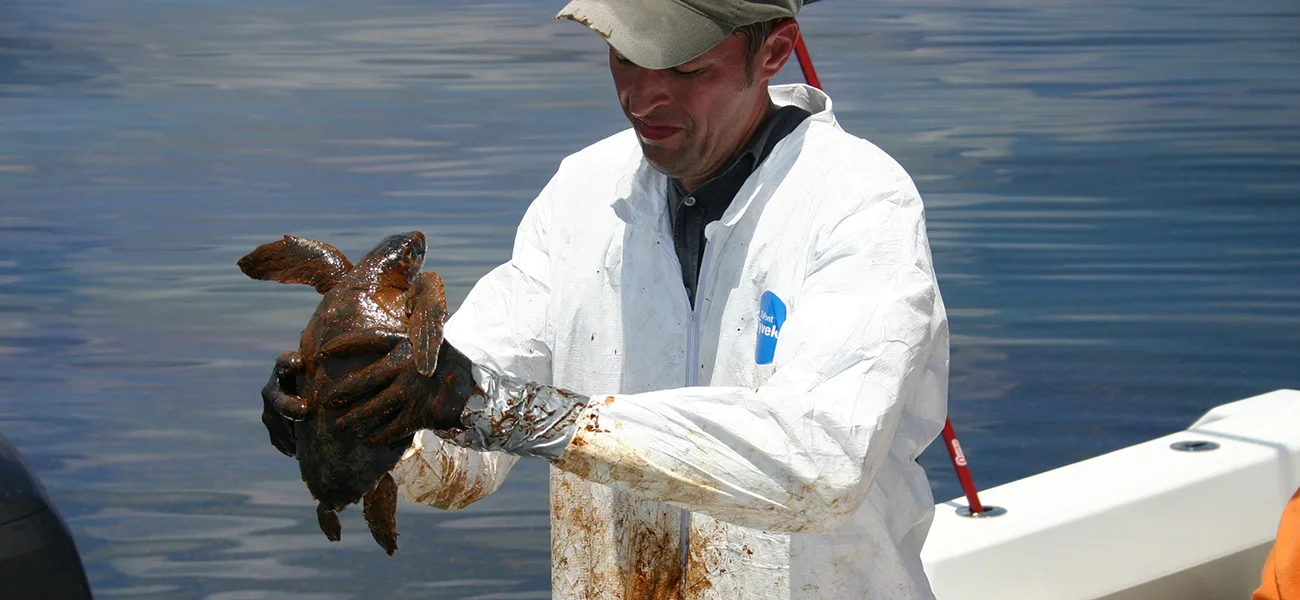
From boiling thermal hot springs to deep beneath the Antarctic ice, microorganisms can be found almost everywhere on earth in great quantities. Microorganisms (or microbes, as they are also called) are small organisms. Most are so small that they cannot be seen without a microscope.
Most microorganisms are harmless to humans and, in fact, many are helpful. They play fundamental roles in ecosystems everywhere on earth, forming the backbone of many food webs. People use them to make biofuels, medicines, and even foods. Without microbes, there would be no bread, cheese, or beer. Our bodies are filled with microbes, and our skin alone is home to trillions of them. Some of them we can’t live without; others cause diseases that can make us sick or even kill us.
Although much more is known today about microbial life than ever before, the vast majority of this invisible world remains unexplored. Microbiologists continue to identify new ways that microbes benefit and threaten humans.
Sections
- What Our Ancestors Knew — how prehistoric and ancient peoples used microbes to make fermented foods, how they explained and contained disease before anyone could see a microbe, and the events from Leeuwenhoek’s microscope to the Golden Age of Microbiology that made microbiology a science.
- A Systematic Approach — taxonomy and classification, the trees of life from Linnaeus through Haeckel and Whittaker to Woese and Fox’s three domains, binomial nomenclature, and Bergey’s manuals.
- Types of Microorganisms — bacteria, archaea, protists, fungi, helminths, and viruses, their defining characteristics and relative sizes, and the subfields of microbiology that study them.
This chapter is adapted from Microbiology, Chapter 1: An Invisible World by Nina Parker, Mark Schneegurt, Anh-Hue Thi Tu, Philip Lister, Brian M. Forster, and OpenStax, © OpenStax, licensed under CC BY-NC-SA 4.0. Access the original for free at openstax.org. Each section page records its own changes from the source. Changes: the chapter-opening photograph is the source’s, re-encoded for the web with its credit kept in the caption and its alt text rewritten to describe what the photograph shows.