Archaea
By the end of this section, you will be able to:
- Describe the unique features of each category of Archaea
- Explain why archaea might not be associated with human microbiomes or pathology
- Give common examples of archaea commonly associated with unique environmental habitats
Like organisms in the domain Bacteria, organisms of the domain Archaea are all unicellular organisms. However, archaea differ structurally from bacteria in several significant ways, as discussed in Unique Characteristics of Prokaryotic Cells. To summarize:
- The archaeal cell membrane is composed of ether linkages with branched isoprene chains (as opposed to the bacterial cell membrane, which has ester linkages with unbranched fatty acids).
- Archaeal cell walls lack peptidoglycan, but some contain a structurally similar substance called pseudopeptidoglycan or pseudomurein.
- The genomes of Archaea are larger and more complex than those of bacteria.
Domain Archaea is as diverse as domain Bacteria, and its representatives can be found in any habitat. Some archaea are mesophiles, and many are extremophiles, preferring extreme hot or cold, extreme salinity, or other conditions that are hostile to most other forms of life on earth. Their metabolism is adapted to the harsh environments, and they can perform methanogenesis, for example, which bacteria and eukaryotes cannot.
The size and complexity of the archaeal genome makes it difficult to classify. Most taxonomists agree that within the Archaea, there are currently five major phyla: Crenarchaeota, Euryarchaeota, Korarchaeota, Nanoarchaeota, and Thaumarchaeota. There are likely many other archaeal groups that have not yet been systematically studied and classified.
With few exceptions, archaea are not present in the human microbiota, and none are currently known to be associated with infectious diseases in humans, animals, plants, or microorganisms. However, many play important roles in the environment and may thus have an indirect impact on human health.
Crenarchaeota
Crenarchaeota is a class of Archaea that is extremely diverse, containing genera and species that differ vastly in their morphology and requirements for growth. All Crenarchaeota are aquatic organisms, and they are thought to be the most abundant microorganisms in the oceans. Most, but not all, Crenarchaeota are hyperthermophiles; some of them (notably, the genus Pyrolobus) are able to grow at temperatures up to 113 °C (E. Blochl et al., “Pyrolobus fumani, gen. and sp. nov., represents a novel group of Archaea, extending the upper temperature limit for life to 113 °C,” Extremophiles 1 [1997]: 14–21).
Archaea of the genus Sulfolobus are thermophiles that prefer temperatures around 70–80°C and acidophiles that prefer a pH of 2–3 (T.D. Brock et al., “Sulfolobus: A New Genus of Sulfur-Oxidizing Bacteria Living at Low pH and High Temperature,” Archiv für Mikrobiologie 84, no. 1 [1972]: 54–68). Sulfolobus can live in aerobic or anaerobic environments. In the presence of oxygen, Sulfolobus spp. use metabolic processes similar to those of heterotrophs. In anaerobic environments, they oxidize sulfur to produce sulfuric acid, which is stored in granules. Sulfolobus spp. are used in biotechnology for the production of thermostable and acid-resistant proteins called affitins (S. Pacheco et al., “Affinity Transfer to the Archaeal Extremophilic Sac7d Protein by Insertion of a CDR,” Protein Engineering Design and Selection 27, no. 10 [2014]: 431–438). Affitins can bind and neutralize various antigens (molecules found in toxins or infectious agents that provoke an immune response from the body).
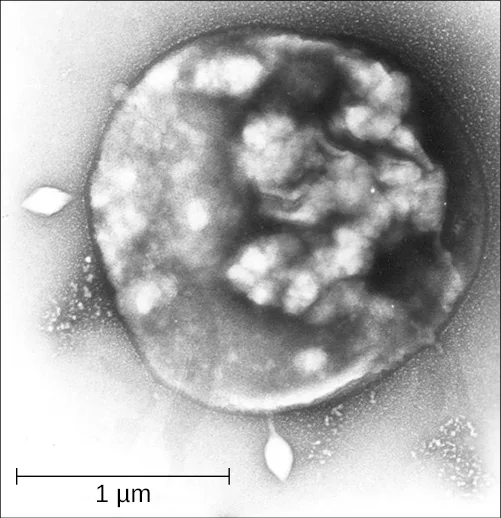
Another genus, Thermoproteus, is represented by strictly anaerobic organisms with an optimal growth temperature of 85 °C. They have flagella and, therefore, are motile. Thermoproteus has a cellular membrane in which lipids form a monolayer rather than a bilayer, which is typical for archaea. Its metabolism is autotrophic. To synthesize ATP, Thermoproteus spp. reduce sulfur or molecular hydrogen and use carbon dioxide or carbon monoxide as a source of carbon. Thermoproteus is thought to be the deepest-branching genus of Archaea, and thus is a living example of some of our planet’s earliest forms of life.
Check Your Understanding
What types of environments do Crenarchaeota prefer?
Show model answer
Did your answer mention:
Euryarchaeota
The phylum Euryarchaeota includes several distinct classes. Species in the classes Methanobacteria, Methanococci, and Methanomicrobia represent Archaea that can be generally described as methanogens. Methanogens are unique in that they can reduce carbon dioxide in the presence of hydrogen, producing methane. They can live in the most extreme environments and can reproduce at temperatures varying from below freezing to boiling. Methanogens have been found in hot springs as well as deep under ice in Greenland. Methanogens also produce gases in ruminants and humans. Some scientists have even hypothesized that methanogens may inhabit the planet Mars because the mixture of gases produced by methanogens resembles the makeup of the Martian atmosphere (R.R. Britt, “Crater Critters: Where Mars Microbes Might Lurk,” accessed April 7, 2015).
The class Halobacteria (which was named before scientists recognized the distinction between Archaea and Bacteria) includes halophilic (“salt-loving”) archaea. Halobacteria require a very high concentration of sodium chloride in their aquatic environment. The required concentration is close to saturation, at 36%; such environments include the Dead Sea as well as some salty lakes in Antarctica and south-central Asia. One remarkable feature of these organisms is that they perform photosynthesis using the protein bacteriorhodopsin, which gives them, and the bodies of water they inhabit, a beautiful purple color.
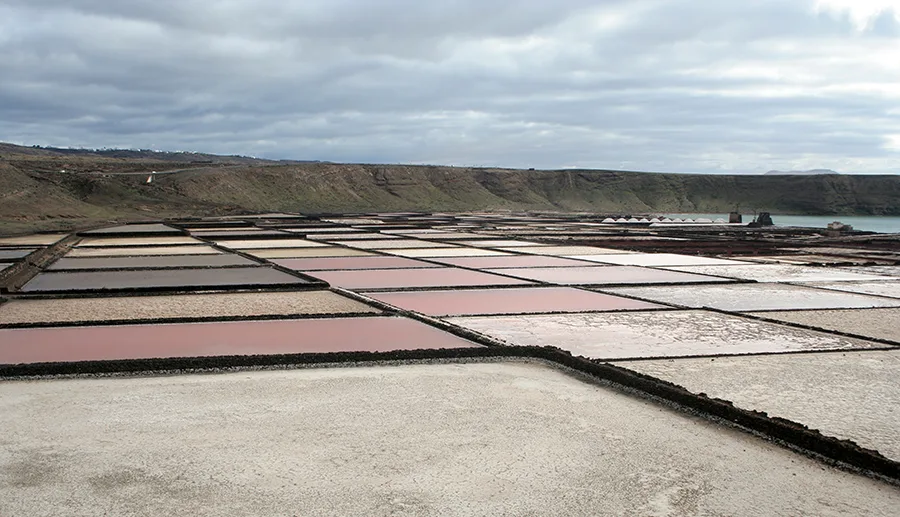
Notable species of Halobacteria include Halobacterium salinarum, which may be the oldest living organism on earth; scientists have isolated its DNA from fossils that are 250 million years old (H. Vreeland et al., “Fatty Acid and DNA Analyses of a Permian Bacterium Isolated from Ancient Salt Crystals Reveal Differences with Their Modern Relatives,” Extremophiles 10 [2006]: 71–78). Another species, Haloferax volcanii, shows a very sophisticated system of ion exchange, which enables it to balance the concentration of salts at high temperatures.
Check Your Understanding
Where do Halobacteria live?
Look for the required salt condition and the named water environments, rather than an organism’s temperature range.Micro Connection. Finding a Link Between Archaea and Disease
Archaea are not known to cause any disease in humans, animals, plants, bacteria, or in other archaea. Although this makes sense for the extremophiles, not all archaea live in extreme environments. Many genera and species of Archaea are mesophiles, so they can live in human and animal microbiomes, although they rarely do. As we have learned, some methanogens exist in the human gastrointestinal tract. Yet we have no reliable evidence pointing to any archaean as the causative agent of any human disease.
Still, scientists have attempted to find links between human disease and archaea. For example, in 2004, Lepp et al. presented evidence that an archaean called Methanobrevibacter oralis inhabits the gums of patients with periodontal disease. The authors suggested that the activity of these methanogens causes the disease (P.W. Lepp et al., “Methanogenic Archaea and Human Gum Disease,” Proceedings of the National Academies of Science of the United States of America 101, no. 16 [2004]: 6176–6181). However, it was subsequently shown that there was no causal relationship between M. oralis and periodontitis. It seems more likely that periodontal disease causes an enlargement of anaerobic regions in the mouth that are subsequently populated by M. oralis (R.I. Aminov, “Role of Archaea in Human Disease,” Frontiers in Cellular and Infection Microbiology 3 [2013]: 42).
There remains no good answer as to why archaea do not seem to be pathogenic, but scientists continue to speculate and hope to find the answer.
Summary
- Archaea are unicellular, prokaryotic microorganisms that differ from bacteria in their genetics, biochemistry, and ecology.
- Some archaea are extremophiles, living in environments with extremely high or low temperatures, or extreme salinity.
- Only archaea are known to produce methane. Methane-producing archaea are called methanogens.
- Halophilic archaea prefer a concentration of salt close to saturation and perform photosynthesis using bacteriorhodopsin.
- Some archaea, based on fossil evidence, are among the oldest organisms on earth.
- Archaea do not live in great numbers in human microbiomes and are not known to cause disease.
Key terms
- Archaea — domain of life separate from the domains Bacteria and Eukarya.
- methanogens — microorganism that produces gaseous methane.
Practice
Describe the unique features of each category of Archaea
Archaea and Bacteria are most similar in terms of their ________.
Compare the shared cellular organization with the differences in genetics, cell walls, and ecology summarized at the start of the section.________ is a genus of Archaea with an optimal environmental temperature of 70 °C to 80 °C and an optimal pH of 2–3; it oxidizes sulfur and produces sulfuric acid.
Use the genus described as both thermophilic and acidophilic in the Crenarchaeota section.Which statement correctly describes Thermoproteus?
Combine its stated oxygen requirement, growth temperature, and membrane organization.Explain why archaea might not be associated with human microbiomes or pathology
________ was once thought to be the cause of periodontal disease, but the causal relationship was not confirmed.
Use the named archaean found in the gums of patients with periodontal disease.What accounts for the purple color in salt ponds inhabited by halophilic archaea?
Identify the protein tied to both their light-using metabolism and the pond color.What evidence supports the hypothesis that some archaea live on Mars?
Compare the stated products of methane-producing archaea with the atmospheric evidence named in the Euryarchaeota section.Give common examples of archaea commonly associated with unique environmental habitats
Which statement is true of archaea that produce methane?
Use the environmental range stated for these organisms, not a claim about Mars or a replacement of hydrogen with another reactant.Which archaeal genus can grow at temperatures up to 113 °C?
Look for the genus named as an example of a Crenarchaeota hyperthermophile.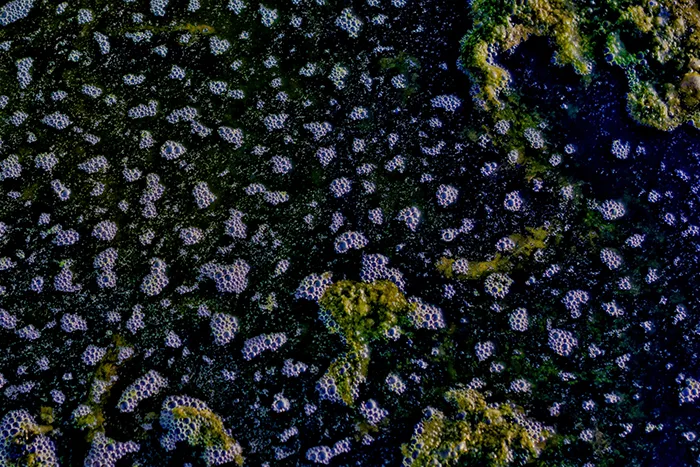
What is the connection between this methane bog and archaea?
Show model answer
Did your answer mention:
This section is adapted from Microbiology, Section 4.6: Archaea by Nina Parker, Mark Schneegurt, Anh-Hue Thi Tu, Philip Lister, Brian M. Forster, and OpenStax, © OpenStax, licensed under CC BY-NC-SA 4.0. Access the original for free at openstax.org. Changes: all three source figures re-encoded as WebP and rendered as mediafigures after image and PDF inspection, with explicit kind="photo"; alts rewritten from the incomplete or inaccurate source alts, including correction of ‘mircrograph’ and ‘diamond-shpaed’ in the Sulfolobus alt and the Art Connection image, and its credit-only source caption expanded to describe the visible methane-bog bubbles without naming the answer to the paired item; the Critical Thinking Art Connection figure appears immediately above its Practice self-check; the Micro Connection feature box rendered as a callout; source footnotes rendered as inline parenthetical citations, with the bare access URL in the Mars citation removed; same-module figure references rendered as describing prose and the cross-reference to Section 3.3 linked to its local page; the two source Multiple Choice and two Fill in the Blank items adapted into Practice, and the two unkeyed Short Answer questions adapted into multiple-choice items from one named module sentence; the unkeyed Art Connection Critical Thinking item remains a self-check with a model answer and rubric assembled only from this module’s methanogen sentence; two author-written multiple-choice items, on Thermoproteus and Pyrolobus, are built strictly from this module’s text to provide three items per objective; the Crenarchaeota Check Your Understanding question remains a body self-check from its preceding text, while the Halobacteria question becomes a body multiple-choice from one paragraph; key terms compiled from the module’s two defined terms and the book’s Glossary appendix, with both definitions taken directly from the Glossary and the capitalized domain sense selected for Archaea. The Halobacteria paragraph and caption’s agreement errors are corrected, and its citation title’s “DA” is corrected to “DNA” with the remaining title capitalization normalized to the cited article. No source exercise was omitted. The methanogen multiple-choice item’s distractor “They are always anaerobes” is replaced with a false statement about bacteriorhodopsin, because this book’s Section 9.2 caption of the bog-and-rumen figure calls methanogens obligate anaerobes, which made that distractor a second correct option (erratum 373).