The Viral Life Cycle
By the end of this section, you will be able to:
- Describe the lytic and lysogenic life cycles
- Describe the replication process of animal viruses
- Describe unique characteristics of retroviruses and latent viruses
- Discuss human viruses and their virus-host cell interactions
- Explain the process of transduction
- Describe the replication process of plant viruses
All viruses depend on cells for reproduction and metabolic processes. By themselves, viruses do not encode for all of the enzymes necessary for viral replication. But within a host cell, a virus can commandeer cellular machinery to produce more viral particles. Bacteriophages replicate only in the cytoplasm, since prokaryotic cells do not have a nucleus or organelles. In eukaryotic cells, most DNA viruses can replicate inside the nucleus, with an exception observed in the large DNA viruses, such as the poxviruses, that can replicate in the cytoplasm. With a few exceptions, RNA viruses that infect animal cells replicate in the cytoplasm. An important exception that will be highlighted later is Influenza virus.
The Life Cycle of Viruses with Prokaryote Hosts
The life cycle of bacteriophages has been a good model for understanding how viruses affect the cells they infect, since similar processes have been observed for eukaryotic viruses, which can cause immediate death of the cell or establish a latent or chronic infection. virulent phages typically lead to the death of the cell through cell lysis. temperate phages, on the other hand, can become part of a host chromosome and are replicated with the cell genome until such time as they are induced to make newly assembled viruses, or progeny viruses.
The Lytic Cycle
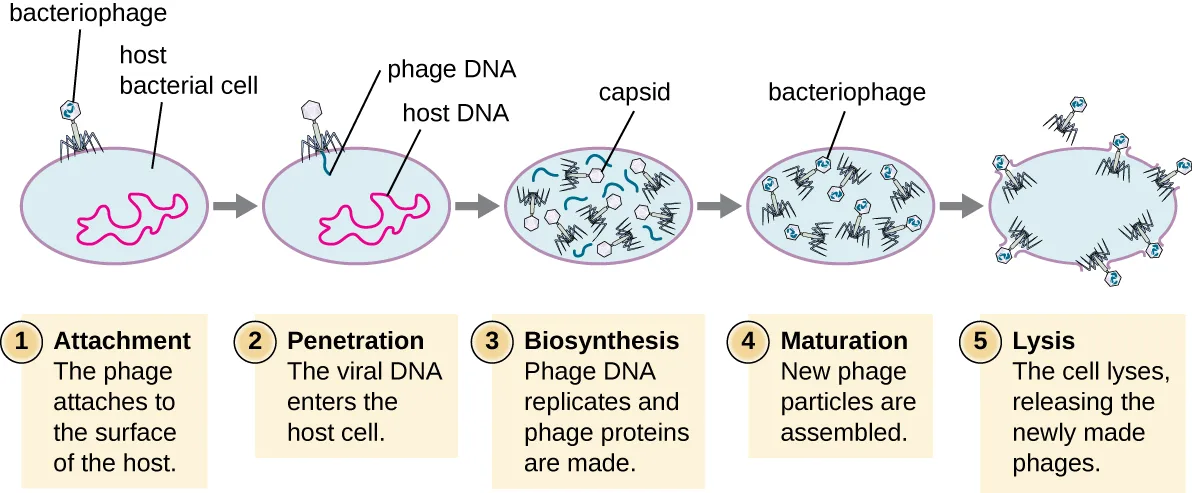
During the lytic cycle of virulent phage, the bacteriophage takes over the cell, reproduces new phages, and destroys the cell. T-even phage is a good example of a well-characterized class of virulent phages. There are five stages in the bacteriophage lytic cycle (see the figure below). attachment is the first stage in the infection process in which the phage interacts with specific bacterial surface receptors (e.g., lipopolysaccharides and OmpC protein on host surfaces). Most phages have a narrow host range and may infect one species of bacteria or one strain within a species. This unique recognition can be exploited for targeted treatment of bacterial infection by phage therapy or for phage typing to identify unique bacterial subspecies or strains. The second stage of infection is entry or penetration. This occurs through contraction of the tail sheath, which acts like a hypodermic needle to inject the viral genome through the cell wall and membrane. The phage head and remaining components remain outside the bacteria.
Extended description
The five panels are labelled by stage: (1) Attachment — the phage attaches to the surface of the host. (2) Penetration — the viral DNA enters the host cell. (3) Biosynthesis — the phage DNA replicates and phage proteins are made. (4) Maturation — the new phage particles are assembled. (5) Lysis — the cell lyses and the newly made phages are released.
The third stage of infection is biosynthesis of new viral components. After entering the host cell, the virus synthesizes virus-encoded endonucleases to degrade the bacterial chromosome. It then hijacks the host cell to replicate, transcribe, and translate the necessary viral components (capsomeres, sheath, base plates, tail fibers, and viral enzymes) for the assembly of new viruses. Polymerase genes are usually expressed early in the cycle, while capsid and tail proteins are expressed later. During the maturation phase, new virions are created. To liberate free phages, the bacterial cell wall is disrupted by phage proteins such as holin or lysozyme. The final stage is release. Mature viruses burst out of the host cell in a process called lysis and the progeny viruses are liberated into the environment to infect new cells.
The Lysogenic Cycle
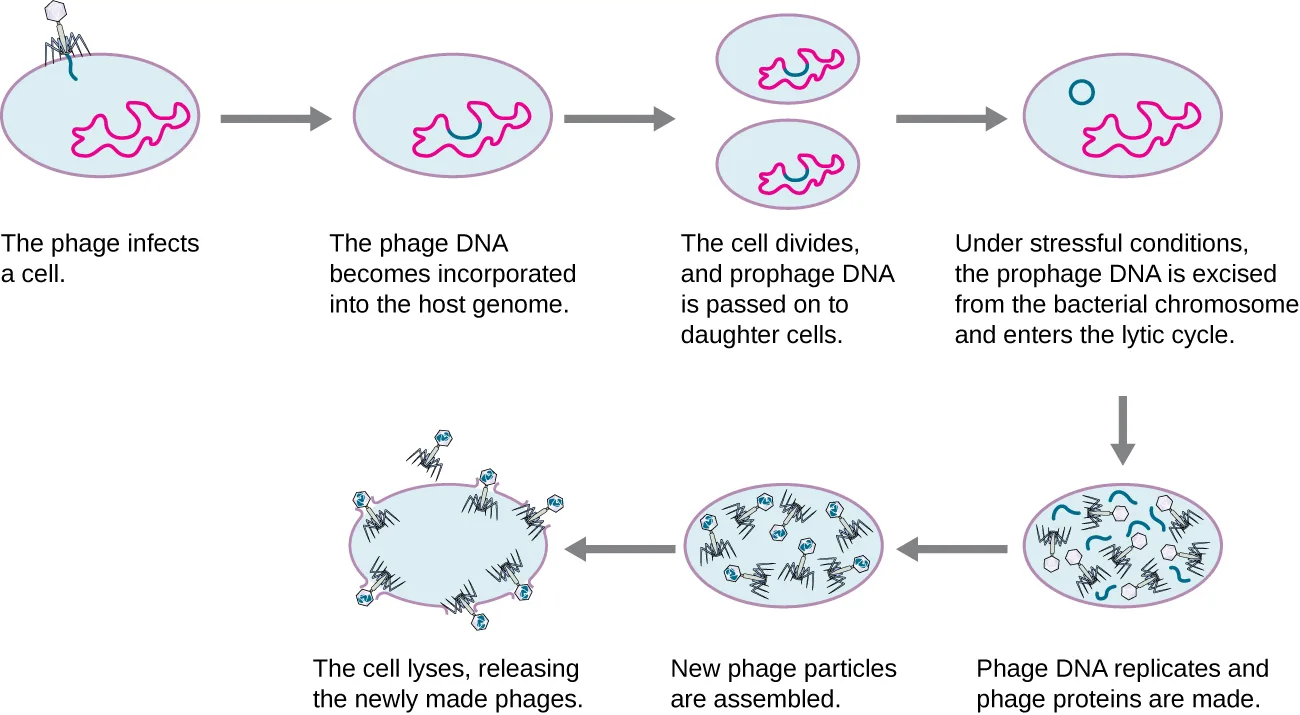
In a lysogenic cycle, the phage genome also enters the cell through attachment and penetration. A prime example of a phage with this type of life cycle is the lambda phage. During the lysogenic cycle, instead of killing the host, the phage genome integrates into the bacterial chromosome and becomes part of the host. The integrated phage genome is called a prophage. A bacterial host with a prophage is called a lysogen. The process in which a bacterium is infected by a temperate phage is called lysogeny. It is typical of temperate phages to be latent or inactive within the cell. As the bacterium replicates its chromosome, it also replicates the phage’s DNA and passes it on to new daughter cells during reproduction. The presence of the phage may alter the phenotype of the bacterium, since it can bring in extra genes (e.g., toxin genes that can increase bacterial virulence). This change in the host phenotype is called lysogenic conversion (or phage conversion). Some bacteria, such as Vibrio cholerae and Clostridium botulinum, are less virulent in the absence of the prophage. The phages infecting these bacteria carry the toxin genes in their genome and enhance the virulence of the host when the toxin genes are expressed. In the case of V. cholerae, phage encoded toxin can cause severe diarrhea; in C. botulinum, the toxin can cause paralysis. During lysogeny, the prophage will persist in the host chromosome until induction, which results in the excision of the viral genome from the host chromosome. After induction has occurred the temperate phage can proceed through a lytic cycle and then undergo lysogeny in a newly infected cell (see the figure below).
Extended description
Top row, left to right: (1) the phage infects a cell, attaching outside and injecting its DNA. (2) The phage DNA becomes incorporated into the host genome. (3) The cell divides, and prophage DNA is passed on to both daughter cells. (4) Under stressful conditions, the prophage DNA is excised from the bacterial chromosome and enters the lytic cycle. Bottom row, right to left, continuing from panel 4: (5) the phage DNA replicates and phage proteins are made. (6) New phage particles are assembled. (7) The cell lyses, releasing the newly made phages.
Link to Learning
This video illustrates the lytic cycle.
Check Your Understanding
Is a latent phage undetectable in a bacterium?
Compare what defines a temperate phage’s behavior with what defines a virulent phage’s behavior.Transduction
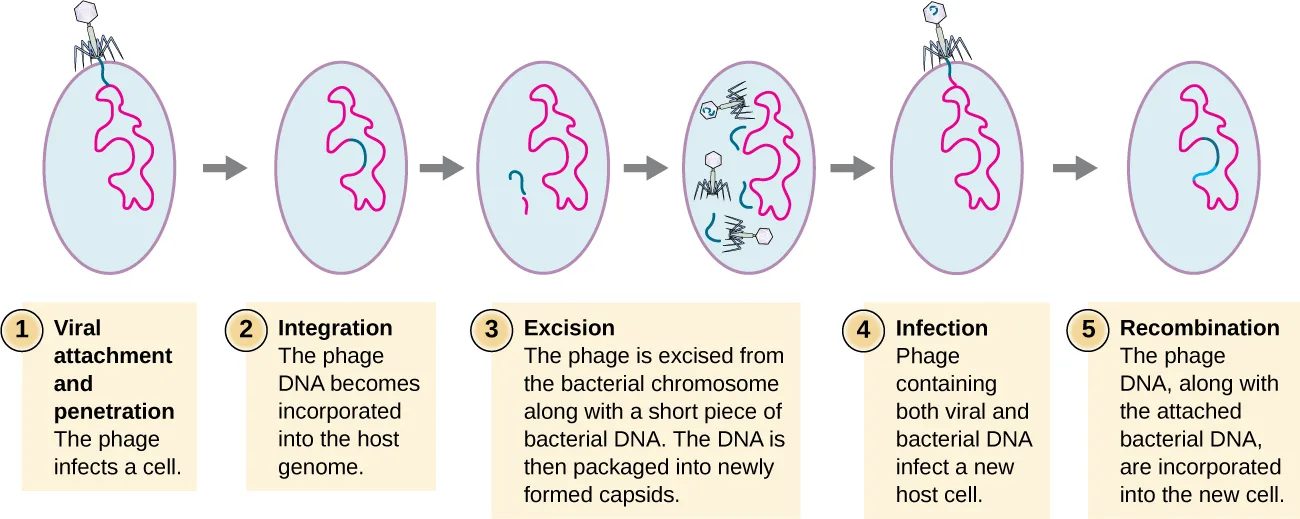
Transduction occurs when a bacteriophage transfers bacterial DNA from one bacterium to another during sequential infections. There are two types of transduction: generalized and specialized transduction. During the lytic cycle of viral replication, the virus hijacks the host cell, degrades the host chromosome, and makes more viral genomes. As it assembles and packages DNA into the phage head, packaging occasionally makes a mistake. Instead of packaging viral DNA, it takes a random piece of host DNA and inserts it into the capsid. Once released, this virion will then inject the former host’s DNA into a newly infected host. The asexual transfer of genetic information can allow for DNA recombination to occur, thus providing the new host with new genes (e.g., an antibiotic-resistance gene, or a sugar-metabolizing gene). generalized transduction occurs when a random piece of bacterial chromosomal DNA is transferred by the phage during the lytic cycle. specialized transduction occurs at the end of the lysogenic cycle, when the prophage is excised and the bacteriophage enters the lytic cycle. Since the phage is integrated into the host genome, the prophage can replicate as part of the host. However, some conditions (e.g., ultraviolet light exposure or chemical exposure) stimulate the prophage to undergo induction, causing the phage to excise from the genome, enter the lytic cycle, and produce new phages to leave host cells. During the process of excision from the host chromosome, a phage may occasionally remove some bacterial DNA near the site of viral integration. The phage and host DNA from one end or both ends of the integration site are packaged within the capsid and are transferred to the new, infected host. Since the DNA transferred by the phage is not randomly packaged but is instead a specific piece of DNA near the site of integration, this mechanism of gene transfer is referred to as specialized transduction (see the figure below). The DNA can then recombine with host chromosome, giving the latter new characteristics. Transduction seems to play an important role in the evolutionary process of bacteria, giving them a mechanism for asexual exchange of genetic information.
Extended description
- Viral attachment and penetration — the phage infects a cell. 2. Integration — the phage DNA becomes incorporated into the host genome. 3. Excision — the phage is excised from the bacterial chromosome along with a short piece of bacterial DNA; a following panel shows the DNA packaged into newly formed capsids. 4. Infection — the phage, now carrying both viral and bacterial DNA, infects a new host cell. 5. Recombination — the phage DNA, along with the attached bacterial DNA, is incorporated into the new cell’s genome.
Check Your Understanding
Which phage life cycle is associated with which forms of transduction?
Recall which cycle packages random host DNA by mistake, and which one begins with a prophage being excised.Life Cycle of Viruses with Animal Hosts
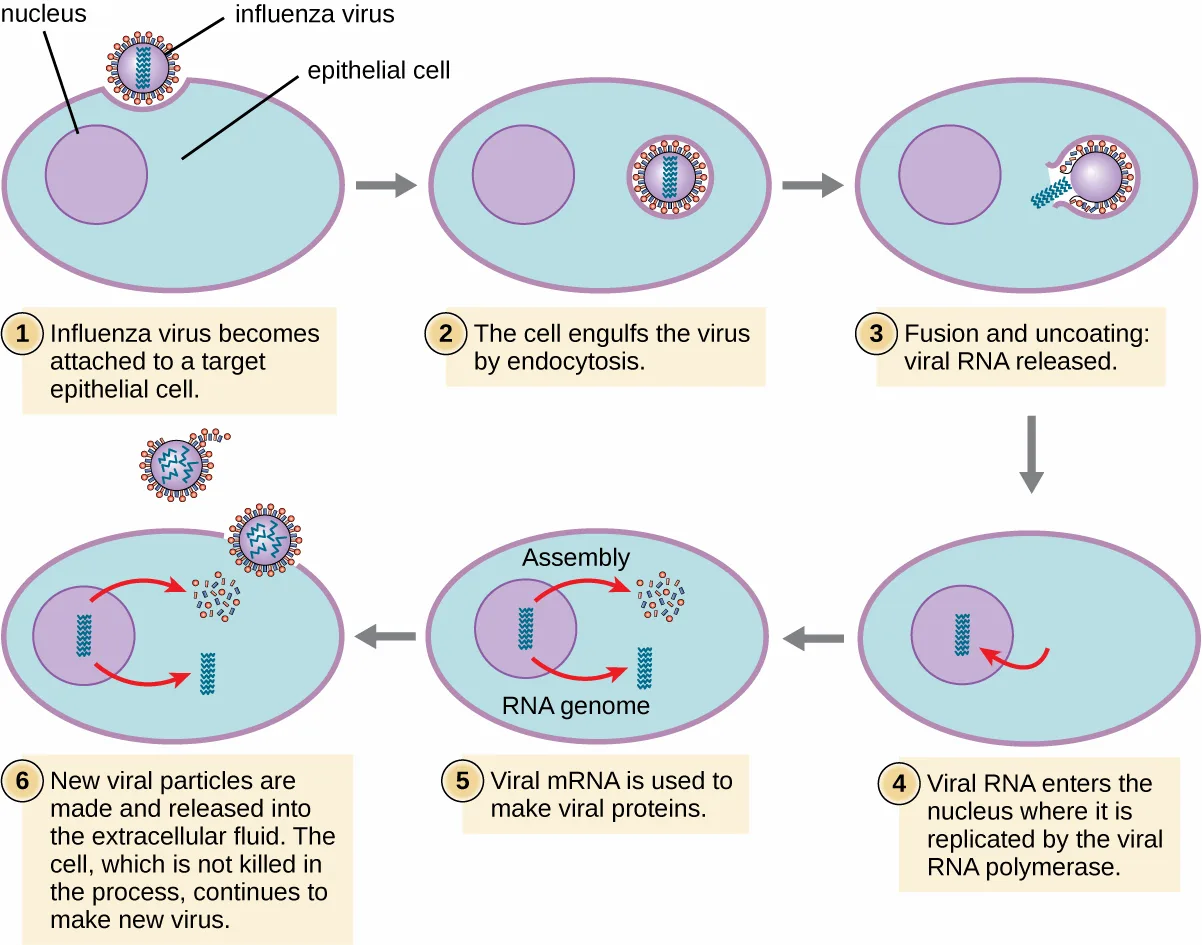
Lytic animal viruses follow similar infection stages to bacteriophages: attachment, penetration, biosynthesis, maturation, and release (see the figure below). However, the mechanisms of penetration, nucleic-acid biosynthesis, and release differ between bacterial and animal viruses. After binding to host receptors, animal viruses enter through endocytosis (engulfment by the host cell) or through membrane fusion (viral envelope with the host cell membrane). Many viruses are host specific, meaning they only infect a certain type of host; and most viruses only infect certain types of cells within tissues. This specificity is called a tissue tropism. Examples of this are demonstrated by the poliovirus, which exhibits tropism for the tissues of the brain and spinal cord, or the influenza virus, which has a primary tropism for the respiratory tract.
Extended description
- Attachment — the influenza virus becomes attached to a target epithelial cell. 2. Penetration — the cell engulfs the virus by endocytosis. 3. Fusion and uncoating — the viral RNA is released from the vesicle. 4. Biosynthesis — the viral RNA enters the nucleus, where it is replicated by the viral RNA polymerase. 5. Assembly — new viral RNA and proteins are used to assemble new viral particles. 6. Release — new viral particles are made and released into the extracellular fluid; the cell, not killed in the process, continues to make new virus.
Animal viruses do not always express their genes using the normal flow of genetic information—from DNA to RNA to protein. Some viruses have a dsDNA genome like cellular organisms and can follow the normal flow. However, others may have ssDNA, dsRNA, or ssRNA genomes. The nature of the genome determines how the genome is replicated and expressed as viral proteins. If a genome is ssDNA, host enzymes will be used to synthesize a second strand that is complementary to the genome strand, thus producing dsDNA. The dsDNA can now be replicated, transcribed, and translated similar to host DNA.
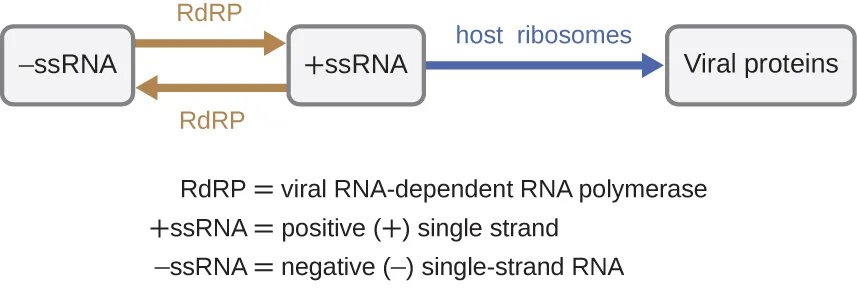
If the viral genome is RNA, a different mechanism must be used. There are three types of RNA genome: dsRNA, positive (+) single-strand (+ssRNA) or negative (−) single-strand RNA (−ssRNA). If a virus has a +ssRNA genome, it can be translated directly to make viral proteins. Viral genomic +ssRNA acts like cellular mRNA. However, if a virus contains a −ssRNA genome, the host ribosomes cannot translate it until the −ssRNA is replicated into +ssRNA by viral RNA-dependent RNA polymerase (RdRP) (see the figure below). The RdRP is brought in by the virus and can be used to make +ssRNA from the original −ssRNA genome. The RdRP is also an important enzyme for the replication of dsRNA viruses, because it uses the negative strand of the double-stranded genome as a template to create +ssRNA. The newly synthesized +ssRNA copies can then be translated by cellular ribosomes.
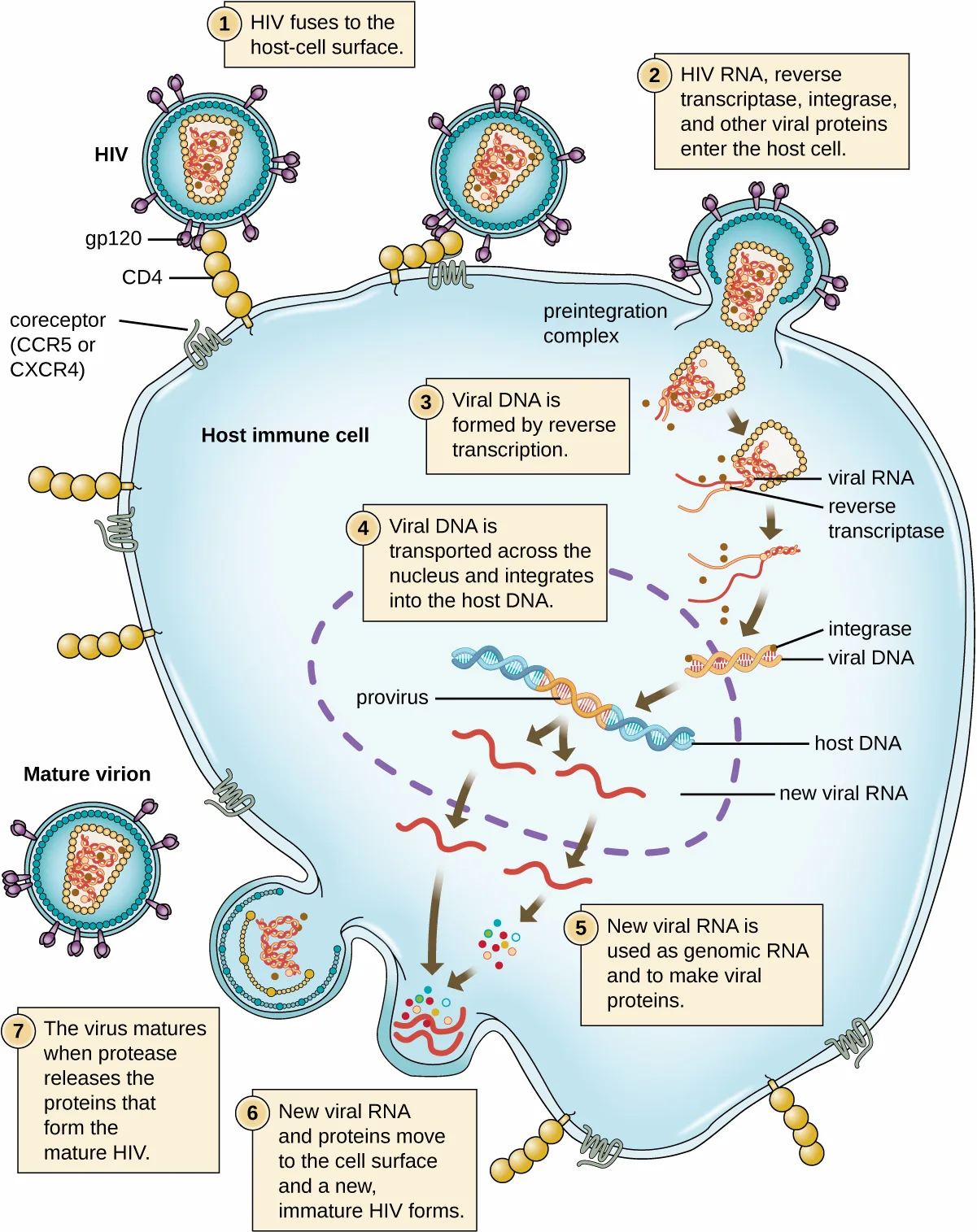
An alternative mechanism for viral nucleic acid synthesis is observed in the retroviruses, which are +ssRNA viruses (see the figure below). Single-stranded RNA viruses such as HIV carry a special enzyme called reverse transcriptase within the capsid that synthesizes a complementary ssDNA (cDNA) copy using the +ssRNA genome as a template. The ssDNA is then made into dsDNA, which can integrate into the host chromosome and become a permanent part of the host. The integrated viral genome is called a provirus. The virus now can remain in the host for a long time to establish a chronic infection. The provirus stage is similar to the prophage stage in a bacterial infection during the lysogenic cycle. However, unlike prophage, the provirus does not undergo excision after splicing into the genome.
Extended description
- HIV fuses to the host-cell surface: the gp120 protein on the virus surface binds CD4, which binds a coreceptor (CCR5 or CXCR4). 2. HIV RNA, reverse transcriptase, integrase, and other viral proteins enter the host cell as a preintegration complex. 3. Viral DNA is formed by reverse transcription. 4. Viral DNA is transported across the nucleus and integrates into the host DNA, forming a provirus. 5. New viral RNA is used as genomic RNA and to make viral proteins. 6. New viral RNA and proteins move to the cell surface, and a new, immature HIV particle forms by budding. 7. The virus matures when protease releases the proteins that form the mature HIV virion.
Check Your Understanding
Is RNA-dependent RNA polymerase made from a viral gene or a host gene?
Check which party ‘brings in’ the RdRP enzyme, according to the paragraph on negative-strand RNA viruses.Persistent Infections
Persistent infection occurs when a virus is not completely cleared from the system of the host but stays in certain tissues or organs of the infected person. The virus may remain silent or undergo productive infection without seriously harming or killing the host. Mechanisms of persistent infection may involve the regulation of the viral or host gene expressions or the alteration of the host immune response. The two primary categories of persistent infections are latent infection and chronic infection. Examples of viruses that cause latent infections include herpes simplex virus (oral and genital herpes), varicella-zoster virus (chickenpox and shingles), and Epstein-Barr virus (mononucleosis). Hepatitis C virus and HIV are two examples of viruses that cause long-term chronic infections.
Latent Infection
Not all animal viruses undergo replication by the lytic cycle. There are viruses that are capable of remaining hidden or dormant inside the cell in a process called latency. These types of viruses are known as latent viruses and may cause latent infections. Viruses capable of latency may initially cause an acute infection before becoming dormant.
For example, the varicella-zoster virus infects many cells throughout the body and causes chickenpox, characterized by a rash of blisters covering the skin. About 10 to 12 days postinfection, the disease resolves and the virus goes dormant, living within nerve-cell ganglia for years. During this time, the virus does not kill the nerve cells or continue replicating. It is not clear why the virus stops replicating within the nerve cells and expresses few viral proteins but, in some cases, typically after many years of dormancy, the virus is reactivated and causes a new disease called shingles (see the figure below). Whereas chickenpox affects many areas throughout the body, shingles is a nerve cell-specific disease emerging from the ganglia in which the virus was dormant.
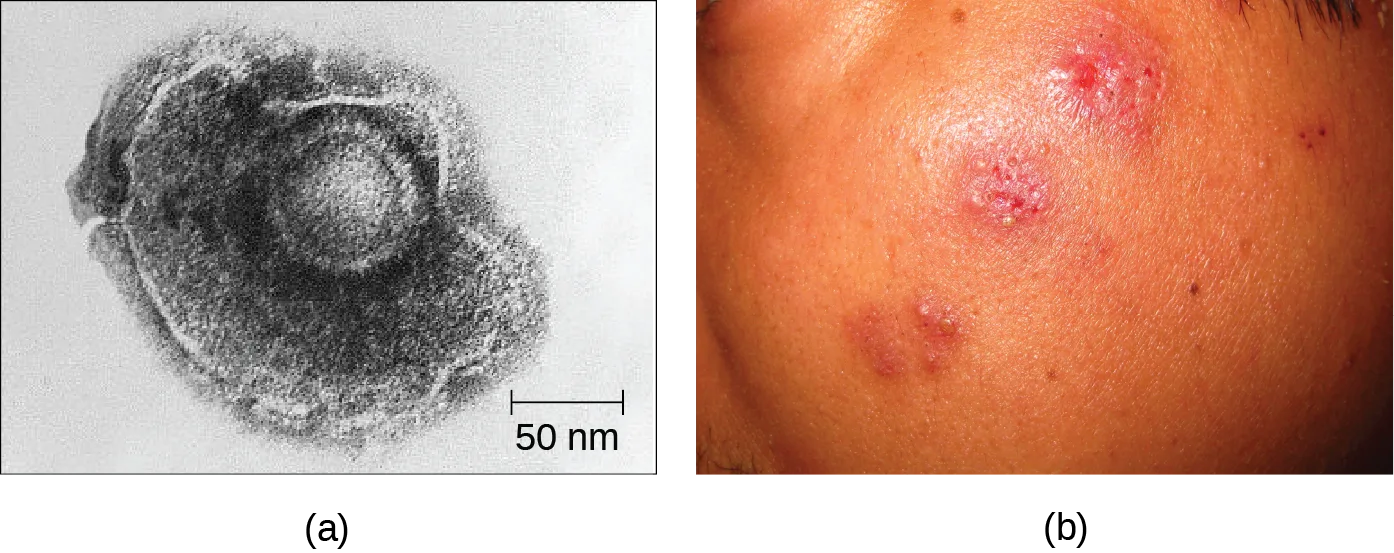
Latent viruses may remain dormant by existing as circular viral genome molecules outside of the host chromosome. Others become proviruses by integrating into the host genome. During dormancy, viruses do not cause any symptoms of disease and may be difficult to detect. A patient may be unaware that they are carrying the virus unless a viral diagnostic test has been performed.
Chronic Infection
A chronic infection is a disease with symptoms that are recurrent or persistent over a long time. Some viral infections can be chronic if the body is unable to eliminate the virus. HIV is an example of a virus that produces a chronic infection, often after a long period of latency. Once a person becomes infected with HIV, the virus can be detected in tissues continuously thereafter, but untreated patients often experience no symptoms for years. However, the virus maintains chronic persistence through several mechanisms that interfere with immune function, including preventing expression of viral antigens on the surface of infected cells, altering immune cells themselves, restricting expression of viral genes, and rapidly changing viral antigens through mutation. Eventually, the damage to the immune system results in progression of the disease leading to acquired immunodeficiency syndrome (AIDS). The various mechanisms that HIV uses to avoid being cleared by the immune system are also used by other chronically infecting viruses, including the hepatitis C virus.
Check Your Understanding
In what two ways can a virus manage to maintain a persistent infection?
Look at the sentence right after the two categories of persistent infection are named.Life Cycle of Viruses with Plant Hosts
Plant viruses are more similar to animal viruses than they are to bacteriophages. Plant viruses may be enveloped or non-enveloped. Like many animal viruses, plant viruses can have either a DNA or RNA genome and be single stranded or double stranded. However, most plant viruses do not have a DNA genome; the majority have a +ssRNA genome, which acts like messenger RNA (mRNA). Only a minority of plant viruses have other types of genomes.
Plant viruses may have a narrow or broad host range. For example, the citrus tristeza virus infects only a few plants of the Citrus genus, whereas the cucumber mosaic virus infects thousands of plants of various plant families. Most plant viruses are transmitted by contact between plants, or by fungi, nematodes, insects, or other arthropods that act as mechanical vectors. However, some viruses can only be transferred by a specific type of insect vector; for example, a particular virus might be transmitted by aphids but not whiteflies. In some cases, viruses may also enter healthy plants through wounds, as might occur due to pruning or weather damage.
Viruses that infect plants are considered biotrophic parasites, which means that they can establish an infection without killing the host, similar to what is observed in the lysogenic life cycles of bacteriophages. Viral infection can be asymptomatic (latent) or can lead to cell death (lytic infection). The life cycle begins with the penetration of the virus into the host cell. Next, the virus is uncoated within the cytoplasm of the cell when the capsid is removed. Depending on the type of nucleic acid, cellular components are used to replicate the viral genome and synthesize viral proteins for assembly of new virions. To establish a systemic infection, the virus must enter a part of the vascular system of the plant, such as the phloem. The time required for systemic infection may vary from a few days to a few weeks depending on the virus, the plant species, and the environmental conditions. The virus life cycle is complete when it is transmitted from an infected plant to a healthy plant.
Check Your Understanding
What is the structure and genome of a typical plant virus?
Show model answer
Did your answer mention:
Viral Growth Curve
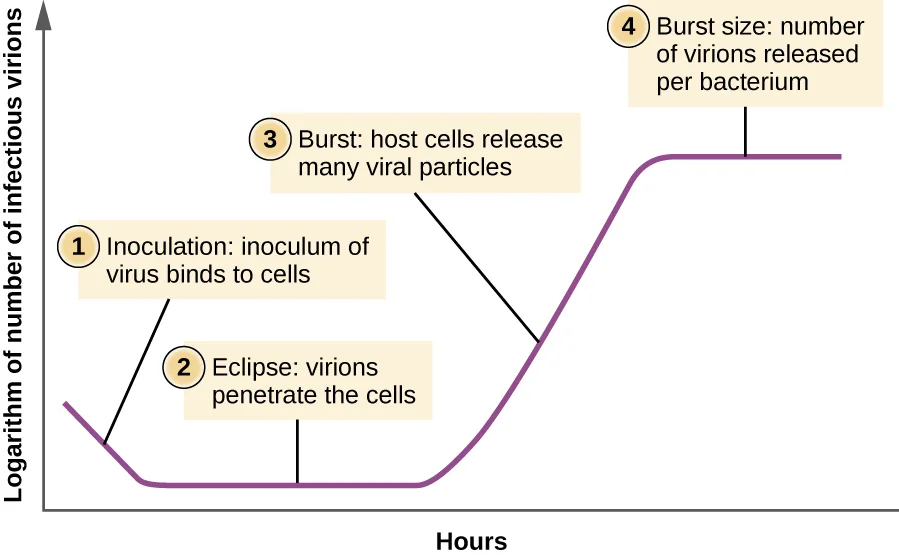
Unlike the growth curve for a bacterial population, the growth curve for a virus population over its life cycle does not follow a sigmoidal curve. During the initial stage, an inoculum of virus causes infection. In the eclipse phase, viruses bind and penetrate the cells with no virions detected in the medium. The chief difference that next appears in the viral growth curve compared to a bacterial growth curve occurs when virions are released from the lysed host cell at the same time. Such an occurrence is called a burst, and the number of virions per bacterium released is described as the burst size. In a one-step multiplication curve for bacteriophage, the host cells lyse, releasing many viral particles to the medium, which leads to a very steep rise in viral titer (the number of virions per unit volume). If no viable host cells remain, the viral particles begin to degrade during the decline of the culture (see the figure below).
Extended description
The curve carries four labelled call-outs in order: 1. Inoculation — the inoculum of virus binds to cells. 2. Eclipse — virions penetrate the cells. 3. Burst — host cells release many viral particles. 4. Burst size — the number of virions released per bacterium.
Check Your Understanding
What aspect of the life cycle of a virus leads to the sudden increase in the growth curve?
Show model answer
Did your answer mention:
Eye on Ethics. Unregistered Treatments
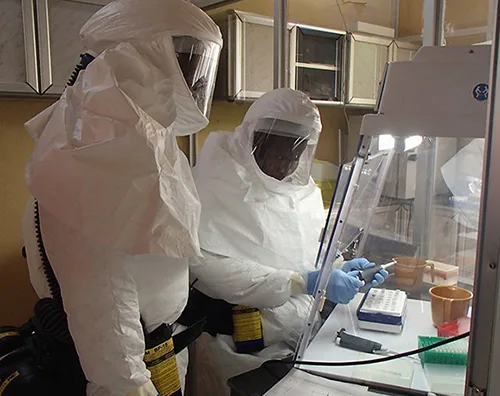
Ebola is incurable and deadly. The outbreak in West Africa in 2014 was unprecedented, dwarfing other human Ebola epidemics in the level of mortality. Of 24,666 suspected or confirmed cases reported, 10,179 people died (World Health Organization, “WHO Ebola Data and Statistics,” March 18, 2015) (Source note: the source dates this citation “March 18, 2005”; the cited page reports the 2014 outbreak and its URL encodes 20150318, so the year is printed as 2015.).
No approved treatments or vaccines for Ebola are available. While some drugs have shown potential in laboratory studies and animal models, they have not been tested in humans for safety and effectiveness. Not only are these drugs untested or unregistered but they are also in short supply.
Given the great suffering and high mortality rates, it is fair to ask whether unregistered and untested medications are better than none at all. Should such drugs be dispensed and, if so, who should receive them, in light of their extremely limited supplies? Is it ethical to treat untested drugs on patients with Ebola? On the other hand, is it ethical to withhold potentially life-saving drugs from dying patients? Or should the drugs perhaps be reserved for health-care providers working to contain the disease?
In August 2014, two infected US aid workers and a Spanish priest were treated with ZMapp, an unregistered drug that had been tested in monkeys but not in humans. The two American aid workers recovered, but the priest died. Later that month, the WHO released a report on the ethics of treating patients with the drug. Since Ebola is often fatal, the panel reasoned that it is ethical to give the unregistered drugs and unethical to withhold them for safety concerns. This situation is an example of “compassionate use” outside the well-established system of regulation and governance of therapies.
Case in Point. Ebola in the US
On September 25, 2014, Thomas Eric Duncan arrived at the Texas Health Presbyterian Hospital in Dallas complaining of a fever, headache, vomiting, and diarrhea—symptoms commonly observed in patients with the cold or the flu. After examination, an emergency department doctor diagnosed him with sinusitis, prescribed some antibiotics, and sent him home. Three days later, Duncan returned to the hospital by ambulance. His condition had deteriorated and additional blood tests confirmed that he has been infected with the Ebola virus. (Source note: the source says Duncan arrived on September 24 and returned “two days later,” and that his exposure was “nine days before he showed up at the hospital.” The CDC’s investigation dates his first emergency-department visit to September 25 and his return by ambulance to September 28, with symptom onset on September 24 (CDC, “Ebola Virus Disease Cluster in the United States — Dallas County, Texas, 2014,” MMWR 63, November 14, 2014); this page uses those dates, so the nine-day count runs to the day his symptoms began.)
Further investigations revealed that Duncan had just returned from Liberia, one of the countries in the midst of a severe Ebola epidemic. On September 15, nine days before his symptoms began, Duncan had helped transport an Ebola-stricken neighbor to a hospital in Liberia. The hospital continued to treat Duncan, but he died several days after being admitted.
The timeline of the Duncan case is indicative of the life cycle of the Ebola virus. The incubation time for Ebola ranges from 2 days to 21 days. Nine days passed between Duncan’s exposure to the virus infection and the appearance of his symptoms. This corresponds, in part, to the eclipse period in the growth of the virus population. During the eclipse phase, Duncan would have been unable to transmit the disease to others. However, once an infected individual begins exhibiting symptoms, the disease becomes very contagious. Ebola virus is transmitted through direct contact with droplets of bodily fluids such as saliva, blood, and vomit. Duncan could conceivably have transmitted the disease to others at any time after he began having symptoms, presumably some time before his arrival at the hospital in Dallas. Once a hospital realizes a patient like Duncan is infected with Ebola virus, the patient is immediately quarantined, and public health officials initiate a back trace to identify everyone with whom a patient like Duncan might have interacted during the period in which he was showing symptoms.
Public health officials were able to track down 10 high-risk individuals (family members of Duncan) and 50 low-risk individuals to monitor them for signs of infection. None contracted the disease. However, one of the nurses charged with Duncan’s care did become infected. This, along with Duncan’s initial misdiagnosis, made it clear that US hospitals needed to provide additional training to medical personnel to prevent a possible Ebola outbreak in the US.
- What types of training can prepare health professionals to contain emerging epidemics like the Ebola outbreak of 2014?
- What is the difference between a contagious pathogen and an infectious pathogen?
Link to Learning
For additional information about Ebola, please visit the CDC website.
Summary
- Many viruses target specific hosts or tissues. Some may have more than one host.
- Many viruses follow several stages to infect host cells. These stages include attachment, penetration, uncoating, biosynthesis, maturation, and release.
- Bacteriophages have a lytic or lysogenic cycle. The lytic cycle leads to the death of the host, whereas the lysogenic cycle leads to integration of phage into the host genome.
- Bacteriophages inject DNA into the host cell, whereas animal viruses enter by endocytosis or membrane fusion.
- Animal viruses can undergo latency, similar to lysogeny for a bacteriophage.
- The majority of plant viruses are positive-strand ssRNA and can undergo latency, chronic, or lytic infection, as observed for animal viruses.
- The growth curve of bacteriophage populations is a one-step multiplication curve and not a sigmoidal curve, as compared to the bacterial growth curve.
- Bacteriophages transfer genetic information between hosts using either generalized or specialized transduction.
Key terms
- virulent phages — bacteriophage for which infection leads to the death of the host cell; a phage that undergoes the lytic cycle.
- temperate phages — bacteriophage that can incorporate viral genome into the host cell chromosome and replicate with the host cell until new viruses are produced; a phage that undergoes the lysogenic cycle.
- progeny viruses — newly assembled virions ready for release outside the cell.
- lytic cycle — infection process that leads to the lysis of host cells.
- attachment — binding of phage or virus to host cell receptors.
- penetration — entry of phage or virus into a host cell through injection, endocytosis, or membrane fusion.
- biosynthesis — replication of viral genome and other protein components.
- maturation — assembly of viral components to produce a functional virus.
- lysis — destruction of the host cell.
- lysogenic cycle — life cycle of some phages in which the genome of the infecting phage is integrated into the bacterial chromosome and replicated during bacterial reproduction until it excises and enters a lytic phase of the life cycle.
- prophage — phage genome that has incorporated into the host genome.
- lysogen — bacterium carrying the prophage.
- lysogeny — process of integrating the phage into the host genome.
- lysogenic conversion (phage conversion) — alteration of host characteristics or phenotypes due to the presence of phage.
- induction — prophage DNA is excised from the bacterial genome.
- generalized transduction — transfer of a random piece of bacterial chromosome DNA by the phage.
- specialized transduction — transfer of a specific piece of bacterial chromosomal DNA near the site of integration by the phage.
- tissue tropism — tendency of most viruses to infect only certain tissue types within a host.
- positive (+) single-strand (+ssRNA) — a viral RNA strand that acts like cellular messenger RNA and can be translated directly into viral proteins.
- negative (−) single-strand RNA (−ssRNA) — a viral RNA strand that cannot be translated until it is replicated into positive single-strand RNA by viral RNA-dependent RNA polymerase.
- retroviruses — positive ssRNA virus that produces and uses reverse transcriptase to make an ssDNA copy of the retroviral genome that can then be made into dsDNA and integrate into the host cell chromosome to form a provirus within the host chromosome.
- reverse transcriptase — enzyme found in retroviruses that can make a copy of ssDNA from ssRNA.
- provirus — animal virus genome that has integrated into the host chromosome.
- latent viruses — virus that remains dormant in the host genome.
- eclipse phase — period after viral infection during which the infective virus is not detected, either intracellularly or extracellularly, and biosynthesis is occurring.
- burst — release of new virions by a lysed host cell infected by a virus.
- burst size — the number of virions released from a host cell when it is lysed because of a viral infection.
- viral titer — number of virions per unit volume.
Practice
Describe the lytic and lysogenic life cycles
Which of the following leads to the destruction of the host cells?
Recall which cycle takes over and destroys its host, versus which one integrates without killing it.For lytic viruses, ________ is a phase during a viral growth curve when the virus is not detected.
Name the growth-curve stage between virus penetration and the steep rise in titer.Sort each description under the phage life cycle it describes.
Lytic cycle
Lysogenic cycle
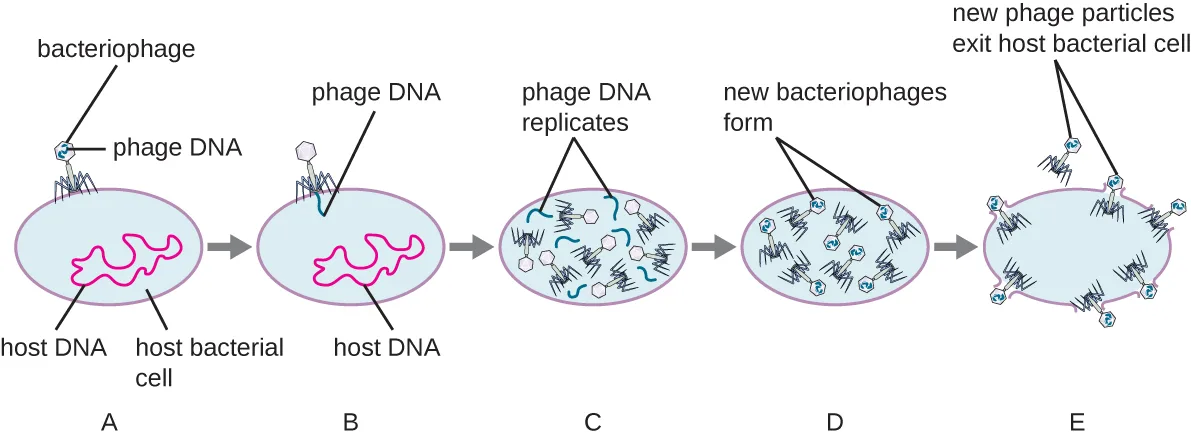
Label the five stages of a bacteriophage infection in the figure above.
Show model answer
Did your answer mention:
Bacteriophages have lytic and lysogenic cycles. Discuss the advantages and disadvantages for the phage.
Show model answer
Did your answer mention:
Describe the replication process of animal viruses
A virus obtains its envelope during which of the following phases?
Recall which stage releases new virions from the host cell, picking up membrane on the way out.A positive-strand RNA virus:
Compare how host ribosomes treat +ssRNA versus −ssRNA.Sort each description under the type of virus that enters a cell this way.
Bacteriophages
Animal viruses
Describe unique characteristics of retroviruses and latent viruses
Which of the following components is brought into a cell by HIV?
Identify the special enzyme HIV carries within its capsid to copy its RNA genome into DNA.How does reverse transcriptase aid a retrovirus in establishing a chronic infection?
Show model answer
Did your answer mention:
An enzyme from HIV that can make a copy of DNA from RNA is called ________.
Name the HIV enzyme discussed in the retrovirus paragraph.A virus capable of remaining hidden or dormant inside a cell, which may initially cause an acute infection before becoming inactive, is called a ________ virus.
Name the term this section uses for a virus capable of remaining hidden or dormant inside the cell.Discuss human viruses and their virus-host cell interactions
Animal viruses can undergo ________, similar to lysogeny for a bacteriophage.
Name the process, discussed alongside lysogeny, that lets an animal virus persist without producing progeny.HIV is an example of a virus that produces a ________ infection, often after a long period of latency.
Recall the term for a long-term infection the body cannot fully clear, as HIV often causes after a period of latency.According to the Ebola case discussed in this section, once an infected individual begins exhibiting symptoms, the disease becomes very ________.
Recall what changes about transmissibility once Ebola symptoms appear, according to the case discussion.Whereas chickenpox affects many areas throughout the body, ________ is a nerve cell-specific disease emerging from the ganglia in which the virus was dormant.
Name the disease that can emerge years later from the nerve-cell ganglia where varicella-zoster went dormant.Explain the process of transduction
What is the name for the transfer of genetic information from one bacterium to another bacterium by a phage?
Name the process this whole section’s heading describes.Sort each description under the type of transduction it describes.
Generalized transduction
Specialized transduction
The phage genome that has incorporated into the host genome, and that specialized transduction excises from the bacterial chromosome, is called a ________.
Name the integrated viral genome discussed in the Lysogenic Cycle subsection.Describe the replication process of plant viruses
Viruses that infect plants are considered ________ parasites, meaning they can establish an infection without killing the host, similar to what is observed in the lysogenic life cycles of bacteriophages.
Use the one-word term the plant-virus paragraph applies to these parasites.The ________ infects only a few plants of the Citrus genus, whereas the cucumber mosaic virus infects thousands of plants of various plant families.
Name the narrow-host-range virus contrasted with the broad-host-range cucumber mosaic virus.However, most plant viruses do not have a DNA genome; the majority have a ________ genome, which acts like messenger RNA.
Recall which RNA type, discussed earlier for animal viruses, acts directly like messenger RNA.Discuss some methods by which plant viruses are transmitted from a diseased plant to a healthy one.
Show model answer
Did your answer mention:
This section is adapted from Microbiology, Section 6.2: The Viral Life Cycle by Nina Parker, Mark Schneegurt, Anh-Hue Thi Tu, Philip Lister, Brian M. Forster, and OpenStax, © OpenStax, licensed under CC BY-NC-SA 4.0. Access the original for free at openstax.org. Changes: all nine source figures and the bare Critical Thinking exercise media re-encoded as WebP and rendered as mediafigures after image and PDF inspection, with explicit kind set from the artwork (the eight drawn process figures — seven source figures and the Critical Thinking media — set kind="diagram", overriding the manifest’s JPEG-driven “photo” guess; the two-panel latency figure and the hazmat photograph set kind="photo", overriding the manifest’s “diagram” guess for the former); alts rewritten from the source’s incomplete or garbled alts (the transduction alt’s missing space in “excisionwhen,” the HIV alt’s “reverse transtriptase,” the growth-curve alt’s “the grap his,” and the latency alt’s “a a shpere” are not reproduced — logged for the errata file); longdesc added to every process/life-cycle figure and the growth curve, walking each numbered or lettered stage in order; the Link to Learning and Eye on Ethics/Case in Point boxes rendered as callouts, the Case in Point kept in its source order (its closing questions, then its figure) with its two closing questions left unanswered as plain bullets; the WHO footnote rendered as an inline parenthetical citation with its bare access URL dropped and its printed date “March 18, 2005” corrected to “March 18, 2015” with a visible Source note (the linked URL itself encodes 20150318, and the citation supports an event from 2014) — logged as an erratum; the animal-virus replication figure’s source alt calls the new particles “phage” particles, which the page’s alt does not repeat (logged as an erratum); the malformed binomial “V. cholera” corrected to “V. cholerae” to match the same paragraph’s own “Vibrio cholerae” three sentences earlier — logged as a suspected source defect; the latency figure’s credit line’s unbalanced parenthesis closed to match its “(credit a: …; credit b: … (CC-BY))” structure; all eight source figure cross-references rendered as “(see the figure below)”; the Critical Thinking exercise “Label the five stages of a bacteriophage infection in the figure” (fs-id1168326822762) kept its bare media as a Practice mediafigure, with an author-written caption describing the panels (the source prints none) and its own source problem text moved into the self-check’s question; it stays a self-check because honestly labelling all five panels needs five separate keys, which neither a single-answer multiplechoice nor a 4-bin sortbins can hold; all six body Check Your Understanding bullets rendered as body items at their note positions — four are graded (multiplechoice) from a single sentence or paired sentence of this module, and two stay self-checks — “What is the structure and genome of a typical plant virus?” because the honest answer assembles several sentences of one paragraph rather than a single fixed fact, and “What aspect of the life cycle of a virus leads to the sudden increase in the growth curve?” because the growth-curve figure beside it names the burst in its caption; of the section’s 14 numbered source exercises, all five Multiple Choice and both Fill in the Blank items are used as printed and keyed from the source; two of the three Short Answer questions (“Differentiate between lytic and lysogenic cycles,” “Discuss the difference between generalized and specialized transduction”) are graded as sortbins from this module’s own contrasting sentences (the source prints no key for either), the third (“Briefly explain the difference between the mechanism of entry of a T-even bacteriophage and an animal virus”) is graded as a sortbins from the penetration paragraphs of the Lytic Cycle and Animal Hosts sections; of the four Critical Thinking questions, the labelling item is a self-check as described above, “Discuss some methods by which plant viruses are transmitted…” stays a self-check because its honest answer is a list of several transmission routes, and the remaining two (“Discuss the advantages and disadvantages…,” “How does reverse transcriptase aid a retrovirus…”) stay self-checks because their honest answers assemble several module sentences into an explanation; nine author-written items (three multiplechoice cloze/select-the-term items from ## Summary or body sentences, four term-recall textins from ## Key terms or a body sentence, one cloze textin on biotrophic parasites from a body sentence, one +ssRNA cloze multiplechoice) fill out the “retroviruses and latent viruses,” “human viruses,” “transduction,” and “plant viruses” objective groups to the book’s three-per-group floor; the Multiple Choice item testing which HIV component is “brought into a cell” (fs-id1168329002208) and the Fill in the Blank item naming that same enzyme (fs-id1168326830123) are both genuine, separately source-keyed items that key the same fact (“reverse transcriptase”); both are kept as printed rather than dropped, since the source itself prints both, and the overlap is disclosed here for the checker; key terms compiled from the module’s 29 defined <term> elements and the book’s Glossary appendix, with lysogenic conversion and phage conversion merged into one bullet because the module defines both in the same sentence against one appendix entry, for 28 distinct bullets; 1 definition (“positive (+) single-strand (+ssRNA),” which has no appendix entry under that or any near form) is taken from the module’s own defining sentence, and the other 27 are glossary-sourced; no source exercise was omitted. The Case in Point’s dates for Thomas Eric Duncan’s hospital visits are corrected with a visible Source note citing the CDC investigation, per this book’s prose claim pass (logged as an erratum).