Mechanisms of Microbial Genetics
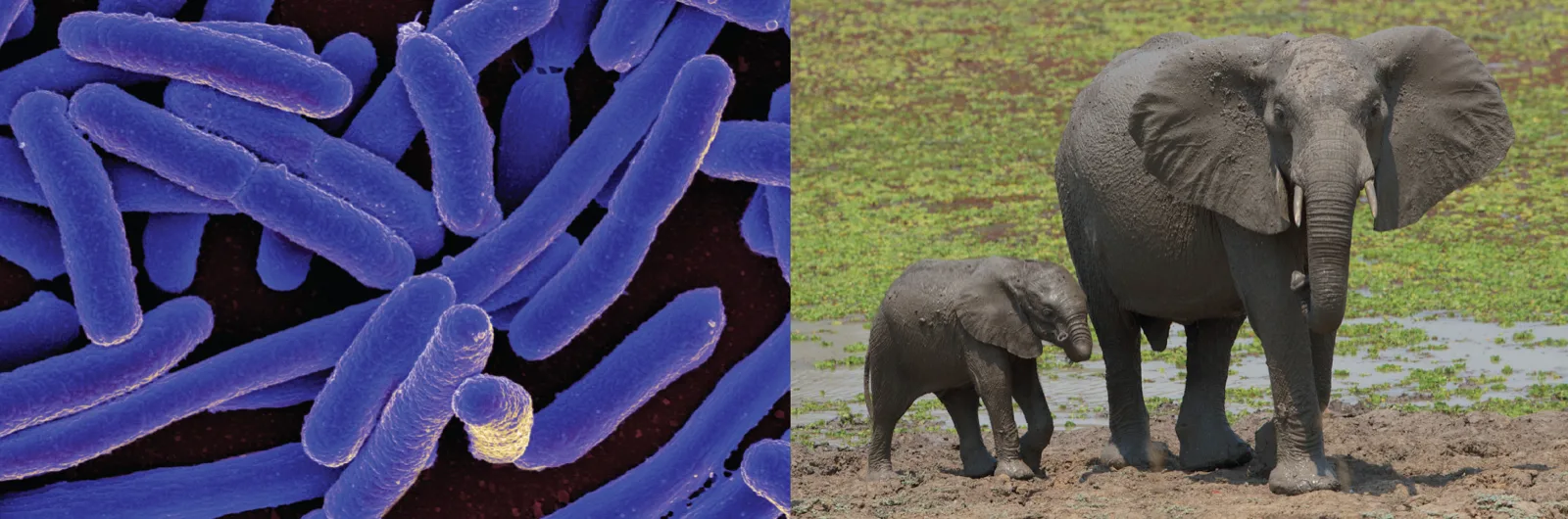
In 1954, French scientist and future Nobel laureate Jacques Monod (1910–1976) famously said, “What is true in E. coli is true in the elephant,” suggesting that the biochemistry of life was maintained throughout evolution and is shared in all forms of known life. Since Monod’s famous statement, we have learned a great deal about the mechanisms of gene regulation, expression, and replication in living cells. All cells use DNA for information storage, share the same genetic code, and use similar mechanisms to replicate and express it. Although many aspects of genetics are universally shared, variations do exist among contemporary genetic systems. We now know that within the shared overall theme of the genetic mechanism, there are significant differences among the three domains of life: Eukarya, Archaea, and Bacteria. Additionally, viruses, cellular parasites but not themselves living cells, show dramatic variation in their genetic material and the replication and gene expression processes. Some of these differences have allowed us to engineer clinical tools such as antibiotics and antiviral drugs that specifically inhibit the reproduction of pathogens yet are harmless to their hosts.
Sections
- The Functions of Genetic Material — the central dogma, genotype and phenotype, and how the same genetic information gives rise to different cellular products under different conditions.
- DNA Replication — semiconservative replication and the Meselson–Stahl experiment; initiation, elongation, and termination in bacteria; the differences in eukaryotes, including telomeres and telomerase; and rolling circle replication of plasmids and viruses.
- RNA Transcription — RNA polymerase, promoters, and sigma factors in bacteria, and the eukaryotic differences of capping, polyadenylation, and splicing.
- Protein Synthesis (Translation) — the genetic code, ribosomes and transfer RNAs, the initiation, elongation, and termination of translation, and protein targeting, folding, and modification.
- Mutations — point and frameshift mutations and their effects on proteins, chemical and radiation mutagens, DNA repair mechanisms, and how bacterial mutants and mutagens are identified.
- How Asexual Prokaryotes Achieve Genetic Diversity — horizontal gene transfer by transformation, transduction, and conjugation, and transposition.
- Gene Regulation: Operon Theory — repressible and inducible operons, catabolite repression, global responses, attenuation and riboswitches, and gene regulation in eukaryotes.
This chapter is adapted from Microbiology, Chapter 11: Mechanisms of Microbial Genetics by Nina Parker, Mark Schneegurt, Anh-Hue Thi Tu, Philip Lister, Brian M. Forster, and OpenStax, © OpenStax, licensed under CC BY-NC-SA 4.0. Access the original for free at openstax.org. Each section page records its own changes from the source. Changes: the chapter-opening figure is the source’s pair of photographs, re-encoded for the web, with its alt text rewritten to describe both panels; the source’s index-entry term (Monod) is printed as plain text because the module defines no terms.