Gene Regulation: Operon Theory
By the end of this section, you will be able to:
- Compare inducible operons and repressible operons
- Describe why regulation of operons is important
Each nucleated cell in a multicellular organism contains copies of the same DNA. Similarly, all cells in two pure bacterial cultures inoculated from the same starting colony contain the same DNA, with the exception of changes that arise from spontaneous mutations. If each cell in a multicellular organism has the same DNA, then how is it that cells in different parts of the organism’s body exhibit different characteristics? Similarly, how is it that the same bacterial cells within two pure cultures exposed to different environmental conditions can exhibit different phenotypes? In both cases, each genetically identical cell does not turn on, or express, the same set of genes. Only a subset of proteins in a cell at a given time is expressed.
Genomic DNA contains both structural genes, which encode products that serve as cellular structures or enzymes, and regulatory genes, which encode products that regulate gene expression. The expression of a gene is a highly regulated process. Whereas regulating gene expression in multicellular organisms allows for cellular differentiation, in single-celled organisms like prokaryotes, it primarily ensures that a cell’s resources are not wasted making proteins that the cell does not need at that time.
Elucidating the mechanisms controlling gene expression is important to the understanding of human health. Malfunctions in this process in humans lead to the development of cancer and other diseases. Understanding the interaction between the gene expression of a pathogen and that of its human host is important for the understanding of a particular infectious disease. Gene regulation involves a complex web of interactions within a given cell among signals from the cell’s environment, signaling molecules within the cell, and the cell’s DNA. These interactions lead to the expression of some genes and the suppression of others, depending on circumstances.
Prokaryotes and eukaryotes share some similarities in their mechanisms to regulate gene expression; however, gene expression in eukaryotes is more complicated because of the temporal and spatial separation between the processes of transcription and translation. Thus, although most regulation of gene expression occurs through transcriptional control in prokaryotes, regulation of gene expression in eukaryotes occurs at the transcriptional level and post-transcriptionally (after the primary transcript has been made).
Prokaryotic Gene Regulation
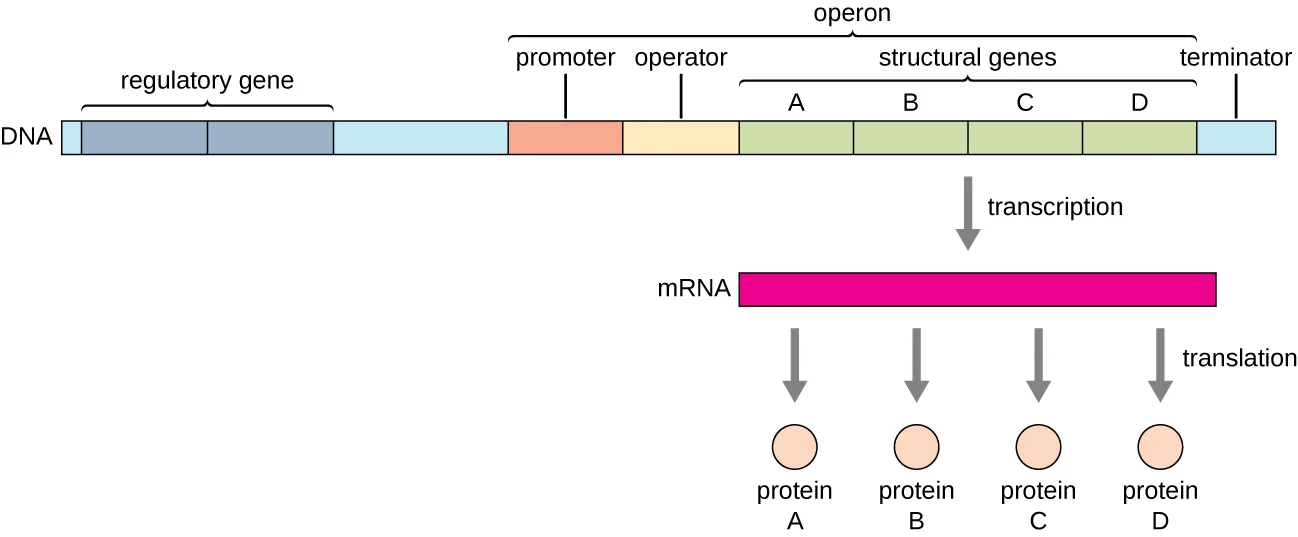
In bacteria and archaea, structural proteins with related functions are usually encoded together within the genome in a block called an operon and are transcribed together under the control of a single promoter, resulting in the formation of a polycistronic transcript, as the figure below shows. In this way, regulation of the transcription of all of the structural genes encoding the enzymes that catalyze the many steps in a single biochemical pathway can be controlled simultaneously, because they will either all be needed at the same time, or none will be needed. For example, in E. coli, all of the structural genes that encode enzymes needed to use lactose as an energy source lie next to each other in the lactose (or lac) operon under the control of a single promoter, the lac promoter. French scientists François Jacob (1920–2013) and Jacques Monod at the Pasteur Institute were the first to show the organization of bacterial genes into operons, through their studies on the lac operon of E. coli. For this work, they won the Nobel Prize in Physiology or Medicine in 1965. Although eukaryotic genes are not organized into operons, prokaryotic operons are excellent models for learning about gene regulation generally. There are some gene clusters in eukaryotes that function similar to operons. Many of the principles can be applied to eukaryotic systems and contribute to our understanding of changes in gene expression in eukaryotes that can result pathological changes such as cancer.
Each operon includes DNA sequences that influence its own transcription; these are located in a region called the regulatory region. The regulatory region includes the promoter and the region surrounding the promoter, to which transcription factors, proteins encoded by regulatory genes, can bind. Transcription factors influence the binding of RNA polymerase to the promoter and allow its progression to transcribe structural genes. A repressor is a transcription factor that suppresses transcription of a gene in response to an external stimulus by binding to a DNA sequence within the regulatory region called the operator, which is located between the RNA polymerase binding site of the promoter and the transcriptional start site of the first structural gene. Repressor binding physically blocks RNA polymerase from transcribing structural genes. Conversely, an activator is a transcription factor that increases the transcription of a gene in response to an external stimulus by facilitating RNA polymerase binding to the promoter. An inducer, a third type of regulatory molecule, is a small molecule that either activates or represses transcription by interacting with a repressor or an activator.
In prokaryotes, there are examples of operons whose gene products are required rather consistently and whose expression, therefore, is unregulated. Such operons are constitutively expressed, meaning they are transcribed and translated continuously to provide the cell with constant intermediate levels of the protein products. Such genes encode enzymes involved in housekeeping functions required for cellular maintenance, including DNA replication, repair, and expression, as well as enzymes involved in core metabolism. In contrast, there are other prokaryotic operons that are expressed only when needed and are regulated by repressors, activators, and inducers.
Extended description
Reading left to right: a DNA strand opens with a block labelled regulatory gene, then an unlabelled spacer, then the operon proper, bracketed overall as operon and broken into a promoter block, an operator block, and four equal structural-gene blocks labelled A, B, C, and D in order, ending in a terminator block. A downward arrow labelled transcription leads from the operon to a single horizontal bar labelled mRNA that spans the same length as the four structural genes. From that one mRNA bar, four downward arrows labelled translation lead to four separate circles labelled protein A, protein B, protein C, and protein D, showing that one polycistronic transcript is translated into four separate proteins.
Check Your Understanding
What are the parts in the DNA sequence of an operon?
Show model answer
Did your answer mention:
What types of regulatory molecules are there?
Show model answer
Did your answer mention:
Regulation by Repression
Prokaryotic operons are commonly controlled by the binding of repressors to operator regions, thereby preventing the transcription of the structural genes. Such operons are classified as either repressible operons or inducible operons. Repressible operons, like the tryptophan (trp) operon, typically contain genes encoding enzymes required for a biosynthetic pathway. As long as the product of the pathway, like tryptophan, continues to be required by the cell, a repressible operon will continue to be expressed. However, when the product of the biosynthetic pathway begins to accumulate in the cell, removing the need for the cell to continue to make more, the expression of the operon is repressed. Conversely, inducible operons, like the lac operon of E. coli, often contain genes encoding enzymes in a pathway involved in the metabolism of a specific substrate like lactose. These enzymes are only required when that substrate is available, thus expression of the operons is typically induced only in the presence of the substrate.
The trp Operon: A Repressible Operon
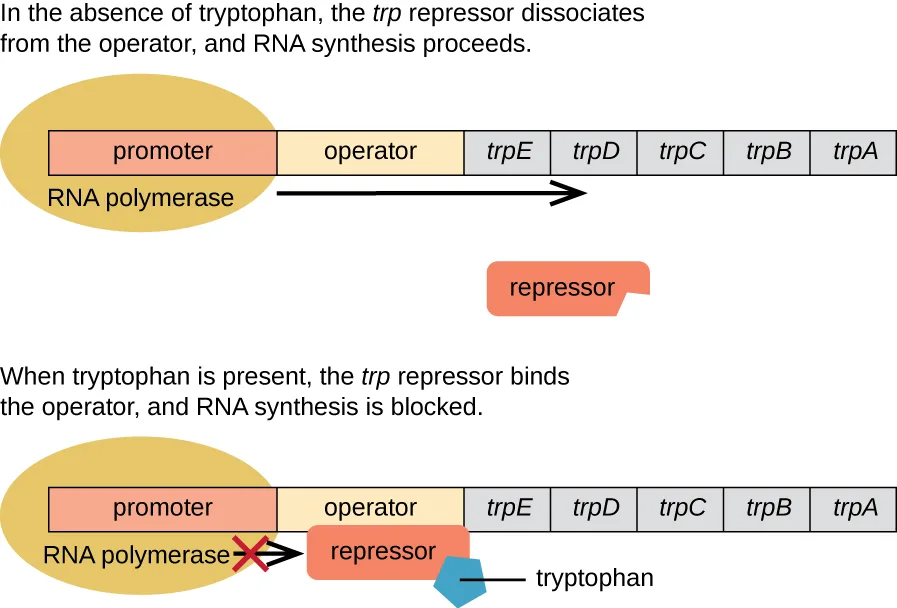
E. coli can synthesize tryptophan using enzymes that are encoded by five structural genes located next to each other in the trp operon, shown in the figure below. When environmental tryptophan is low, the operon is turned on. This means that transcription is initiated, the genes are expressed, and tryptophan is synthesized. However, if tryptophan is present in the environment, the trp operon is turned off. Transcription does not occur and tryptophan is not synthesized.
When tryptophan is not present in the cell, the repressor by itself does not bind to the operator; therefore, the operon is active and tryptophan is synthesized. However, when tryptophan accumulates in the cell, two tryptophan molecules bind to the trp repressor molecule, which changes its shape, allowing it to bind to the trp operator. This binding of the active form of the trp repressor to the operator blocks RNA polymerase from transcribing the structural genes, stopping expression of the operon. Thus, the actual product of the biosynthetic pathway controlled by the operon regulates the expression of the operon.
Extended description
Two stacked panels, each showing the same row of blocks: promoter, operator, trpE, trpD, trpC, trpB, trpA, left to right. Top panel (absence of tryptophan): an oval labelled RNA polymerase sits on the promoter with a rightward arrow running from the promoter across the operator and all five trp genes, showing transcription proceeding; a separate rounded shape labelled repressor sits below the gene row, unattached to anything. Bottom panel (tryptophan present): the same RNA polymerase oval sits on the promoter, but a red X sits on the arrow just past the promoter; the repressor shape now sits directly on the operator, and a small pentagon labelled tryptophan is attached to the repressor, showing that tryptophan-bound repressor blocks RNA polymerase from moving into the operon.
Link to Learning
Watch this video to learn more about the trp operon.
The lac Operon: An Inducible Operon
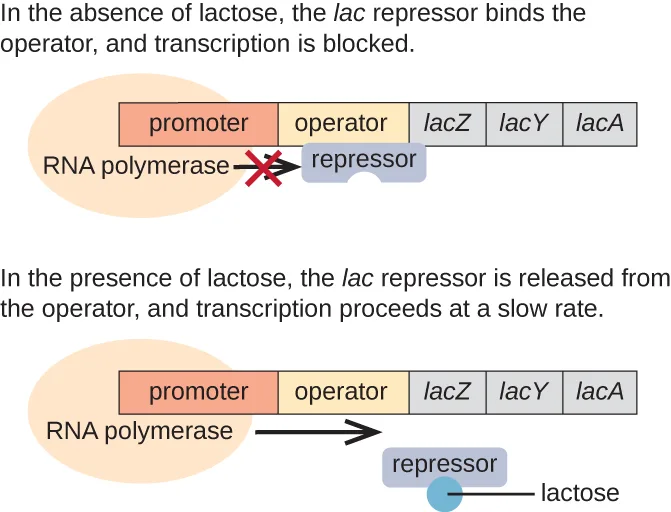
The lac operon is an example of an inducible operon that is also subject to activation in the absence of glucose, as the figure below shows. The lac operon encodes three structural genes necessary to acquire and process the disaccharide lactose from the environment, breaking it down into the simple sugars glucose and galactose. For the lac operon to be expressed, lactose must be present. This makes sense for the cell because it would be energetically wasteful to create the enzymes to process lactose if lactose was not available.
In the absence of lactose, the lac repressor is bound to the operator region of the lac operon, physically preventing RNA polymerase from transcribing the structural genes. However, when lactose is present, the lactose inside the cell is converted to allolactose. Allolactose serves as an inducer molecule, binding to the repressor and changing its shape so that it is no longer able to bind to the operator DNA. Removal of the repressor in the presence of lactose allows RNA polymerase to move through the operator region and begin transcription of the lac structural genes.
Extended description
Two stacked panels, each showing the same row of blocks: promoter, operator, lacZ, lacY, lacA, left to right. Top panel (lactose absent): an oval labelled RNA polymerase sits on the promoter; a rounded shape labelled repressor sits on the operator, and a red X blocks the arrow that would otherwise run from RNA polymerase into the operator and the three lac genes. Bottom panel (lactose present): the repressor shape now sits apart from the operator with a small circle labelled lactose attached to it, and an unbroken arrow runs from RNA polymerase across the operator into lacZ, lacY, and lacA, showing transcription proceeding.
The lac Operon: Activation by Catabolite Activator Protein
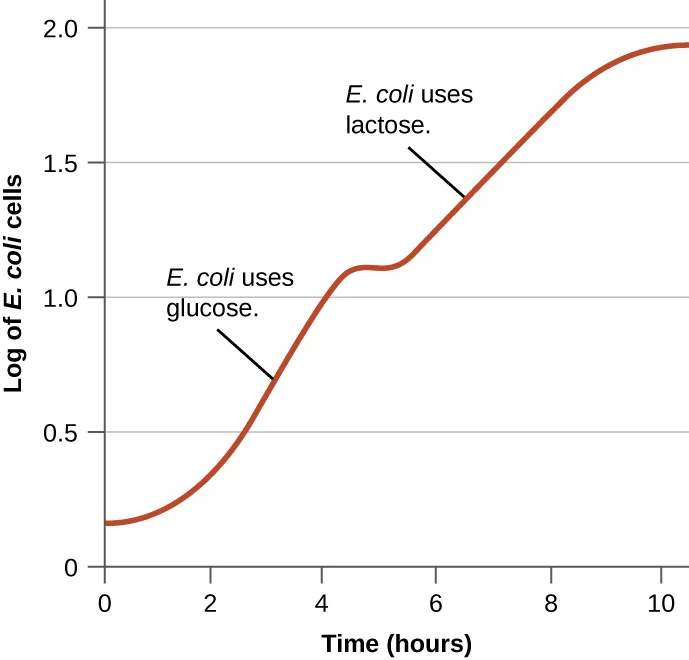
Bacteria typically have the ability to use a variety of substrates as carbon sources. However, because glucose is usually preferable to other substrates, bacteria have mechanisms to ensure that alternative substrates are only used when glucose has been depleted. Additionally, bacteria have mechanisms to ensure that the genes encoding enzymes for using alternative substrates are expressed only when the alternative substrate is available. In the 1940s, Jacques Monod was the first to demonstrate the preference for certain substrates over others through his studies of E. coli’s growth when cultured in the presence of two different substrates simultaneously. Such studies generated diauxic growth curves, like the one shown in the figure below. Although the preferred substrate glucose is used first, E. coli grows quickly and the enzymes for lactose metabolism are absent. However, once glucose levels are depleted, growth rates slow, inducing the expression of the enzymes needed for the metabolism of the second substrate, lactose. Notice how the growth rate in lactose is slower, as indicated by the lower steepness of the growth curve.
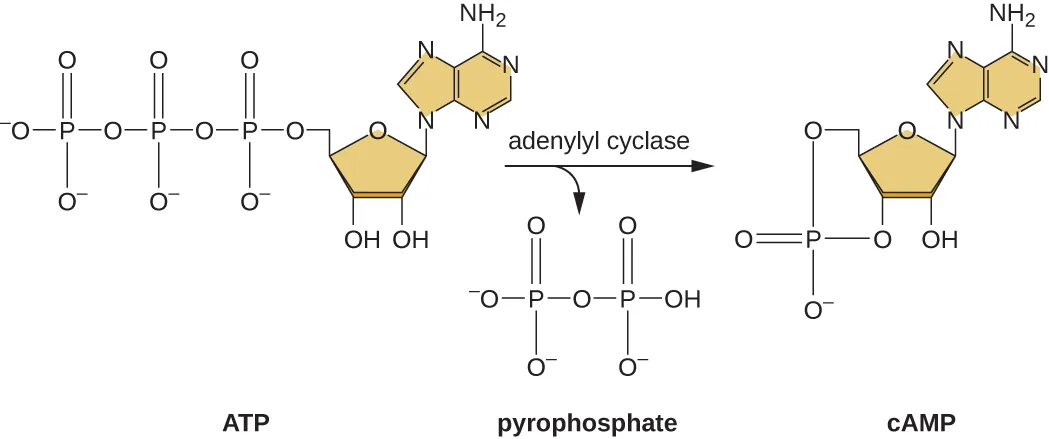
The ability to switch from glucose use to another substrate like lactose is a consequence of the activity of an enzyme called Enzyme IIA (EIIA). When glucose levels drop, cells produce less ATP from catabolism (see Catabolism of Carbohydrates), and EIIA becomes phosphorylated. Phosphorylated EIIA activates adenylyl cyclase, an enzyme that converts some of the remaining ATP to cyclic AMP (cAMP), a cyclic derivative of AMP and important signaling molecule involved in glucose and energy metabolism in E. coli. As a result, cAMP levels begin to rise in the cell, as shown in the figure below.
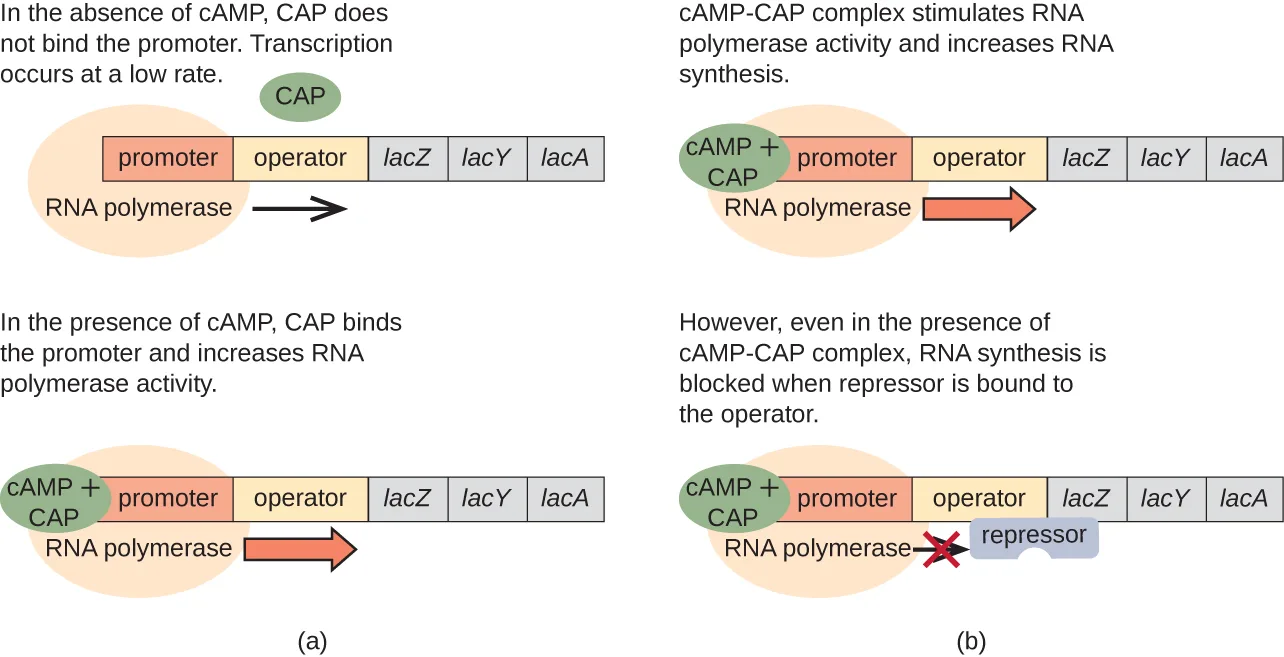
The lac operon also plays a role in this switch from using glucose to using lactose. When glucose is scarce, the accumulating cAMP caused by increased adenylyl cyclase activity binds to catabolite activator protein (CAP), also known as cAMP receptor protein (CRP). The complex binds to the promoter region of the lac operon, as the figure below shows. In the regulatory regions of these operons, a CAP binding site is located upstream of the RNA polymerase binding site in the promoter. Binding of the CAP-cAMP complex to this site increases the binding ability of RNA polymerase to the promoter region to initiate the transcription of the structural genes. Thus, in the case of the lac operon, for transcription to occur, lactose must be present (removing the lac repressor protein) and glucose levels must be depleted (allowing binding of an activating protein). When glucose levels are high, there is catabolite repression of operons encoding enzymes for the metabolism of alternative substrates. Because of low cAMP levels under these conditions, there is an insufficient amount of the CAP-cAMP complex to activate transcription of these operons. See the table below for a summary of the regulation of the lac operon.
Extended description
Reading left to right: the curve begins near 0.15 at time 0 and stays nearly flat for about the first hour. It then climbs steeply for about three hours, from roughly 0.3 to 1.0, a segment labelled E. coli uses glucose. The curve flattens again for roughly an hour around 1.0–1.2, then climbs a second time for about four hours, from roughly 1.2 to 1.9, a segment labelled E. coli uses lactose, before flattening once more near 1.9 for the rest of the plotted time.
Extended description
Reading left to right: ATP is drawn as an adenine base joined to a ribose sugar (with two hydroxyl groups on the sugar ring) that in turn carries a chain of three linked phosphate groups. An arrow labelled adenylyl cyclase points from ATP down to a separate two-phosphate unit labelled pyrophosphate, and across to the product on the right: the same adenine-ribose unit, now carrying only one phosphate group, which forms a second bond from its own oxygen to the ribose ring’s 3′ carbon, closing a ring. The starting molecule is labelled ATP, the two-phosphate byproduct is labelled pyrophosphate, and the closed-ring product is labelled cAMP.
Extended description
Panel (a), two rows over the same promoter-operator-lacZ-lacY-lacA gene row. Top row: a separate oval labelled CAP floats apart from the promoter, RNA polymerase sits on the promoter, and a thin arrow runs into the genes, showing transcription at a low rate. Bottom row: the CAP oval now sits directly on the promoter beside a small circle labelled cAMP, RNA polymerase sits beside it, and a thick arrow runs into the genes, showing faster transcription. Panel (b): the same cAMP-CAP complex sits on the promoter beside RNA polymerase, but a separate repressor shape now sits on the operator, and a red X blocks the arrow between RNA polymerase and the lacZ, lacY, lacA genes, showing that repressor binding still blocks transcription even with CAP-cAMP present.
Conditions Affecting Transcription of the lac Operon
| Glucose | CAP binds | Lactose | Repressor binds | Transcription |
|---|---|---|---|---|
| + | – | – | + | No |
| + | – | + | – | Some |
| – | + | – | + | No |
| – | + | + | – | Yes |
Link to Learning
Watch an animated tutorial about the workings of the lac operon here.
Check Your Understanding
What affects the binding of the trp operon repressor to the operator?
Recall what two molecules must bind the trp repressor before it can bind the operator.How and when is the behavior of the lac repressor protein altered?
Show model answer
Did your answer mention:
In addition to being repressible, how else is the lac operon regulated?
Recall the one other regulatory relationship named for the lac operon, besides repression, at the start of the next subsection.Global Responses of Prokaryotes
In prokaryotes, there are also several higher levels of gene regulation that have the ability to control the transcription of many related operons simultaneously in response to an environmental signal. A group of operons all controlled simultaneously is called a regulon.
Alarmones
When sensing impending stress, prokaryotes alter the expression of a wide variety of operons to respond in coordination. They do this through the production of alarmones, which are small intracellular nucleotide derivatives. Alarmones change which genes are expressed and stimulate the expression of specific stress-response genes. The use of alarmones to alter gene expression in response to stress appears to be important in pathogenic bacteria. On encountering host defense mechanisms and other harsh conditions during infection, many operons encoding virulence genes are upregulated in response to alarmone signaling. Knowledge of these responses is key to being able to fully understand the infection process of many pathogens and to the development of therapies to counter this process.
Alternate σ Factors
Since the σ subunit of bacterial RNA polymerase confers specificity as to which promoters should be transcribed, altering the σ factor used is another way for bacteria to quickly and globally change what regulons are transcribed at a given time. The σ factor recognizes sequences within a bacterial promoter, so different σ factors will each recognize slightly different promoter sequences. In this way, when the cell senses specific environmental conditions, it may respond by changing which σ factor it expresses, degrading the old one and producing a new one to transcribe the operons encoding genes whose products will be useful under the new environmental condition. For example, in sporulating bacteria of the genera Bacillus and Clostridium (which include many pathogens), a group of σ factors controls the expression of the many genes needed for sporulation in response to sporulation-stimulating signals.
Check Your Understanding
The name given to a collection of operons that can be regulated as a group is a ________.
Name the term this section defines for a group of operons all controlled simultaneously.What type of stimulus would trigger the transcription of a different σ factor?
Recall what the cell senses before it changes which σ factor it expresses.Additional Methods of Regulation in Bacteria: Attenuation and Riboswitches
Although most gene expression is regulated at the level of transcription initiation in prokaryotes, there are also mechanisms to control both the completion of transcription as well as translation concurrently. Since their discovery, these mechanisms have been shown to control the completion of transcription and translation of many prokaryotic operons. Because these mechanisms link the regulation of transcription and translation directly, they are specific to prokaryotes, because these processes are physically separated in eukaryotes.
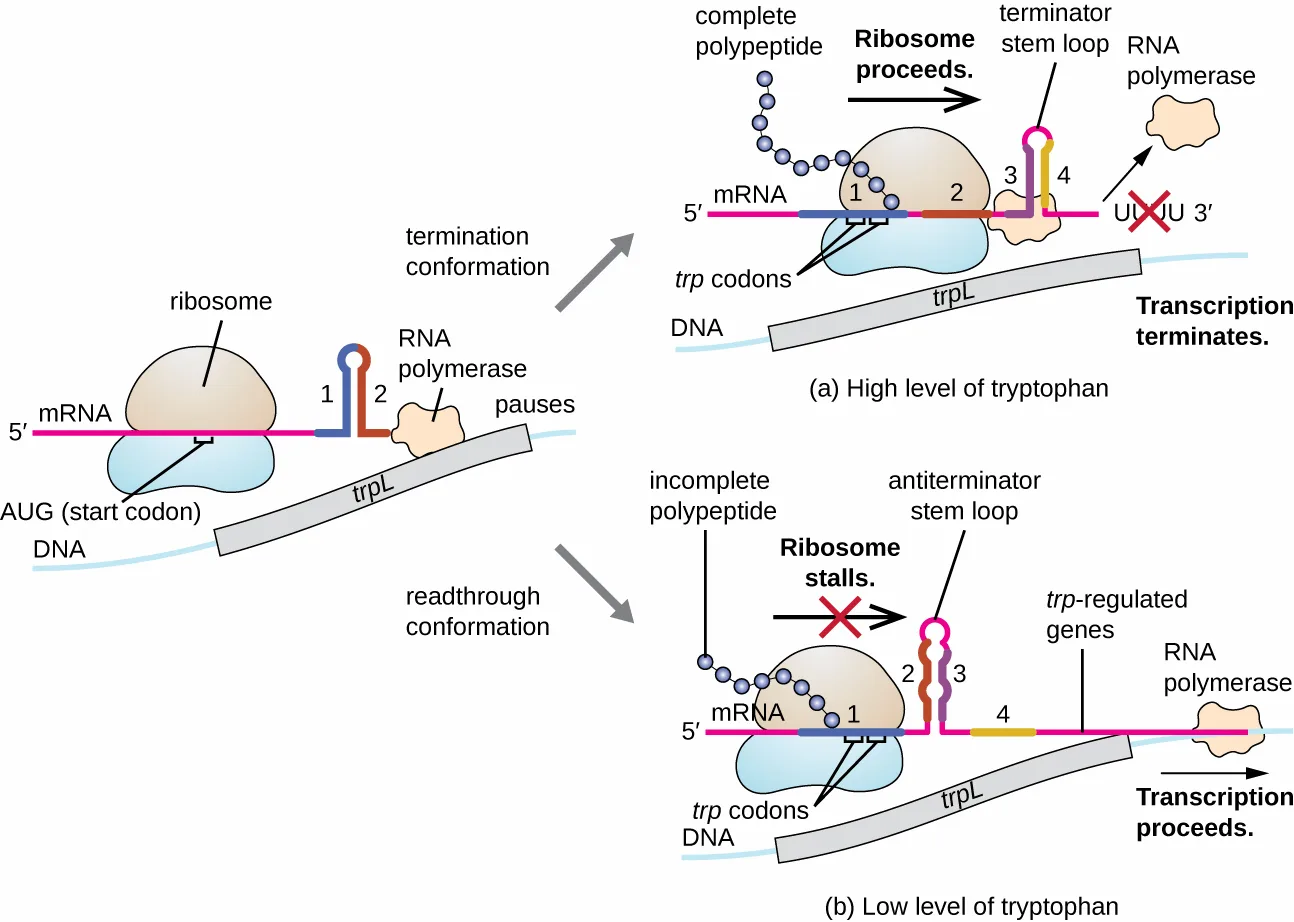
One such regulatory system is attenuation, whereby secondary stem-loop structures formed within the 5′ end of an mRNA being transcribed determine if transcription to complete the synthesis of this mRNA will occur and if this mRNA will be used for translation. Beyond the transcriptional repression mechanism already discussed, attenuation also controls expression of the trp operon in E. coli, as the figure below shows. The trp operon regulatory region contains a leader sequence called trpL between the operator and the first structural gene, which has four stretches of RNA that can base pair with each other in different combinations. When a terminator stem-loop forms, transcription terminates, releasing RNA polymerase from the mRNA. However, when an antiterminator stem-loop forms, this prevents the formation of the terminator stem-loop, so RNA polymerase can transcribe the structural genes.
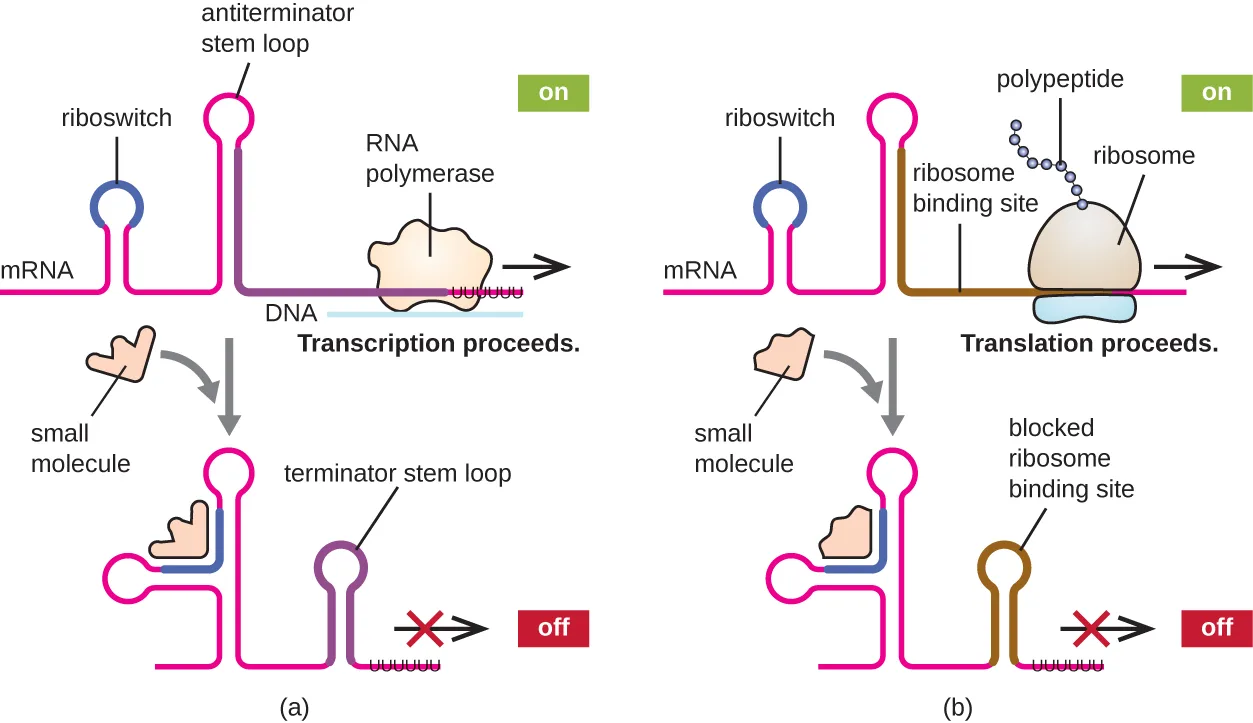
A related mechanism of concurrent regulation of transcription and translation in prokaryotes is the use of a riboswitch, a small region of noncoding RNA found within the 5′ end of some prokaryotic mRNA molecules, as the figure below shows. A riboswitch may bind to a small intracellular molecule to stabilize certain secondary structures of the mRNA molecule. The binding of the small molecule determines which stem-loop structure forms, thus influencing the completion of mRNA synthesis and protein synthesis.
Extended description
At the left, a shared initial state: a ribosome sits at the AUG start codon over the start of an mRNA strand, where regions 1 and 2 have already paired into a small stem-loop; below, on the DNA, RNA polymerase is shown pausing as it transcribes the trpL leader sequence. Two grey arrows lead right from this shared state. The upper arrow, labelled termination conformation, leads to panel (a), High level of tryptophan: the ribosome has proceeded across regions 1 and 2 to produce a complete polypeptide (a chain of circles) and the label Ribosome proceeds; regions 3 and 4 now pair into a terminator stem loop; RNA polymerase, blocked by a red X just past a run of U’s at the mRNA’s 3′ end, is shown detaching, labelled Transcription terminates. The lower arrow, labelled readthrough conformation, leads to panel (b), Low level of tryptophan: the ribosome stalls, blocked by a red X, after producing only an incomplete polypeptide from region 1, labelled Ribosome stalls; regions 2 and 3 pair into an antiterminator stem loop instead, leaving region 4 an unpaired stretch of mRNA ahead of the trp-regulated genes; RNA polymerase proceeds rightward past it, labelled Transcription proceeds.
Extended description
Panel (a): top row, an mRNA strand folds into a small riboswitch loop followed by a larger antiterminator stem loop; RNA polymerase sits to the right with an arrow proceeding rightward and the label on. Bottom row, the same mRNA after a small molecule (drawn as an irregular shape) has bound the riboswitch loop: the second loop is now shown as a terminator stem loop, a red X blocks the arrow, and the label reads off. Panel (b) mirrors this layout for translation: top row, the mRNA’s riboswitch loop is followed by an open ribosome binding site where a ribosome sits translating a chain of circles labelled polypeptide, label on. Bottom row, after the small molecule binds the riboswitch, the region that was the ribosome binding site is now folded into its own stem loop labelled blocked ribosome binding site, a red X blocks the arrow, and the label reads off.
Other Factors Affecting Gene Expression in Prokaryotes and Eukaryotes
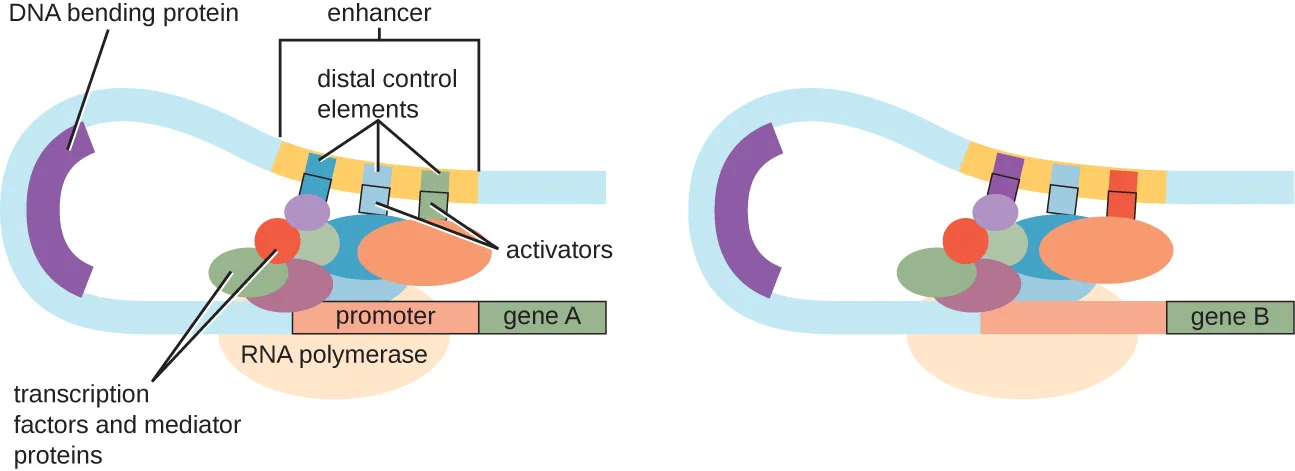
Although the focus on our discussion of transcriptional control used prokaryotic operons as examples, eukaryotic transcriptional control is similar in many ways. As in prokaryotes, eukaryotic transcription can be controlled through the binding of transcription factors including repressors and activators. Interestingly, eukaryotic transcription can be influenced by the binding of proteins to regions of DNA, called enhancers, rather far away from the gene, through DNA looping facilitated between the enhancer and the promoter, as the figure below shows. Overall, regulating transcription is a highly effective way to control gene expression in both prokaryotes and eukaryotes. However, the control of gene expression in eukaryotes in response to environmental and cellular stresses can be accomplished in additional ways without the binding of transcription factors to regulatory regions.
Extended description
A single light-blue DNA strand runs left to right, bent into a loop near its left end so that a distant stretch of DNA is brought close to the promoter. At the far left of the loop sits a purple crescent labelled DNA bending protein. Where the loop closes, a short yellow stretch of DNA carries three small coloured squares labelled activators, bracketed together with the label distal control elements and, above that, enhancer. Each activator square connects by a short line down to one of several ovals — red, green, purple, blue, and a large orange oval — labelled transcription factors and mediator proteins, which sit on an orange promoter block immediately to the left of a green block labelled gene A. The large orange oval is labelled RNA polymerase.
DNA-Level Control
In eukaryotes, the DNA molecules or associated histones can be chemically modified in such a way as to influence transcription; this is called epigenetic regulation. Methylation of certain cytosine nucleotides in DNA in response to environmental factors has been shown to influence use of such DNA for transcription, with DNA methylation commonly correlating to lowered levels of gene expression. Additionally, in response to environmental factors, histone proteins for packaging DNA can also be chemically modified in multiple ways, including acetylation and deacetylation, influencing the packaging state of DNA and thus affecting the availability of loosely wound DNA for transcription. These chemical modifications can sometimes be maintained through multiple rounds of cell division, making at least some of these epigenetic changes heritable.
Link to Learning
This video describes how epigenetic regulation controls gene expression.
Check Your Understanding
What stops or allows transcription to proceed when attenuation is operating?
Show model answer
Did your answer mention:
The state of a riboswitch is determined by the binding of ________.
Recall what a riboswitch may bind to stabilize certain secondary structures of the mRNA molecule.Check Your Understanding
Describe the function of an enhancer.
Recall the one-sentence definition of an enhancer given in its figure caption.Describe two mechanisms of epigenetic regulation in eukaryotes.
Show model answer
Did your answer mention:
Clinical Focus. Resolution
Although Mark survived his bout with necrotizing fasciitis, he would now have to undergo a skin-grafting surgery, followed by long-term physical therapy. Based on the amount of muscle mass he lost, it is unlikely that his leg will return to full strength, but his physical therapist is optimistic that he will regain some use of his leg.
Laboratory testing revealed the causative agent of Mark’s infection was a strain of Staphylococcus aureus. As required by law, Mark’s case was reported to the state health department and ultimately to the Centers for Disease Control and Prevention (CDC). At the CDC, the strain of Staphylococcus aureus strep isolated from Mark was analyzed more thoroughly for methicillin resistance.
Methicillin resistance is genetically coded and is increasing among strains of S. aureus through horizontal gene transfer. Strains of S. aureus that are resistant to methicillin are typically resistant to virtually all beta-lactam antibiotics and other classes of antibiotics as well. In necrotizing fasciitis, blood flow to the infected area is typically limited because of the action of various genetically encoded bacterial toxins. This is why there is typically little to no bleeding as a result of the incision test. Unfortunately, these bacterial toxins limit the effectiveness of intravenous antibiotics in clearing infection from the skin and underlying tissue, meaning that antibiotic resistance alone does not explain the ineffectiveness of Mark’s treatment. Nevertheless, intravenous antibiotic therapy was warranted to help minimize the possible outcome of sepsis, which is a common outcome of necrotizing fasciitis. Through genomic analysis by the CDC of the strain isolated from Mark, several of the important virulence genes were shown to be encoded within pathogenicity islands that were associated with prophages. Horizontal transfer of pathogenicity island-encoded virulence factors between strains of S. aureus has been shown to occur through induction of prophage and can be induced by treatment with antibiotics.
This is the final installment of Mark’s case; it began in The Functions of Genetic Material.
Summary
- Gene expression is a tightly regulated process.
- Gene expression in prokaryotes is largely regulated at the point of transcription. Gene expression in eukaryotes is additionally regulated post-transcriptionally.
- Prokaryotic structural genes of related function are often organized into operons, all controlled by transcription from a single promoter. The regulatory region of an operon includes the promoter itself and the region surrounding the promoter to which transcription factors can bind to influence transcription.
- Although some operons are constitutively expressed, most are subject to regulation through the use of transcription factors (repressors and activators). A repressor binds to an operator, a DNA sequence within the regulatory region between the RNA polymerase binding site in the promoter and first structural gene, thereby physically blocking transcription of these operons. An activator binds within the regulatory region of an operon, helping RNA polymerase bind to the promoter, thereby enhancing the transcription of this operon. An inducer influences transcription through interacting with a repressor or activator.
- The trp operon is a classic example of a repressible operon. When tryptophan accumulates, tryptophan binds to a repressor, which then binds to the operator, preventing further transcription.
- The lac operon is a classic example an inducible operon. When lactose is present in the cell, it is converted to allolactose. Allolactose acts as an inducer, binding to the repressor and preventing the repressor from binding to the operator. This allows transcription of the structural genes.
- The lac operon is also subject to activation. When glucose levels are depleted, some cellular ATP is converted into cAMP, which binds to the catabolite activator protein (CAP). The cAMP-CAP complex activates transcription of the lac operon. When glucose levels are high, its presence prevents transcription of the lac operon and other operons by catabolite repression.
- Small intracellular molecules called alarmones are made in response to various environmental stresses, allowing bacteria to control the transcription of a group of operons, called a regulon.
- Bacteria have the ability to change which σ factor of RNA polymerase they use in response to environmental conditions to quickly and globally change which regulons are transcribed.
- Prokaryotes have regulatory mechanisms, including attenuation and the use of riboswitches, to simultaneously control the completion of transcription and translation from that transcript. These mechanisms work through the formation of stem loops in the 5′ end of an mRNA molecule currently being synthesized.
- There are additional points of regulation of gene expression in prokaryotes and eukaryotes. In eukaryotes, epigenetic regulation by chemical modification of DNA or histones, and regulation of RNA processing are two methods.
Key terms
- operon — a group of genes with related functions often found clustered together within the prokaryotic chromosome and transcribed under the control of a single promoter and operator repression sequence.
- transcription factors — proteins encoded by regulatory genes that function by influencing the binding of RNA polymerase to the promoter and allowing its progression to transcribe structural genes.
- repressor — protein that suppresses transcription of a gene or operon in response to an external stimulus.
- operator — DNA sequence located between the promoter region and the first coding gene to which a repressor protein can bind.
- activator — protein that increases the transcription of a gene in response to an external stimulus.
- inducer — small molecule that either activates or represses transcription.
- constitutively expressed — describes genes that are transcribed and translated continuously to provide the cell with constant intermediate levels of the protein products.
- repressible operon — bacterial operon, that typically containing genes encoding enzymes required for a biosynthetic pathway and that is expressed when the product of the pathway continues to be required but is repressed when the product of the pathway accumulates, removing the need for continued expression.
- inducible operon — bacterial operon, typically containing genes encoding enzymes in a degradative pathway, whose expression is induced by the substrate to be degraded when the substrate is available for the cell to use, but that is otherwise repressed in the absence of the substrate.
- cyclic AMP (cAMP) — intracellular signaling molecule made through the action of adenylyl cyclase from ATP when glucose levels are low, with the ability to bind to a catabolite activator protein to allow it to bind to regulatory regions and activate the transcription of operons encoding enzymes for metabolism of alternative substrates.
- catabolite activator protein (CAP) — a protein, also known as cAMP receptor protein (CRP), that binds cAMP when glucose is scarce and, as the resulting complex, binds the promoter region of an operon such as the lac operon to increase RNA polymerase’s ability to bind the promoter and initiate transcription.
- alarmones — small intracellular derivative of a nucleotide that signals a global bacterial response (i.e., activating a regulon of operons) to an environmental stress.
- σ factor — subunit of bacterial RNA polymerase conferring promoter specificity that can be substituted with a different version in response to an environmental condition, allowing for a quick and global change of the regulon transcribed.
- attenuation — regulatory system of prokaryotes whereby secondary stem-loop structures formed within the 5′ end of an mRNA being transcribed determine both if transcription to complete the synthesis of this mRNA will occur and if this mRNA will be used for translation.
- riboswitch — small region of noncoding RNA found within the 5′ end of some prokaryotic mRNA molecules that may bind to a small intracellular molecule, influencing the completion of transcription and/or translation.
- epigenetic regulation — chemical modification of DNA or associated histones to influence transcription.
Practice
Compare inducible operons and repressible operons
An operon of genes encoding enzymes in a biosynthetic pathway is likely to be which of the following?
Recall which operon type continues to be expressed only until the product of its biosynthetic pathway accumulates.An operon encoding genes that are transcribed and translated continuously to provide the cell with constant intermediate levels of the protein products is said to be which of the following?
Recall the term for an operon whose expression is unregulated because its products are needed consistently.Which of the following conditions leads to maximal expression of the lac operon?
Recall the two conditions that must both hold — removing the repressor and allowing CAP binding — for the lac operon to be fully expressed.The DNA sequence, to which repressors may bind, that lies between the promoter and the first structural gene is called the ________.
Name the regulatory-region element the repressor physically binds to block RNA polymerase.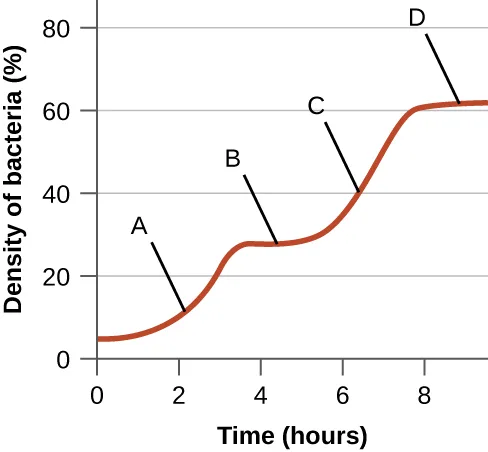
The following figure is from Monod’s original work on diauxic growth showing the growth of E. coli in the simultaneous presence of xylose and glucose as the only carbon sources. Explain what is happening at points A–D with respect to the carbon source being used for growth, and explain whether the xylose-use operon is being expressed (and why). Note that expression of the enzymes required for xylose use is regulated in a manner similar to the expression of the enzymes required for lactose use.
Show model answer
Did your answer mention:
Sort each condition described below by the transcription outcome it produces in the lac operon, from the table above.
No
Some
Yes
Describe why regulation of operons is important
Which of the following is a type of regulation of gene expression unique to eukaryotes?
Of these four, three are prokaryote-specific mechanisms named earlier in this section; one is the DNA-level mechanism named in the last subsection.The prevention of expression of operons encoding substrate use pathways for substrates other than glucose when glucose is present is called ________.
Name the term this section gives to what happens to alternative-substrate operons when glucose levels are high.What are two ways that bacteria can influence the transcription of multiple different operons simultaneously in response to a particular environmental condition?
Show model answer
Did your answer mention:
This section is adapted from Microbiology, Section 11.7: Gene Regulation: Operon Theory by Nina Parker, Mark Schneegurt, Anh-Hue Thi Tu, Philip Lister, Brian M. Forster, and OpenStax, © OpenStax, licensed under CC BY-NC-SA 4.0. Access the original for free at openstax.org. Changes: all nine figures re-encoded as WebP and rendered as mediafigures after image and PDF inspection; every one is set kind="diagram" (each is a drawn schematic or line graph, not a photograph), overriding the manifest’s photo guess for all nine, and each carries a longdesc walking its panels, labels, or curve in reading order since none of their captions name every drawn element; OSC_Microbio_11_07_Atten’s alt and longdesc were rewritten after a second look at the artwork to name the shared initial state (the ribosome paused at the AUG start codon over the region 1/2 stem-loop, with RNA polymerase paused on the trpL DNA) that precedes the branch into panels (a) and (b), which the first draft omitted; OSC_Microbio_11_07_Operon carries eager="true" as the first figure on the page; same-module figure cross-references are rendered as describing prose (“the figure below,” “as the figure below shows”), and the cross-reference to the lac-operon conditions table is rendered the same way. The Conditions Affecting Transcription of the *lac* Operon table is transcribed as a Markdown table from the CNXML cells, checked against the PDF page, never from the table’s summary attribute, with its spanning header row rendered as a bold title line above the table rather than a data row; it feeds one sortbins in the Practice block, binned by the table’s own three column values for the Transcription outcome (“No”, “Some”, “Yes”, printed exactly as the table prints them rather than paraphrased) with items drawn from both the glucose/lactose condition pairs and the CAP/repressor-binding states, placed under the first objective. The two Link to Learning boxes inside the trp and lac subsections, and the third inside DNA-Level Control, keep their URLs with the source’s own sentences; the cross-reference to Catabolism of Carbohydrates (Section 8.2) is an absolute site-root link, since that page is authored. The Clinical Focus Resolution callout keeps the case’s four closing paragraphs verbatim; its closing sentence, which in the source links back to the previous Clinical Focus part (in How Asexual Prokaryotes Achieve Genetic Diversity), is replaced with a sentence naming where the case began, The Functions of Genetic Material, per the chapter-11 chain rule. The eleven body Check Your Understanding bullets, across four source boxes (2, 3, 2, and 4 bullets), are rendered as body items at each box’s position; the fourth box’s four bullets are split into two consecutive **Check Your Understanding** runs of two, per the book’s 2–3-consecutive-question rule, content unchanged: five stay self-checks whose model answers and rubrics are assembled from this module’s own sentences (the operon-parts question, the three-regulatory-molecules question, the lac-repressor-alteration question, the attenuation stop/allow question, and the two-epigenetic-mechanisms question — each needs more than one module sentence joined together, so none reduces to a single fixing sentence); three are graded textin (the regulon name-recall, the σ-factor-stimulus recall, and the riboswitch-determinant recall, each a short phrase the module prints verbatim); three are graded multiplechoice because one module sentence fixes the whole answer, with distractors built from this module’s own sibling regulatory concepts: the trp-repressor-binding-factor question (fixed by “two tryptophan molecules bind to the trp repressor molecule, which changes its shape, allowing it to bind to the trp operator”), the “how else is the lac operon regulated” question (fixed by “The lac operon is also subject to activation in the absence of glucose” — the key is trimmed to this one sentence’s own words, without the CAP-cAMP mechanism detail that lives in the sentences after it), and the enhancer-function question (fixed by the figure caption’s own opening sentence, “an enhancer is a DNA sequence that promotes transcription,” rather than the caption’s later sentences about distal control elements and DNA looping). Of the module’s four Multiple Choice and two Fill in the Blank items, all six are adapted into Practice as source-keyed multiplechoice/textin items, unchanged from the source’s own options and keys. The unkeyed Short Answer question (“two ways bacteria influence transcription of multiple operons simultaneously”) stays a selfcheck: its two mechanisms (alarmones, an alternate σ factor) live in two different subsections rather than one fixing sentence, so it is not converted; the model answer and rubric are assembled from one sentence of each subsection (§ Alarmones, § Alternate σ Factors). The source prints no key for it. The unkeyed Critical Thinking question (the diauxic-growth figure, points A–D) stays a selfcheck, per the run’s decision: it is rendered as a mediafigure immediately followed by the item, in the first objective’s Practice group; the caption is author-written (the source prints none), and the alt reads only the axes and the two rises and two plateaus with each letter’s position, never the explanation the item asks for; the model answer applies the diauxic-growth and CAP-cAMP-activation passages to xylose exactly as the question’s own note instructs, treating xylose analogously to lactose. Both objective groups meet the book’s floor with source items alone (six in the first group plus the table’s sortbins and the diauxic self-check, three in the second), so no filler item was needed. The ## Key terms block is the sixteen distinct defined <term> elements of this module in body order; fifteen definitions are the Glossary appendix’s verbatim entries (including repressible operon’s, which is printed exactly as the appendix has it, grammatical infelicity and all — “bacterial operon, that typically containing genes … and that is expressed …” — rather than smoothed), and one — catabolite activator protein (CAP) — has no appendix entry under either CAP or catabolite activator protein and is written from this module’s own defining sentence. No source exercise item is omitted.