Modern Applications of Microbial Genetics
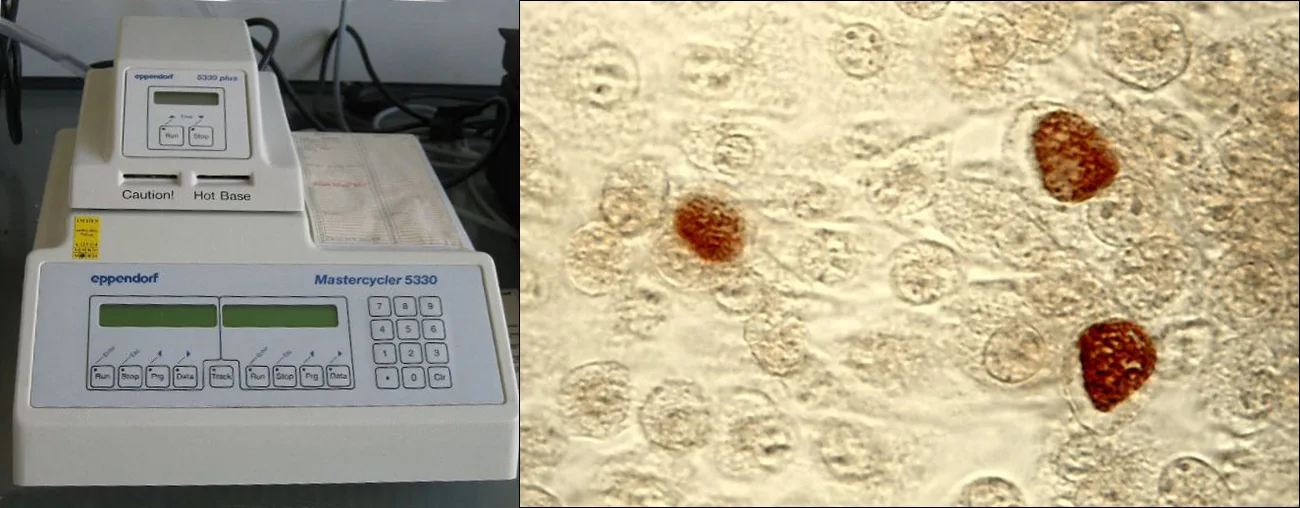
Watson and Crick’s identification of the structure of DNA in 1953 was the seminal event in the field of genetic engineering. Since the 1970s, there has been a veritable explosion in scientists’ ability to manipulate DNA in ways that have revolutionized the fields of biology, medicine, diagnostics, forensics, and industrial manufacturing. Many of the molecular tools discovered in recent decades have been produced using prokaryotic microbes. In this chapter, we will explore some of those tools, especially as they relate to applications in medicine and health care.
As an example, the thermal cycler in the figure above is used to perform a diagnostic technique called the polymerase chain reaction (PCR), which relies on DNA polymerase enzymes from thermophilic bacteria. Other molecular tools, such as restriction enzymes and plasmids obtained from microorganisms, allow scientists to insert genes from humans or other organisms into microorganisms. The microorganisms are then grown on an industrial scale to synthesize products such as insulin, vaccines, and biodegradable polymers. These are just a few of the numerous applications of microbial genetics that we will explore in this chapter.
Sections
- Microbes and the Tools of Genetic Engineering — recombinant DNA technology, restriction enzymes and ligation, plasmid vectors and blue-white screening, genomic and cDNA libraries, and the methods that introduce DNA into prokaryotic and eukaryotic cells.
- Visualizing and Characterizing DNA, RNA, and Protein — DNA probes, agarose gel electrophoresis, RFLP analysis, Southern and northern blots, microarrays, SDS-PAGE, the polymerase chain reaction and its variants, and Sanger and next-generation sequencing.
- Whole Genome Methods and Pharmaceutical Applications of Genetic Engineering — genomics, transcriptomics, proteomics, and bioinformatics; reporter genes; recombinant DNA pharmaceuticals and vaccines; and RNA interference.
- Gene Therapy — the mechanisms and risks of gene therapy, the regulation of its clinical trials, and the ethical questions raised by somatic-cell and germ-line approaches.
This chapter is adapted from Microbiology, Chapter 12: Modern Applications of Microbial Genetics by Nina Parker, Mark Schneegurt, Anh-Hue Thi Tu, Philip Lister, Brian M. Forster, and OpenStax, © OpenStax, licensed under CC BY-NC-SA 4.0. Access the original for free at openstax.org. Each section page records its own changes from the source. Changes: the chapter-opening figure is the source’s pair of photographs, re-encoded for the web, with its alt text rewritten to describe both panels; the source’s in-text figure reference is rendered as “the figure above”; the module defines no terms.