Whole Genome Methods and Pharmaceutical Applications of Genetic Engineering
By the end of this section, you will be able to:
- Explain the uses of genome-wide comparative analyses
- Summarize the advantages of genetically engineered pharmaceutical products
Advances in molecular biology have led to the creation of entirely new fields of science. Among these are fields that study aspects of whole genomes, collectively referred to as whole-genome methods. In this section, we’ll provide a brief overview of the whole-genome fields of genomics, transcriptomics, and proteomics.
Genomics, Transcriptomics, and Proteomics
The study and comparison of entire genomes, including the complete set of genes and their nucleotide sequence and organization, is called genomics. This field has great potential for future medical advances through the study of the human genome as well as the genomes of infectious organisms. Analysis of microbial genomes has contributed to the development of new antibiotics, diagnostic tools, vaccines, medical treatments, and environmental cleanup techniques.
The field of transcriptomics is the science of the entire collection of mRNA molecules produced by cells. Scientists compare gene expression patterns between infected and uninfected host cells, gaining important information about the cellular responses to infectious disease. Additionally, transcriptomics can be used to monitor the gene expression of virulence factors in microorganisms, aiding scientists in better understanding pathogenic processes from this viewpoint.
When genomics and transcriptomics are applied to entire microbial communities, we use the terms metagenomics and metatranscriptomics, respectively. Metagenomics and metatranscriptomics allow researchers to study genes and gene expression from a collection of multiple species, many of which may not be easily cultured or cultured at all in the laboratory. A DNA microarray (discussed in the previous section) can be used in metagenomics studies.
Another up-and-coming clinical application of genomics and transcriptomics is pharmacogenomics, also called toxicogenomics, which involves evaluating the effectiveness and safety of drugs on the basis of information from an individual’s genomic sequence. Genomic responses to drugs can be studied using experimental animals (such as laboratory rats or mice) or live cells in the laboratory before embarking on studies with humans. Changes in gene expression in the presence of a drug can sometimes be an early indicator of the potential for toxic effects. Personal genome sequence information may someday be used to prescribe medications that will be most effective and least toxic on the basis of the individual patient’s genotype.
The study of proteomics is an extension of genomics that allows scientists to study the entire complement of proteins in an organism, called the proteome. Even though all cells of a multicellular organism have the same set of genes, cells in various tissues produce different sets of proteins. Thus, the genome is constant, but the proteome varies and is dynamic within an organism. Proteomics may be used to study which proteins are expressed under various conditions within a single cell type or to compare protein expression patterns between different organisms.
The most prominent disease being studied with proteomic approaches is cancer, but this area of study is also being applied to infectious diseases. Research is currently underway to examine the feasibility of using proteomic approaches to diagnose various types of hepatitis, tuberculosis, and HIV infection, which are rather difficult to diagnose using currently available techniques (E.O. List, D.E. Berryman, B. Bower, L. Sackmann-Sala, E. Gosney, J. Ding, S. Okada, and J.J. Kopchick, “The Use of Proteomics to Study Infectious Diseases,” Infectious Disorders-Drug Targets (Formerly Current Drug Targets-Infectious Disorders) 8, no. 1 (2008): 31–45).
A recent and developing proteomic analysis relies on identifying proteins called biomarkers, whose expression is affected by the disease process. Biomarkers are currently being used to detect various forms of cancer as well as infections caused by pathogens such as Yersinia pestis and Vaccinia virus (Mohan Natesan and Robert G. Ulrich, “Protein Microarrays and Biomarkers of Infectious Disease,” International Journal of Molecular Sciences 11, no. 12 (2010): 5165–5183).
Other “-omic” sciences related to genomics and proteomics include metabolomics, glycomics, and lipidomics, which focus on the complete set of small-molecule metabolites, sugars, and lipids, respectively, found within a cell. Through these various global approaches, scientists continue to collect, compile, and analyze large amounts of genetic information. This emerging field of bioinformatics can be used, among many other applications, for clues to treating diseases and understanding the workings of cells.
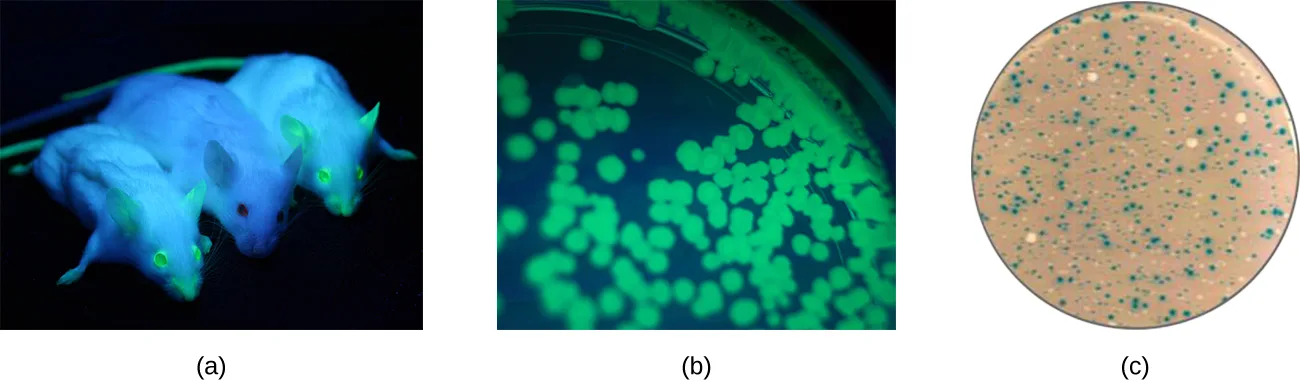
Additionally, researchers can use reverse genetics, a technique related to classic mutational analysis, to determine the function of specific genes. Classic methods of studying gene function involved searching for the genes responsible for a given phenotype. Reverse genetics uses the opposite approach, starting with a specific DNA sequence and attempting to determine what phenotype it produces. Alternatively, scientists can attach known genes (called reporter genes) that encode easily observable characteristics to genes of interest, and the location of expression of such genes of interest can be easily monitored. This gives the researcher important information about what the gene product might be doing or where it is located in the organism. Common reporter genes include bacterial lacZ, which encodes beta-galactosidase and whose activity can be monitored by changes in colony color in the presence of X-gal as previously described, and the gene encoding the jellyfish protein green fluorescent protein (GFP) whose activity can be visualized in colonies under ultraviolet light exposure, as shown below.
Check Your Understanding
How is genomics different from traditional genetics?
Show model answer
Did your answer mention:
If you wanted to study how two different cells in the body respond to an infection, what –omics field would you apply?
This section names the field that compares gene expression patterns between infected and uninfected host cells.What are the biomarkers uncovered in proteomics used for?
This section names the diseases biomarkers are currently being used to detect.Clinical Focus. Resolution
Because Kayla’s symptoms were persistent and serious enough to interfere with daily activities, Kayla’s physician decided to order some laboratory tests. The physician collected samples of Kayla’s blood, cerebrospinal fluid (CSF), and synovial fluid (from one of her swollen knees) and requested PCR analysis on all three samples. The PCR tests on the CSF and synovial fluid came back positive for the presence of Borrelia burgdorferi, the bacterium that causes Lyme disease.
Kayla’s physician immediately prescribed a full course of the antibiotic doxycycline. Fortunately, Kayla recovered fully within a few weeks and did not suffer from the long-term symptoms of post-treatment Lyme disease syndrome (PTLDS), which affects 10–20% of Lyme disease patients. To prevent future infections, Kayla’s physician advised her to use insect repellant and wear protective clothing during her outdoor adventures. These measures can limit exposure to Lyme-bearing ticks, which are common in many regions of the United States during the warmer months of the year. Kayla was also advised to make a habit of examining herself for ticks after returning from outdoor activities, as prompt removal of a tick greatly reduces the chances of infection.
Lyme disease is often difficult to diagnose. B. burgdorferi is not easily cultured in the laboratory, and the initial symptoms can be very mild and resemble those of many other diseases. But left untreated, the symptoms can become quite severe and debilitating. In addition to two antibody tests, which were inconclusive in Kayla’s case, and the PCR test, a Southern blot could be used with B. burgdorferi-specific DNA probes to identify DNA from the pathogen. Sequencing of surface protein genes of Borrelia species is also being used to identify strains within the species that may be more readily transmitted to humans or cause more severe disease.
The previous Clinical Focus box appears in Visualizing and Characterizing DNA, RNA, and Protein. The case began in Microbes and the Tools of Genetic Engineering.
Recombinant DNA Technology and Pharmaceutical Production
Genetic engineering has provided a way to create new pharmaceutical products called recombinant DNA pharmaceuticals. Such products include antibiotic drugs, vaccines, and hormones used to treat various diseases. The table below lists examples of recombinant DNA products and their uses.
For example, the naturally occurring antibiotic synthesis pathways of various Streptomyces spp., long known for their antibiotic production capabilities, can be modified to improve yields or to create new antibiotics through the introduction of genes encoding additional enzymes. More than 200 new antibiotics have been generated through the targeted inactivation of genes and the novel combination of antibiotic synthesis genes in antibiotic-producing Streptomyces hosts (Jose-Luis Adrio and Arnold L. Demain, “Recombinant Organisms for Production of Industrial Products,” Bioengineered Bugs 1, no. 2 (2010): 116–131).
Genetic engineering is also used to manufacture subunit vaccines, which are safer than other vaccines because they contain only a single antigenic molecule and lack any part of the genome of the pathogen (see Vaccines). For example, a vaccine for hepatitis B is created by inserting a gene encoding a hepatitis B surface protein into a yeast; the yeast then produces this protein, which the human immune system recognizes as an antigen. The hepatitis B antigen is purified from yeast cultures and administered to patients as a vaccine. Even though the vaccine does not contain the hepatitis B virus, the presence of the antigenic protein stimulates the immune system to produce antibodies that will protect the patient against the virus in the event of exposure (U.S. Department of Health and Human Services, “Types of Vaccines,” 2013; The Internet Drug List, Recombivax, 2015).
Genetic engineering has also been important in the production of other therapeutic proteins, such as insulin, interferons, and human growth hormone, to treat a variety of human medical conditions. For example, at one time, it was possible to treat diabetes only by giving patients pig insulin, which had supply limitations and caused allergic reactions due to small differences between the proteins expressed in human and pig insulin. Villa-Komaroff’s and the Gilbert team’s groundbreaking methods changed that. After they demonstrated the process for producing the hormone, the FDA approved the resulting synthetic insulin for human use. And since 1982, recombinant DNA technology has been used to produce large-scale quantities of human insulin using E. coli in a relatively inexpensive process that yields a more consistently effective pharmaceutical product. Scientists have also genetically engineered E. coli capable of producing human growth hormone (HGH), which is used to treat growth disorders in children and certain other disorders in adults. The HGH gene was cloned from a cDNA library and inserted into E. coli cells by cloning it into a bacterial vector. Eventually, genetic engineering will be used to produce DNA vaccines and various gene therapies, as well as customized medicines for fighting cancer and other diseases.
| Recombinant DNA Product | Application |
|---|---|
| Atrial natriuretic peptide | Treatment of heart disease (e.g., congestive heart failure), kidney disease, high blood pressure |
| DNase | Treatment of viscous lung secretions in cystic fibrosis |
| Erythropoietin | Treatment of severe anemia with kidney damage |
| Factor VIII | Treatment of hemophilia |
| Hepatitis B vaccine | Prevention of hepatitis B infection |
| Human growth hormone | Treatment of growth hormone deficiency, Turner’s syndrome, burns |
| Human insulin | Treatment of diabetes |
| Interferons | Treatment of multiple sclerosis, various cancers (e.g., melanoma), viral infections (e.g., Hepatitis B and C) |
| Tetracenomycins | Used as antibiotics |
| Tissue plasminogen activator | Treatment of pulmonary embolism in ischemic stroke, myocardial infarction |
Some Genetically Engineered Pharmaceutical Products and Applications
Check Your Understanding
What bacterium has been genetically engineered to produce human insulin for the treatment of diabetes?
Name the bacterial species this section says has produced large-scale quantities of human insulin since 1982.Explain how microorganisms can be engineered to produce vaccines.
Show model answer
Did your answer mention:
RNA Interference Technology
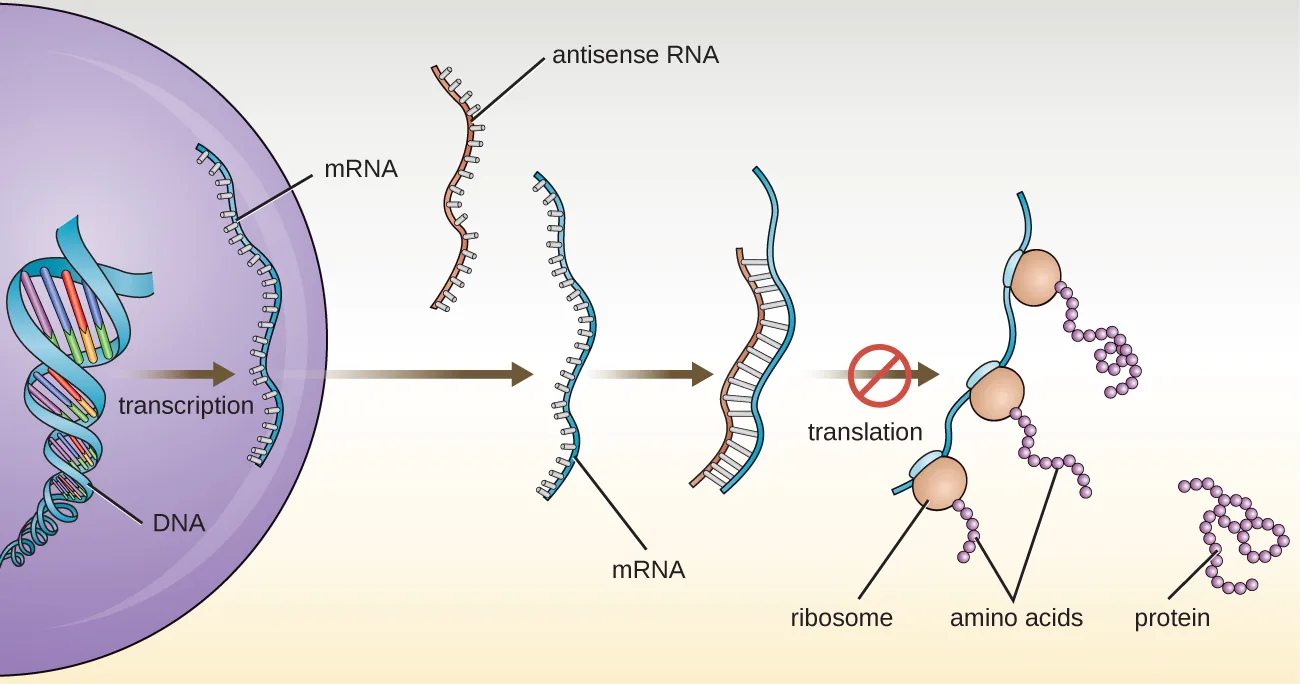
In Structure and Function of RNA, we described the function of mRNA, rRNA, and tRNA. In addition to these types of RNA, cells also produce several types of small noncoding RNA molecules that are involved in the regulation of gene expression. These include antisense RNA molecules, which are complementary to regions of specific mRNA molecules found in both prokaryotes and eukaryotic cells. Non-coding RNA molecules play a major role in RNA interference (RNAi), a natural regulatory mechanism by which mRNA molecules are prevented from guiding the synthesis of proteins. RNA interference of specific genes results from the base pairing of short, single-stranded antisense RNA molecules to regions within complementary mRNA molecules, preventing protein synthesis. Cells use RNA interference to protect themselves from viral invasion, which may introduce double-stranded RNA molecules as part of the viral replication process, as shown below.
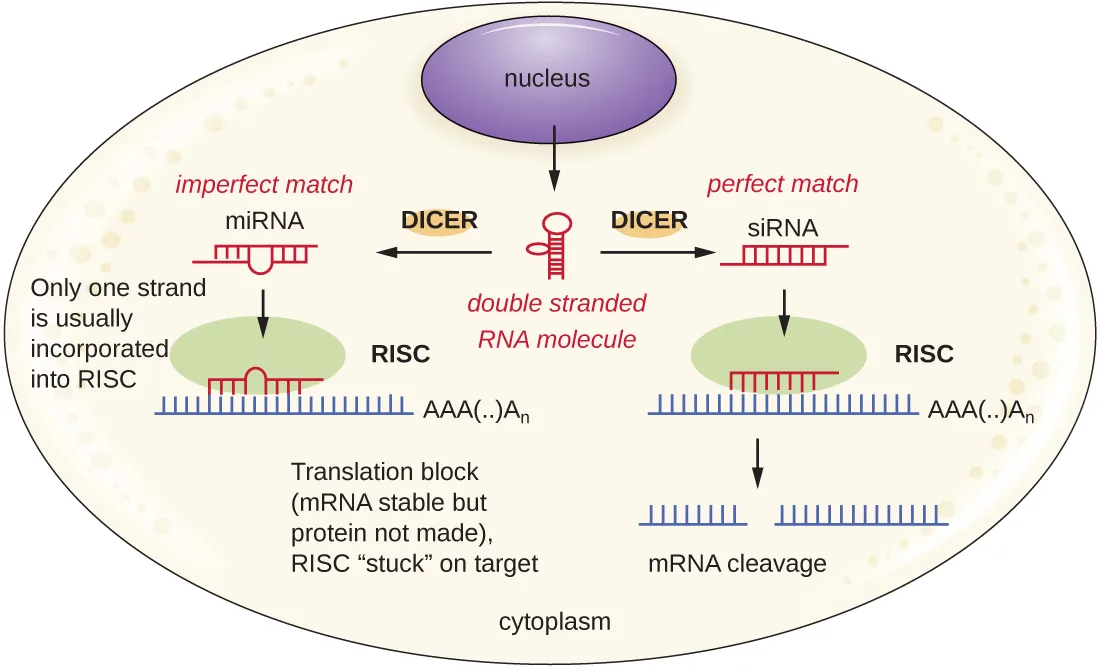
Researchers are currently developing techniques to mimic the natural process of RNA interference as a way to treat viral infections in eukaryotic cells. RNA interference technology involves using small interfering RNAs (siRNAs) or microRNAs (miRNAs), as shown below. siRNAs are completely complementary to the mRNA transcript of a specific gene of interest while miRNAs are mostly complementary. These double-stranded RNAs are bound to DICER, an endonuclease that cleaves the RNA into short molecules (approximately 20 nucleotides long). The RNAs are then bound to RNA-induced silencing complex (RISC), a ribonucleoprotein. The siRNA-RISC complex binds to mRNA and cleaves it. For miRNA, only one of the two strands binds to RISC. The miRNA-RISC complex then binds to mRNA, inhibiting translation. If the miRNA is completely complementary to the target gene, then the mRNA can be cleaved. Taken together, these mechanisms are known as gene silencing.
Summary
- The science of genomics allows researchers to study organisms on a holistic level and has many applications of medical relevance.
- Transcriptomics and proteomics allow researchers to compare gene expression patterns between different cells and shows great promise in better understanding global responses to various conditions.
- The various –omics technologies complement each other and together provide a more complete picture of an organism’s or microbial community’s (metagenomics) state.
- The analysis required for large data sets produced through genomics, transcriptomics, and proteomics has led to the emergence of bioinformatics.
- Reporter genes encoding easily observable characteristics are commonly used to track gene expression patterns of genes of unknown function.
- The use of recombinant DNA technology has revolutionized the pharmaceutical industry, allowing for the rapid production of high-quality recombinant DNA pharmaceuticals used to treat a wide variety of human conditions.
- RNA interference technology has great promise as a method of treating viral infections by silencing the expression of specific genes
Key terms
- genomics — the study and comparison of entire genomes, including the complete set of genes, their nucleotide sequence and organization, and their interactions within a species and with other species.
- transcriptomics — the study of the entire collection of mRNA molecules produced by cells; involves monitoring differences in gene expression patterns between cells at the mRNA level.
- metagenomics — the sequencing of genomic fragments from microbial communities, allowing researchers to study genes from a collection of multiple species.
- metatranscriptomics — the science of studying a collection of mRNA molecules produced from microbial communities; involves studying gene expression patterns from a collection of multiple species.
- pharmacogenomics (toxicogenomics) — the evaluation of the effectiveness and safety of drugs on the basis of information from an individual’s genomic sequence as well as examination of changes in gene expression in response to the drug.
- proteomics — the study of the entire complement of proteins in an organism; involves monitoring differences in gene expression patterns between cells at the protein level.
- biomarkers — a protein expressed by a cell or tissue that is indicative of disease.
- bioinformatics — the analysis of large amounts of information required for interpretation of these data.
- recombinant DNA pharmaceuticals — pharmaceuticals produced as a result of genetic engineering.
- antisense RNA — small noncoding RNA molecules that inhibit gene expression by binding to mRNA transcripts via complementary base pairing.
- RNA interference (RNAi) — process by which antisense RNAs or small interfering RNAs (siRNAs) interfere with gene expression by binding to mRNA, preventing translation and protein synthesis.
- gene silencing — a genetic engineering technique in which researchers prevent the expression of a particular gene by using small interfering RNAs (siRNAs) or microRNAs (miRNAs) to interfere with translation.
Practice
Explain the uses of genome-wide comparative analyses
The science of studying the entire collection of mRNA molecules produced by cells, allowing scientists to monitor differences in gene expression patterns between cells, is called:
Recall the field defined near the start of this section as the science of the entire collection of mRNA molecules.The science of studying genomic fragments from microbial communities, allowing researchers to study genes from a collection of multiple species, is called:
Recall the field this section names for applying genomics to an entire microbial community rather than a single organism.The application of genomics to evaluate the effectiveness and safety of drugs on the basis of information from an individual’s genomic sequence is called ____________.
This section gives this field two names; either is accepted.A gene whose expression can be easily visualized and monitored is called a ________.
This section names the type of gene attached to a gene of interest so its expression can be tracked, such as GFP or lacZ.If all cellular proteins are encoded by the cell’s genes, what information does proteomics provide that genomics cannot?
Recall the sentence contrasting what stays constant in a cell with what varies and is dynamic within an organism.Summarize the advantages of genetically engineered pharmaceutical products
The insulin produced by recombinant DNA technology is
Recall how this section contrasts recombinant human insulin with the pig insulin it replaced.RNA interference does not influence the sequence of genomic DNA.
Recall whether this section’s opening paragraph describes RNA interference as acting on DNA or on messenger RNA molecules.Which application is Erythropoietin, one of this section’s genetically engineered pharmaceutical products, used for?
Match the product to its own row in the recombinant DNA products table above, not a neighboring row.What are some advantages of cloning human genes into bacteria to treat human diseases caused by specific protein deficiencies?
Show model answer
Did your answer mention:
This section is adapted from Microbiology, Section 12.3: Whole Genome Methods and Pharmaceutical Applications of Genetic Engineering by Nina Parker, Mark Schneegurt, Anh-Hue Thi Tu, Philip Lister, Brian M. Forster, and OpenStax, © OpenStax, licensed under CC BY-NC-SA 4.0. Access the original for free at openstax.org. Changes: all three source figures are re-encoded as WebP and rendered as mediafigures; the GFP figure (all three panels photographs) is kind="photo", the Noncoding and siRNA figures (drawn process diagrams) are kind="diagram"; the GFP alt is rewritten to describe what the three photographs show rather than reprint the caption’s own narration, and panel (a) is written from the image rather than the source alt’s “glow … over most of their bodies,” since the green fluorescence is concentrated at the ears, nose, feet, and tail of the two outer mice and the middle mouse shows none; the Noncoding and siRNA alts keep the source’s step-by-step wording, with one one-word typo corrected in each (“mrNA” to “mRNA” in the Noncoding alt, “Dicer than cuts” to “Dicer then cuts” in the siRNA alt) and one further correction in the Noncoding alt (“Antisense mRNA” to “Antisense RNA,” matching the artwork’s own label and this section’s body prose) — all three logged as source-alt defects and disclosed here per the one-word-typo rule, with no inline note. The five footnoted citations are rendered as inline parenthetical citations after the sentences they support; the two bare access URLs (the vaccines.gov and rxlist citations) are dropped, no DOI is printed for any of the five. The single-summary table (Some Genetically Engineered Pharmaceutical Products and Applications) is a lookup table, not a comparison of categories, so it is transcribed as a Markdown table with no sortbins; one filler Practice item (“Which application is Erythropoietin … used for?”) is built from one of its rows, with the other rows’ applications as distractors. Both body Check Your Understanding boxes are rendered as body items at their note positions: of the five bullets, three are graded from a single module sentence each (two textin, one multiple choice) and two are self-checks with model answers assembled only from this module’s own sentences, because their honest answers require assembling more than one sentence or, for “How is genomics different from traditional genetics?”, the module never defines “traditional genetics” for the contrast the question asks for — the self-check model answer restates the module’s own genomics definition and says so rather than inventing a comparison. Of the module’s eight source exercises, all three Multiple Choice, the one True/False (rendered as a two-option multiple choice), and both Fill in the Blank items are adapted into Practice verbatim and keyed as printed; the unkeyed Short Answer question (“what information does proteomics provide that genomics cannot?”) is fixed by one module sentence (“the genome is constant, but the proteome varies and is dynamic within an organism”) and is converted to a multiple choice whose distractors are this module’s own descriptions of genomics, transcriptomics, and metagenomics; the unkeyed Critical Thinking question needs several sentences assembled from the insulin and human growth hormone discussion, so it stays a self-check with a model answer written strictly from this module’s own text. One filler textin recalls “reporter gene” from ## Key terms. Key terms are compiled from the module’s 13 defined-term elements and the book’s Glossary appendix, rendered as 12 bullets: toxicogenomics has no distinct appendix entry of its own and is merged into the pharmacogenomics (toxicogenomics) bullet, whose meaning is the appendix’s pharmacogenomics (toxicogenomics) entry. The cross-reference to Structure and Function of RNA (m58837) is kept as a link with its source link text; the cross-reference to Vaccines (m58888, a later, not-yet-authored chapter) is left as plain italicized text naming the target rather than a link. Clinical Focus Resolution names Visualizing and Characterizing DNA, RNA, and Protein as where the previous box appears (the source’s “go back to the previous box” link, which points at Part 3 of the case, printed in that section) and Microbes and the Tools of Genetic Engineering as where the case began.