History of Chemotherapy and Antimicrobial Discovery
By the end of this section, you will be able to:
- Compare and contrast natural, semisynthetic, and synthetic antimicrobial drugs
- Describe the chemotherapeutic approaches of ancient societies
- Describe the historically important individuals and events that led to the development of antimicrobial drugs
Clinical Focus. Part 1
Marisa, a 52-year-old woman, was suffering from severe abdominal pain, swollen lymph nodes, fatigue, and a fever. She had just returned home from visiting extended family in her native country of Cambodia. While abroad, she received medical care in neighboring Vietnam for a compressed spinal cord. She still had discomfort when leaving Cambodia, but the pain increased as her trip home continued and her husband drove her straight from the airport to the emergency room.
Her doctor considers whether Marisa could be suffering from appendicitis, a urinary tract infection (UTI), or pelvic inflammatory disease (PID). However, each of those conditions is typically preceded or accompanied by additional symptoms. He considers the treatment she received in Vietnam for her compressed spinal cord, but abdominal pain is not usually associated with spinal cord compression. He examines her health history further.
- What type of infection or other condition may be responsible?
- What type of lab tests might the doctor order?
The case continues in Mechanisms of Antibacterial Drugs.
Most people associate the term chemotherapy with treatments for cancer. However, chemotherapy is actually a broader term that refers to any use of chemicals or drugs to treat disease. Chemotherapy may involve drugs that target cancerous cells or tissues, or it may involve antimicrobial drugs that target infectious microorganisms. Antimicrobial drugs typically work by destroying or interfering with microbial structures and enzymes, either killing microbial cells or inhibiting their growth. But before we examine how these drugs work, we will briefly explore the history of humans’ use of antimicrobials for the purpose of chemotherapy.
Use of Antimicrobials in Ancient Societies
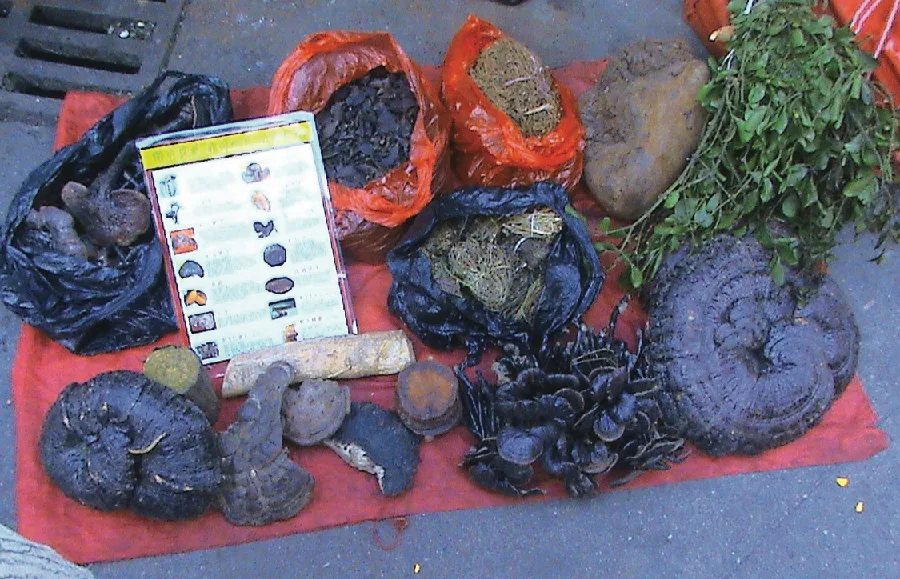
Although the discovery of antimicrobials and their subsequent widespread use is commonly associated with modern medicine, there is evidence that humans have been exposed to antimicrobial compounds for millennia. Chemical analyses of the skeletal remains of people from Nubia (now found in present-day Sudan) dating from between 350 and 550 AD have shown residue of the antimicrobial agent tetracycline in high enough quantities to suggest the purposeful fermentation of tetracycline-producing Streptomyces during the beer-making process (M.L. Nelson et al. “Brief Communication: Mass Spectroscopic Characterization of Tetracycline in the Skeletal Remains of an Ancient Population from Sudanese Nubia 350–550 CE.” American Journal of Physical Anthropology 143 no. 1 (2010):151–154.). The resulting beer, which was thick and gruel-like, was used to treat a variety of ailments in both adults and children, including gum disease and wounds. The antimicrobial properties of certain plants may also have been recognized by various cultures around the world, including Indian and Chinese herbalists (pictured below) who have long used plants for a wide variety of medical purposes. More contemporary researchers have utilized practices and even texts from these traditional sources. For example, Chinese researcher Tu Youyou, who in the 1970s was selected to lead a government effort to find a cure for malaria, utilized Artemisia, a plant she identified by consulting 4th Century physician Ge Hong’s Handbook of Prescriptions for Emergencies. After initial efforts were unsuccessful, Youyou and her team more carefully followed the 1650-year-old text’s method of extracting the plant’s chemicals, and within a year had conducted a trial that successfully cured malaria patients (E. Hsu. “The history of qing hao in the Chinese materia medica.” Transactions of The Royal Society of Tropical Medicine and Hygiene, Volume 100, Issue 6. (2006.) 505–508.). Youyou was awarded the Nobel Prize in Physiology or Medicine in 2015. Healers of many cultures understood the antimicrobial properties of fungi and their use of moldy bread or other mold-containing products to treat wounds has been well documented for centuries (M. Wainwright. “Moulds in Ancient and More Recent Medicine.” Mycologist 3 no. 1 (1989):21–23.). Today, while about 80% of the world’s population still relies on plant-derived medicines (S. Verma, S.P. Singh. “Current and Future Status of Herbal Medicines.” Veterinary World 1 no. 11 (2008):347–350.), scientists are now discovering the active compounds conferring the medicinal benefits contained in many of these traditionally used plants.
Check Your Understanding
Give examples of how antimicrobials were used in ancient societies.
Show model answer
Did your answer mention:
The First Antimicrobial Drugs
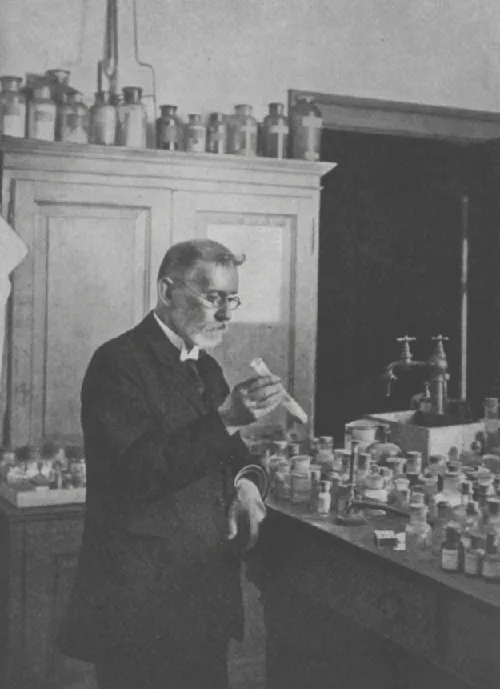
Societies relied on traditional medicine for thousands of years; however, the first half of the 20th century brought an era of strategic drug discovery. In the early 1900s, the German physician and scientist Paul Ehrlich (1854–1915) set out to discover or synthesize chemical compounds capable of killing infectious microbes without harming the patient. In 1909, after screening more than 600 arsenic-containing compounds, Ehrlich’s assistant Sahachiro Hata (1873–1938) found one such “magic bullet.” Compound 606 targeted the bacterium Treponema pallidum, the causative agent of syphilis. Compound 606 was found to successfully cure syphilis in rabbits and soon after was marketed under the name Salvarsan as a remedy for the disease in humans (pictured below). Ehrlich’s innovative approach of systematically screening a wide variety of compounds remains a common strategy for the discovery of new antimicrobial agents even today.
A few decades later, German scientists Josef Klarer, Fritz Mietzsch, and Gerhard Domagk discovered the antibacterial activity of a synthetic dye, prontosil, that could treat streptococcal and staphylococcal infections in mice. Domagk’s own daughter was one of the first human recipients of the drug, which completely cured her of a severe streptococcal infection that had resulted from a poke with an embroidery needle. Gerhard Domagk (1895–1964) was awarded the Nobel Prize in Medicine in 1939 for his work with prontosil and sulfanilamide, the active breakdown product of prontosil in the body. Sulfanilamide, the first synthetic antimicrobial created, served as the foundation for the chemical development of a family of sulfa drugs. A synthetic antimicrobial is a drug that is developed from a chemical not found in nature. The success of the sulfa drugs led to the discovery and production of additional important classes of synthetic antimicrobials, including the quinolines and oxazolidinones.
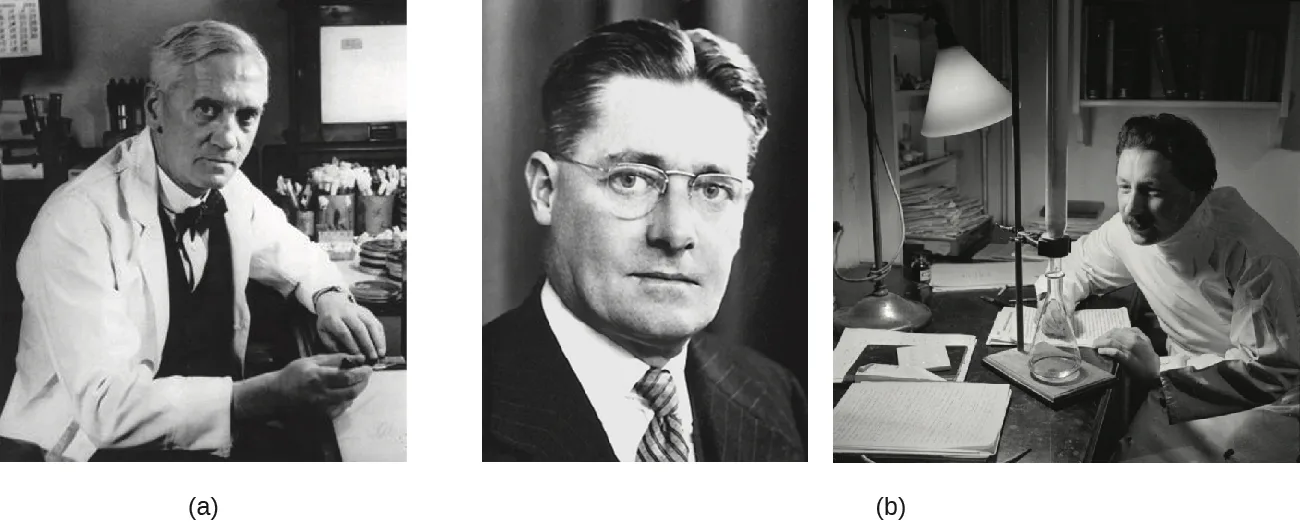
A few years before the discovery of prontosil, scientist Alexander Fleming (1881–1955) made his own accidental discovery that turned out to be monumental. In 1928, Fleming returned from holiday and examined some old plates of staphylococci in his research laboratory at St. Mary’s Hospital in London. He observed that contaminating mold growth (subsequently identified as a strain of Penicillium notatum) inhibited staphylococcal growth on one plate. Fleming, therefore, is credited with the discovery of penicillin, the first natural antibiotic (pictured below). Further experimentation showed that penicillin from the mold was antibacterial against streptococci, meningococci, and Corynebacterium diphtheriae, the causative agent of diphtheria.
Fleming and his colleagues were credited with discovering and identifying penicillin, but its isolation and mass production were accomplished by a team of researchers at Oxford University under the direction of Howard Florey (1898–1968) and Ernst Chain (1906–1979) (pictured below). In 1940, the research team purified penicillin and reported its success as an antimicrobial agent against streptococcal infections in mice. Their subsequent work with human subjects also showed penicillin to be very effective. Because of their important work, Fleming, Florey, and Chain were awarded the Nobel Prize in Physiology and Medicine in 1945.
In the early 1940s, scientist Dorothy Hodgkin (1910–1994), who studied crystallography at Oxford University, used X-rays to analyze the structure of a variety of natural products. In 1946, she determined the structure of penicillin, for which she was awarded the Nobel Prize in Chemistry in 1964. Once the structure was understood, scientists could modify it to produce a variety of semisynthetic penicillins. A semisynthetic antimicrobial is a chemically modified derivative of a natural antibiotic. The chemical modifications are generally designed to increase the range of bacteria targeted, increase stability, decrease toxicity, or confer other properties beneficial for treating infections.
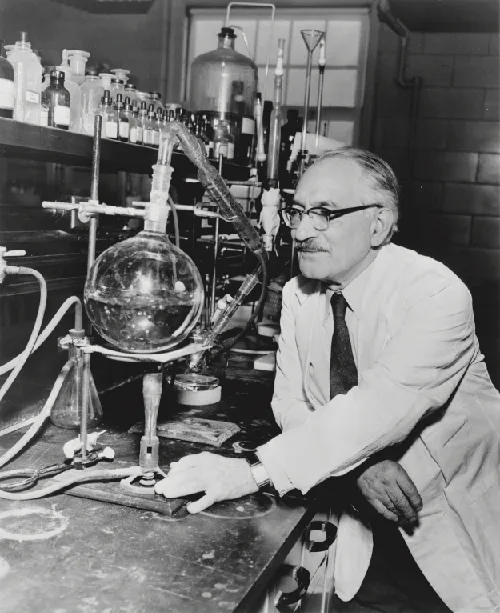
Penicillin is only one example of a natural antibiotic. Also in the 1940s, Selman Waksman (1888–1973) (pictured below), a prominent soil microbiologist at Rutgers University, led a research team that discovered several antimicrobials, including actinomycin, streptomycin, and neomycin. The discoveries of these antimicrobials stemmed from Waksman’s study of fungi and the Actinobacteria, including soil bacteria in the genus Streptomyces, known for their natural production of a wide variety of antimicrobials. Key collaborators included Albert Schatz, who first isolated streptomycin, and Elizabeth Bugie, who performed the antibacterial testing for the substance. (Source note: the source prints the name as “Arthur Shatz”; the graduate student who isolated streptomycin and co-authored the discovery paper with Waksman and Bugie was Albert Schatz (Schatz, Bugie, and Waksman, Proceedings of the Society for Experimental Biology and Medicine 55 (1944): 66–69) — the paper this passage calls “the critical paper about the discovery.”) All three were included on the critical paper about the discovery, but Waksman was noted for playing down the role of his collaborators in later writings and in the patent process. He was given the Nobel Prize in Physiology and Medicine in 1952. The actinomycetes are the source of more than half of all natural antibiotics (J. Berdy. “Bioactive Microbial Metabolites.” The Journal of Antibiotics 58 no. 1 (2005):1–26.) and continue to serve as an excellent reservoir for the discovery of novel antimicrobial agents. Some researchers argue that we have not yet come close to tapping the full antimicrobial potential of this group (M. Baltz. “Antimicrobials from Actinomycetes: Back to the Future.” Microbe 2 no. 3 (2007):125–131.).
Check Your Understanding
Why is the soil a reservoir for antimicrobial resistance genes?
Show model answer
Did your answer mention:
Summary
- Antimicrobial drugs produced by purposeful fermentation and/or contained in plants have been used as traditional medicines in many cultures for millennia.
- The purposeful and systematic search for a chemical “magic bullet” that specifically target infectious microbes was initiated by Paul Ehrlich in the early 20th century.
- The discovery of the natural antibiotic, penicillin, by Alexander Fleming in 1928 started the modern age of antimicrobial discovery and research.
- Sulfanilamide, the first synthetic antimicrobial, was discovered by Gerhard Domagk and colleagues and is a breakdown product of the synthetic dye, prontosil.
Key terms
- antimicrobial drugs — chemical compounds, including naturally produced drugs, semisynthetic derivatives, and synthetic compounds, that target specific microbial structures and enzymes, killing specific microbes or inhibiting their growth.
- synthetic antimicrobial — antimicrobial developed from a chemical not found in nature.
- penicillin — β-lactam antibacterial that was the first cell wall synthesis inhibitor developed.
- natural antibiotic — antimicrobial compound that is produced naturally by microorganisms in nature.
- semisynthetic antimicrobial — chemically modified derivative of a natural antibiotic.
Practice
Compare and contrast natural, semisynthetic, and synthetic antimicrobial drugs
A scientist discovers that a soil bacterium he has been studying produces an antimicrobial that kills gram-negative bacteria. She isolates and purifies the antimicrobial compound, then chemically converts a chemical side chain to a hydroxyl group. When she tests the antimicrobial properties of this new version, she finds that this antimicrobial drug can now also kill gram-positive bacteria. The new antimicrobial drug with broad-spectrum activity is considered to be which of the following?
Recall what a chemical modification made to an already-natural antibiotic, without starting from a chemical not found in nature, is called.Which of the following antimicrobial drugs is synthetic?
Recall which drug in this list was developed from a synthetic dye rather than isolated from a living organism.Where do antimicrobials come from naturally? Why?
Show model answer
Did your answer mention:
In nature, why do antimicrobial-producing microbes commonly also have antimicrobial resistance genes?
Show model answer
Did your answer mention:
Describe the chemotherapeutic approaches of ancient societies
Chemical analysis of skeletal remains of an ancient population from Nubia, dating from between 350 and 550 AD, showed residue of which antimicrobial agent, in high enough quantities to suggest purposeful fermentation during beer-making?
Name the antimicrobial this section says was found in the skeletal remains; the same paragraph names the soil bacterium genus fermented to produce it.In the 1970s, Chinese researcher Tu Youyou searched for a cure for malaria using the plant ________, which she identified by consulting a 4th-century physician’s handbook.
Name the plant genus, printed in italics, that Youyou’s team extracted chemicals from.How did Tu Youyou’s team succeed in developing an effective malaria treatment from Artemisia after their initial efforts failed?
Show model answer
Did your answer mention:
Describe the historically important individuals and events that led to the development of antimicrobial drugs
The group of soil bacteria known for their ability to produce a wide variety of antimicrobials is called the ________.
Name the group of soil bacteria Selman Waksman studied, which includes the genus Streptomyces.Sulfanilamide, the first synthetic antimicrobial, was discovered by Gerhard Domagk and colleagues and is a breakdown product of the synthetic dye, ________.
Name the synthetic dye Domagk and colleagues showed had antibacterial activity against streptococcal and staphylococcal infections.Why was Salvarsan considered to be a “magic bullet” for the treatment of syphilis?
Show model answer
Did your answer mention:
This section is adapted from Microbiology, Section 14.1: History of Chemotherapy and Antimicrobial Discovery by Nina Parker, Mark Schneegurt, Anh-Hue Thi Tu, Philip Lister, Brian M. Forster, and OpenStax, © OpenStax, licensed under CC BY-NC-SA 4.0. Access the original for free at openstax.org. Changes: all four source figures are re-encoded as WebP and rendered as mediafigures, all kind="photo"; the Ehrlich alt is rewritten because the source alt calls the image a “Drawing” when the rendered photograph is a black-and-white photographic portrait, not a line drawing (reported as a suspected source-alt defect); the Woodcut and Oxford alts are rewritten from the image because the source alts (“Photo of a variety of plants being sold by a street vendor,” “a) Photo of Alexander Fleming. B) Photo of Howard Florey and Ernst Chain.”) do not describe what is actually drawn or how many photographs the Oxford figure holds; two cross-references to the same-module figures are rendered as parenthetical pointers (“pictured below”) rather than print figure numbers. The six source footnotes are rendered as inline parenthetical citations after the sentences they support, author names and titles unabridged; none carries a DOI or a bare access URL. Both body Check Your Understanding bullets are rendered as self-checks at their note positions rather than graded: the ancient-societies bullet asks for a list of examples the module gives in three separate places, and the soil-reservoir bullet asks why soil is a reservoir for antimicrobial resistance genes specifically, a connection this module’s text never states (it only says the actinomycetes are a reservoir for antimicrobial discovery) — both self-check model answers are built only from what the module actually says, the second one saying so explicitly rather than inventing the missing reasoning. Of the module’s six source exercises, both Multiple Choice items and the Fill in the Blank item are adapted into Practice, source order and options kept; of the two unkeyed Short Answer questions, neither is fixed by one module sentence, so both are self-checks with model answers assembled strictly from this module’s own text; the one unkeyed Critical Thinking question (“In nature, why do antimicrobial-producing microbes commonly also have antimicrobial resistance genes?”) — a different ask from the soil-reservoir Check Your Understanding bullet (producer self-resistance, not a soil-wide reservoir) — is kept as a Practice self-check under the “natural, semisynthetic, and synthetic” objective, its model answer stating only the one thing the module supports (a producer such as the actinomycetes must survive its own product) and saying explicitly that the module goes no further. Three filler items fill the “ancient societies” objective and complete the section’s practice floor, all built strictly from this module’s own sentences with no new claim: a multiple choice on the Nubian tetracycline residue (distractors are other antimicrobials this module names), a text-recall cloze naming the plant Artemisia, and a self-check on how Tu Youyou’s team succeeded after their initial efforts failed; a fourth filler, a text-recall cloze naming prontosil from the Key Concepts and Summary, fills the “historically important individuals and events” objective to the three-item floor. The source’s “Handbook of Prescription’s for Emergencies” (a stray possessive apostrophe in a book title) is printed here as “Handbook of Prescriptions for Emergencies,” disclosed here and logged as a suspected one-word source defect; the printed text otherwise keeps the source’s own inconsistent naming of the Nobel Prize in Physiology or Medicine (given as “Medicine,” “Physiology and Medicine,” and “Physiology or Medicine” at different points in this same module) exactly as printed, reviewed and not corrected. The claim pass corrected one source name: the streptomycin co-discoverer the source calls “Arthur Shatz” is Albert Schatz, with a Source note giving the discovery paper.