Mechanisms of Other Antimicrobial Drugs
By the end of this section, you will be able to:
- Explain the differences between modes of action of drugs that target fungi, protozoa, helminths, and viruses
Because fungi, protozoa, and helminths are eukaryotic, their cells are very similar to human cells, making it more difficult to develop drugs with selective toxicity. Additionally, viruses replicate within human host cells, making it difficult to develop drugs that are selectively toxic to viruses or virus-infected cells. Despite these challenges, there are antimicrobial drugs that target fungi, protozoa, helminths, and viruses, and some even target more than one type of microbe. The tables below provide examples of antimicrobial drugs in these various classes.
Antifungal Drugs
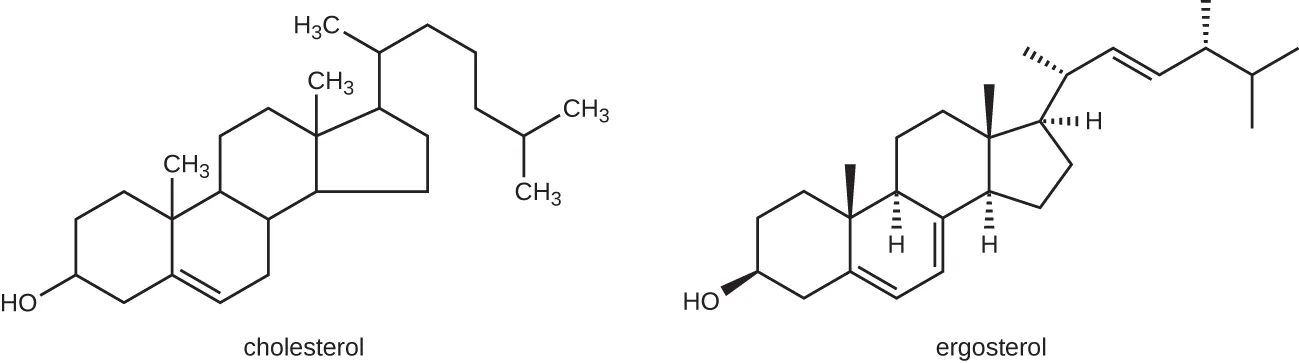
The most common mode of action for antifungal drugs is the disruption of the cell membrane. Antifungals take advantage of small differences between fungi and humans in the biochemical pathways that synthesize sterols. The sterols are important in maintaining proper membrane fluidity and, hence, proper function of the cell membrane. For most fungi, the predominant membrane sterol is ergosterol. Because human cell membranes use cholesterol, instead of ergosterol, antifungal drugs that target ergosterol synthesis are selectively toxic (shown below).
The imidazoles are synthetic fungicides that disrupt ergosterol biosynthesis; they are commonly used in medical applications and also in agriculture to keep seeds and harvested crops from molding. Examples include miconazole, ketoconazole, and clotrimazole, which are used to treat fungal skin infections such as ringworm, specifically tinea pedis (athlete’s foot), tinea cruris (jock itch), and tinea corporis. These infections are commonly caused by dermatophytes of the genera Trichophyton, Epidermophyton, and Microsporum. Miconazole is also used predominantly for the treatment of vaginal yeast infections caused by the fungus Candida, and ketoconazole is used for the treatment of tinea versicolor and dandruff, which both can be caused by the fungus Malassezia.
The triazole drugs, including fluconazole, also inhibit ergosterol biosynthesis. However, they can be administered orally or intravenously for the treatment of several types of systemic yeast infections, including oral thrush and cryptococcal meningitis, both of which are prevalent in patients with AIDS. The triazoles also exhibit more selective toxicity, compared with the imidazoles, and are associated with fewer side effects.
The allylamines, a structurally different class of synthetic antifungal drugs, inhibit an earlier step in ergosterol biosynthesis. The most commonly used allylamine is terbinafine (marketed under the brand name Lamisil), which is used topically for the treatment of dermatophytic skin infections like athlete’s foot, ringworm, and jock itch. Oral treatment with terbinafine is also used for the treatment of fingernail and toenail fungus, but it can be associated with the rare side effect of hepatotoxicity.
The polyenes are a class of antifungal agents naturally produced by certain actinomycete soil bacteria and are structurally related to macrolides. These large, lipophilic molecules bind to ergosterol in fungal cytoplasmic membranes, thus creating pores. Common examples include nystatin and amphotericin B. Nystatin is typically used as a topical treatment for yeast infections of the skin, mouth, and vagina, but may also be used for intestinal fungal infections. The drug amphotericin B is used for systemic fungal infections like aspergillosis, cryptococcal meningitis, histoplasmosis, blastomycosis, and candidiasis. Amphotericin B was the only antifungal drug available for several decades, but its use is associated with some serious side effects, including nephrotoxicity (kidney toxicity).
Amphotericin B is often used in combination with flucytosine, a fluorinated pyrimidine analog that is converted by a fungal-specific enzyme into a toxic product that interferes with both DNA replication and protein synthesis in fungi. Flucytosine is also associated with hepatotoxicity (liver toxicity) and bone marrow depression.
Beyond targeting ergosterol in fungal cell membranes, there are a few antifungal drugs that target other fungal structures (shown below). The echinocandins, including caspofungin, are a group of naturally produced antifungal compounds that block the synthesis of β(1→3) glucan found in fungal cell walls but not found in human cells. This drug class has the nickname “penicillin for fungi.” Caspofungin is used for the treatment of aspergillosis as well as systemic yeast infections.
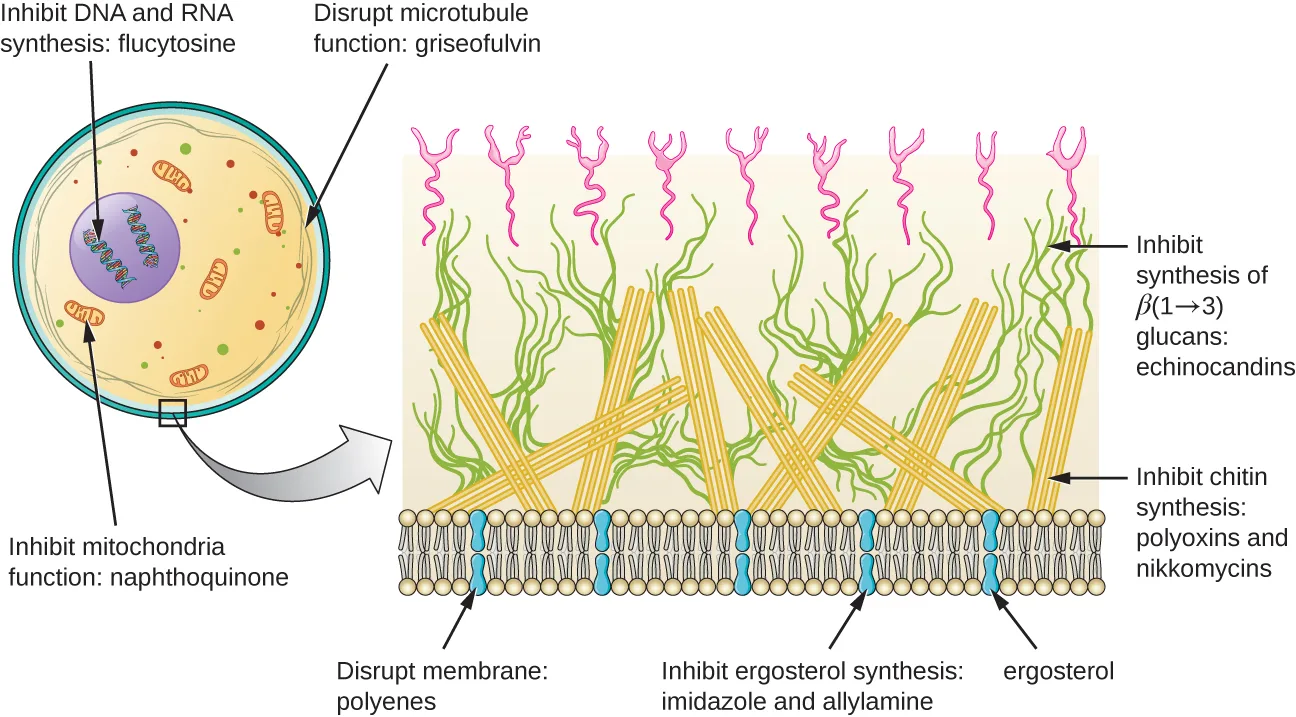
Extended description
Left inset: a fungal cell cross-section with its nucleus and several mitochondria; one arrow from the nucleus reads ‘Inhibit DNA and RNA synthesis: flucytosine,’ and one arrow from a mitochondrion reads ‘Inhibit mitochondria function: naphthoquinone.’ A callout zooms into a boxed section of the cell’s outer layers. Right panel, top to bottom: an outer layer of pink branched fibers (chitin), labeled by an arrow ‘Inhibit chitin synthesis: polyoxins and nikkomycins’; beneath it, green fibers crossed by bundles of gold rod-like fibers (β(1→3) glucans), labeled by an arrow ‘Inhibit synthesis of β(1→3) glucans: echinocandins’; below that, a plasma membrane studded with teal molecules labeled ’ergosterol,’ labeled by two more arrows ‘Disrupt membrane: polyenes’ and ‘Inhibit ergosterol synthesis: imidazole and allylamine.’ A separate arrow above the membrane reads ‘Disrupt microtubule function: griseofulvin,’ pointing at the fungal cell inset.
Although chitin is only a minor constituent of fungal cell walls, it is also absent in human cells, making it a selective target. The polyoxins and nikkomycins are naturally produced antifungals that target chitin synthesis. Polyoxins are used to control fungi for agricultural purposes, and nikkomycin Z is currently under development for use in humans to treat yeast infections and Valley fever (coccidioidomycosis), a fungal disease prevalent in the southwestern US (Centers for Disease Control and Prevention. “Valley Fever: Awareness Is Key.” Accessed June 1, 2016.).
The naturally produced antifungal griseofulvin is thought to specifically disrupt fungal cell division by interfering with microtubules involved in spindle formation during mitosis. It was one of the first antifungals, but its use is associated with hepatotoxicity. It is typically administered orally to treat various types of dermatophytic skin infections when other topical antifungal treatments are ineffective.
There are a few drugs that act as antimetabolites against fungal processes. For example, atovaquone, a representative of the naphthoquinone drug class, is a semisynthetic antimetabolite for fungal and protozoal versions of a mitochondrial cytochrome important in electron transport. Structurally, it is an analog of coenzyme Q, with which it competes for electron binding. It is particularly useful for the treatment of Pneumocystis pneumonia caused by Pneumocystis jirovecii. The antibacterial sulfamethoxazole-trimethoprim combination also acts as an antimetabolite against P. jirovecii.
The table below shows the various therapeutic classes of antifungal drugs, categorized by mode of action, with examples of each.
| Mechanism of Action | Drug Class | Specific Drugs | Clinical Uses |
|---|---|---|---|
| Inhibit ergosterol synthesis | Imidazoles | Miconazole, ketoconazole, clotrimazole | Fungal skin infections and vaginal yeast infections |
| Inhibit ergosterol synthesis | Triazoles | Fluconazole | Systemic yeast infections, oral thrush, and cryptococcal meningitis |
| Inhibit ergosterol synthesis | Allylamines | Terbinafine | Dermatophytic skin infections (athlete’s foot, ring worm, jock itch), and infections of fingernails and toenails |
| Bind ergosterol in the cell membrane and create pores that disrupt the membrane | Polyenes | Nystatin | Used topically for yeast infections of skin, mouth, and vagina; also used for fungal infections of the intestine |
| Bind ergosterol in the cell membrane and create pores that disrupt the membrane | Polyenes | Amphotericin B | Variety systemic fungal infections |
| Inhibit cell wall synthesis | Echinocandins | Caspofungin | Aspergillosis and systemic yeast infections |
| Inhibit cell wall synthesis | Not applicable | Nikkomycin Z | Coccidioidomycosis (Valley fever) and yeast infections |
| Inhibit microtubules and cell division | Not applicable | Griseofulvin | Dermatophytic skin infections |
Common Antifungal Drugs
Check Your Understanding
How is disruption of ergosterol biosynthesis an effective mode of action for antifungals?
Show model answer
Did your answer mention:
Case in Point. Treating a Fungal Infection of the Lungs
Jack, a 48-year-old engineer, is HIV positive but generally healthy thanks to antiretroviral therapy (ART). However, after a particularly intense week at work, he developed a fever and a dry cough. He assumed that he just had a cold or mild flu due to overexertion and didn’t think much of it. However, after about a week, he began to experience fatigue, weight loss, and shortness of breath. He decided to visit his physician, who found that Jack had a low level of blood oxygenation. The physician ordered blood testing, a chest X-ray, and the collection of an induced sputum sample for analysis. His X-ray showed a fine cloudiness and several pneumatoceles (thin-walled pockets of air), which indicated Pneumocystis pneumonia (PCP), a type of pneumonia caused by the fungus Pneumocystis jirovecii. Jack’s physician admitted him to the hospital and prescribed Bactrim, a combination of sulfamethoxazole and trimethoprim, to be administered intravenously.
P. jirovecii is a yeast-like fungus with a life cycle similar to that of protozoans. As such, it was classified as a protozoan until the 1980s. It lives only in the lung tissue of infected persons and is transmitted from person to person, with many people exposed as children. Typically, P. jirovecii only causes pneumonia in immunocompromised individuals. Healthy people may carry the fungus in their lungs with no symptoms of disease. PCP is particularly problematic among HIV patients with compromised immune systems.
PCP is usually treated with oral or intravenous Bactrim, but atovaquone or pentamidine (another antiparasitic drug) are alternatives. If not treated, PCP can progress, leading to a collapsed lung and nearly 100% mortality. Even with antimicrobial drug therapy, PCP still is responsible for 10% of HIV-related deaths.
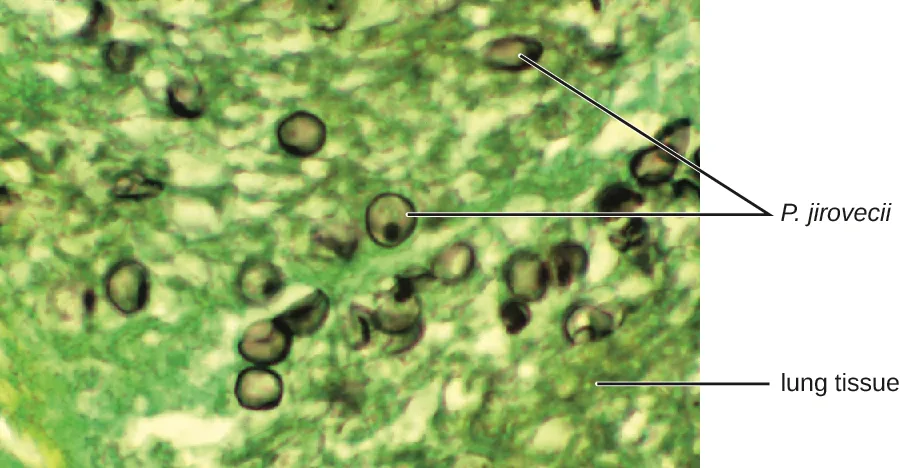
The cytological examination, using direct immunofluorescence assay (DFA), of a smear from Jack’s sputum sample confirmed the presence of P. jirovecii (shown below). Additionally, the results of Jack’s blood tests revealed that his white blood cell count had dipped, making him more susceptible to the fungus. His physician reviewed his ART regimen and made adjustments. After a few days of hospitalization, Jack was released to continue his antimicrobial therapy at home. With the adjustments to his ART therapy, Jack’s CD4 counts began to increase and he was able to go back to work.
Antiprotozoan Drugs
There are a few mechanisms by which antiprotozoan drugs target infectious protozoans (shown below). Some are antimetabolites, such as atovaquone, proguanil, and artemisinins. Atovaquone, in addition to being antifungal, blocks electron transport in protozoans and is used for the treatment of protozoan infections including malaria, babesiosis, and toxoplasmosis. Proguanil is another synthetic antimetabolite that is processed in parasitic cells into its active form, which inhibits protozoan folic acid synthesis. It is often used in combination with atovaquone, and the combination is marketed as Malarone for both malaria treatment and prevention.
Artemisinin, a plant-derived antimalarial (Source note: the source says “antifungal”; this paragraph and section discuss artemisinin only as an antimalarial/antiprotozoal compound — effective against malaria, metabolized into reactive oxygen species that damage target cells, and used in artemisinin-based combination therapy for malaria — never as an antifungal.) first discovered by Tu Youyou and other Chinese scientists in the 1970s, is quite effective against malaria. Semisynthetic derivatives of artemisinin are more water soluble than the natural version, which makes them more bioavailable. Although the exact mechanism of action is unclear, artemisinins appear to act as prodrugs that are metabolized by target cells to produce reactive oxygen species (ROS) that damage target cells. Due to the rise in resistance to antimalarial drugs, artemisinins are also commonly used in combination with other antimalarial compounds in artemisinin-based combination therapy (ACT).
Several antimetabolites are used for the treatment of toxoplasmosis caused by the parasite Toxoplasma gondii. The synthetic sulfa drug sulfadiazine competitively inhibits an enzyme in folic acid production in parasites and can be used to treat malaria and toxoplasmosis. Pyrimethamine is a synthetic drug that inhibits a different enzyme in the folic acid production pathway and is often used in combination with sulfadoxine (another sulfa drug) for the treatment of malaria or in combination with sulfadiazine for the treatment of toxoplasmosis. Side effects of pyrimethamine include decreased bone marrow activity that may cause increased bruising and low red blood cell counts. When toxicity is a concern, spiramycin, a macrolide protein synthesis inhibitor, is typically administered for the treatment of toxoplasmosis.
Two classes of antiprotozoan drugs interfere with nucleic acid synthesis: nitroimidazoles and quinolines. Nitroimidazoles, including semisynthetic metronidazole, which was discussed previously as an antibacterial drug, and synthetic tinidazole, are useful in combating a wide variety of protozoan pathogens, such as Giardia lamblia, Entamoeba histolytica, and Trichomonas vaginalis. Upon introduction into these cells in low-oxygen environments, nitroimidazoles become activated and introduce DNA strand breakage, interfering with DNA replication in target cells. Unfortunately, metronidazole is associated with carcinogenesis (the development of cancer) in humans.
Another type of synthetic antiprotozoan drug that has long been thought to specifically interfere with DNA replication in certain pathogens is pentamidine. It has historically been used for the treatment of African sleeping sickness (caused by the protozoan Trypanosoma brucei) and leishmaniasis (caused by protozoa of the genus Leishmania), but it is also an alternative treatment for the fungus Pneumocystis. Some studies indicate that it specifically binds to the DNA found within kinetoplasts (kDNA; long mitochondrion-like structures unique to trypanosomes), leading to the cleavage of kDNA. However, nuclear DNA of both the parasite and host remain unaffected. It also appears to bind to tRNA, inhibiting the addition of amino acids to tRNA, thus preventing protein synthesis. Possible side effects of pentamidine use include pancreatic dysfunction and liver damage.
The quinolines are a class of synthetic compounds related to quinine, which has a long history of use against malaria. Quinolines are thought to interfere with heme detoxification, which is necessary for the parasite’s effective breakdown of hemoglobin into amino acids inside red blood cells. The synthetic derivatives chloroquine, quinacrine (also called mepacrine), and mefloquine are commonly used as antimalarials, and chloroquine is also used to treat amebiasis typically caused by Entamoeba histolytica. Long-term prophylactic use of chloroquine or mefloquine may result in serious side effects, including hallucinations or cardiac issues. Patients with glucose-6-phosphate dehydrogenase deficiency can experience severe hemolytic anemia when treated with the 8-aminoquinoline antimalarials, such as primaquine. (Source note: the source names chloroquine here; the severe hemolysis risk that makes glucose-6-phosphate dehydrogenase testing routine before treatment belongs to the 8-aminoquinolines, primaquine and tafenoquine, rather than to the 4-aminoquinoline chloroquine (Watson, Taylor, Menard, Kheng, and White, eLife 6 (2017): e23061).)
| Mechanism of Action | Drug Class | Specific Drugs | Clinical Uses |
|---|---|---|---|
| Inhibit electron transport in mitochondria | Naphthoquinone | Atovaquone | Malaria, babesiosis, and toxoplasmosis |
| Inhibit folic acid synthesis | Not applicable | Proquanil (proguanil) | Combination therapy with atovaquone for malaria treatment and prevention |
| Inhibit folic acid synthesis | Sulfonamide | Sulfadiazine | Malaria and toxoplasmosis |
| Inhibit folic acid synthesis | Not applicable | Pyrimethamine | Combination therapy with sulfadoxine (sulfa drug) for malaria |
| Produces damaging reactive oxygen species | Not applicable | Artemisinin | Combination therapy to treat malaria |
| Inhibit DNA synthesis | Nitroimidazoles | Metronidazole, tinidazole | Infections caused by Giardia lamblia, Entamoeba histolytica, and Trichomonas vaginalis |
| Inhibit DNA synthesis | Not applicable | Pentamidine | African sleeping sickness and leishmaniasis |
| Inhibit heme detoxification | Quinolines | Chloroquine | Malaria and infections with E. histolytica |
| Inhibit heme detoxification | Quinolines | Mepacrine, mefloquine | Malaria |
Common Antiprotozoan Drugs
Check Your Understanding
List two modes of action for antiprotozoan drugs.
Show model answer
Did your answer mention:
Antihelminthic Drugs
Because helminths are multicellular eukaryotes like humans, developing drugs with selective toxicity against them is extremely challenging. Despite this, several effective classes have been developed (shown below). Synthetic benzimidazoles, like mebendazole and albendazole, bind to helminthic β-tubulin, preventing microtubule formation. Microtubules in the intestinal cells of the worms seem to be particularly affected, leading to a reduction in glucose uptake. Besides their activity against a broad range of helminths, benzimidazoles are also active against many protozoans, fungi, and viruses, and their use for inhibiting mitosis and cell cycle progression in cancer cells is under study (B. Chu et al. “A Benzimidazole Derivative Exhibiting Antitumor Activity Blocks EGFR and HER2 Activity and Upregulates DR5 in Breast Cancer Cells.” Cell Death and Disease 6 (2015):e1686). Possible side effects of their use include liver damage and bone marrow suppression.
The avermectins are members of the macrolide family that were first discovered from a Japanese soil isolate, Streptomyces avermectinius. A more potent semisynthetic derivative of avermectin is ivermectin, which binds to glutamate-gated chloride channels specific to invertebrates including helminths, blocking neuronal transmission and causing starvation, paralysis, and death of the worms. Ivermectin is used to treat roundworm diseases, including onchocerciasis (also called river blindness, caused by the worm Onchocerca volvulus) and strongyloidiasis (caused by the worm Strongyloides stercoralis or S. fuelleborni). Ivermectin also can also treat parasitic insects like mites, lice, and bed bugs, and is nontoxic to humans.
Niclosamide is a synthetic drug that has been used for over 50 years to treat tapeworm infections. Although its mode of action is not entirely clear, niclosamide appears to inhibit ATP formation under anaerobic conditions and inhibit oxidative phosphorylation in the mitochondria of its target pathogens. Niclosamide is not absorbed from the gastrointestinal tract, thus it can achieve high localized intestinal concentrations in patients. Recently, it has been shown to also have antibacterial, antiviral, and antitumor activities (J.-X. Pan et al. “Niclosamide, An Old Antihelminthic Agent, Demonstrates Antitumor Activity by Blocking Multiple Signaling Pathways of Cancer Stem Cells.” Chinese Journal of Cancer 31 no. 4 (2012):178–184; F. Imperi et al. “New Life for an Old Drug: The Anthelmintic Drug Niclosamide Inhibits Pseudomonas aeruginosa Quorum Sensing.” Antimicrobial Agents and Chemotherapy 57 no. 2 (2013):996-1005; A. Jurgeit et al. “Niclosamide Is a Proton Carrier and Targets Acidic Endosomes with Broad Antiviral Effects.” PLoS Pathogens 8 no. 10 (2012):e1002976.).
Another synthetic antihelminthic drug is praziquantel, which used for the treatment of parasitic tapeworms and liver flukes, and is particularly useful for the treatment of schistosomiasis (caused by blood flukes from three genera of Schistosoma). Its mode of action remains unclear, but it appears to cause the influx of calcium into the worm, resulting in intense spasm and paralysis of the worm. It is often used as a preferred alternative to niclosamide in the treatment of tapeworms when gastrointestinal discomfort limits niclosamide use.
The thioxanthenones, another class of synthetic drugs structurally related to quinine, exhibit antischistosomal activity by inhibiting RNA synthesis. The thioxanthenone lucanthone and its metabolite hycanthone were the first used clinically, but serious neurological, gastrointestinal, cardiovascular, and hepatic side effects led to their discontinuation. Oxamniquine, a less toxic derivative of hycanthone, is only effective against S. mansoni, one of the three species known to cause schistosomiasis in humans. Praziquantel was developed to target the other two schistosome species, but concerns about increasing resistance have renewed interest in developing additional derivatives of oxamniquine to target all three clinically important schistosome species.
| Mechanism of Action | Drug Class | Specific Drugs | Clinical Uses |
|---|---|---|---|
| Inhibit microtubule formation, reducing glucose uptake | Benzimidazoles | Mebendazole, albendazole | Variety of helminth infections |
| Block neuronal transmission, causing paralysis and starvation | Avermectins | Ivermectin | Roundworm diseases, including river blindness and strongyloidiasis, and treatment of parasitic insects |
| Inhibit ATP production | Not applicable | Niclosamide | Intestinal tapeworm infections |
| Induce calcium influx | Not applicable | Praziquantel | Schistosomiasis (blood flukes) |
| Inhibit RNA synthesis | Thioxanthenones | Lucanthone, hycanthone, oxamniquine | Schistosomiasis (blood flukes) |
Common Antihelminthic Drugs
Check Your Understanding
Why are antihelminthic drugs difficult to develop?
Recall what this section’s opening sentence says helminths have in common with the organisms whose cells they closely resemble.Antiviral Drugs
Unlike the complex structure of fungi, protozoa, and helminths, viral structure is simple, consisting of nucleic acid, a protein coat, viral enzymes, and, sometimes, a lipid envelope. Furthermore, viruses are obligate intracellular pathogens that use the host’s cellular machinery to replicate. These characteristics make it difficult to develop drugs with selective toxicity against viruses.
Many antiviral drugs are nucleoside analogs and function by inhibiting nucleic acid biosynthesis. For example, acyclovir (marketed as Zovirax) is a synthetic analog of the nucleoside guanosine (shown below). It is activated by the herpes simplex viral enzyme thymidine kinase and, when added to a growing DNA strand during replication, causes chain termination. Its specificity for virus-infected cells comes from both the need for a viral enzyme to activate it and the increased affinity of the activated form for viral DNA polymerase compared to host cell DNA polymerase. Acyclovir and its derivatives are frequently used for the treatment of herpes virus infections, including genital herpes, chickenpox, shingles, Epstein-Barr virus infections, and cytomegalovirus infections. Acyclovir can be administered either topically or systemically, depending on the infection. One possible side effect of its use includes nephrotoxicity. The drug adenine-arabinoside, marketed as vidarabine, is a synthetic analog to deoxyadenosine that has a mechanism of action similar to that of acyclovir. It is also effective for the treatment of various human herpes viruses. However, because of possible side effects involving low white blood cell counts and neurotoxicity, treatment with acyclovir is now preferred.
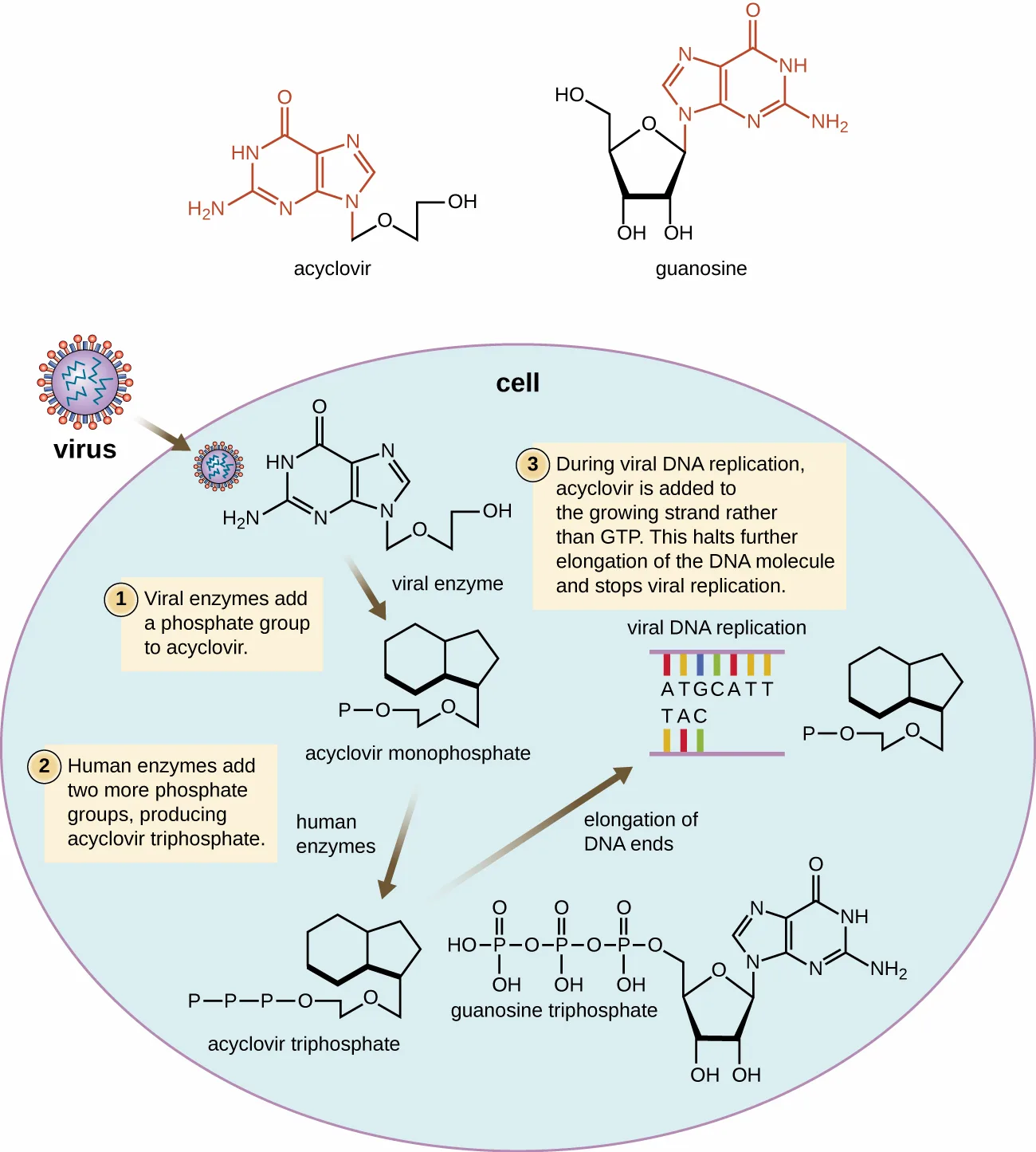
Extended description
Top: two skeletal structures side by side, labeled acyclovir and guanosine; acyclovir’s ring system matches guanosine’s two fused nitrogen-containing rings, but its five-membered sugar ring is replaced by an open-chain hydroxyethoxymethyl group, while guanosine keeps its five-membered sugar ring with two hydroxyl groups. Below, inside an oval labeled ‘cell’: a virus particle enters at upper left. Numbered box 1: a viral enzyme adds one phosphate group to acyclovir, producing acyclovir monophosphate. Numbered box 2, via an arrow labeled ‘human enzymes’: two more phosphate groups are added, producing acyclovir triphosphate; at right, guanosine triphosphate is drawn with its own three phosphate groups for comparison. Numbered box 3, via an arrow labeled ’elongation of DNA ends’: during viral DNA replication, shown as a paired double strand of bases, acyclovir triphosphate is added to the growing strand in place of guanosine triphosphate, capping the strand end and halting further elongation.
Ribavirin, another synthetic guanosine analog, works by a mechanism of action that is not entirely clear. It appears to interfere with both DNA and RNA synthesis, perhaps by reducing intracellular pools of guanosine triphosphate (GTP). Ribavarin also appears to inhibit the RNA polymerase of hepatitis C virus. It is primarily used for the treatment of the RNA viruses like hepatitis C (in combination therapy with interferon) and respiratory syncytial virus. Possible side effects of ribavirin use include anemia and developmental effects on unborn children in pregnant patients. In recent years, another nucleotide analog, sofosbuvir (Solvaldi), has also been developed for the treatment of hepatitis C. Sofosbuvir is a uridine analog that interferes with viral polymerase activity. It is commonly coadministered with ribavirin, with and without interferon.
Inhibition of nucleic acid synthesis is not the only target of synthetic antivirals. Although the mode of action of amantadine and its relative rimantadine are not entirely clear, these drugs appear to bind to a transmembrane protein that is involved in the escape of the influenza virus from endosomes. Blocking escape of the virus also prevents viral RNA release into host cells and subsequent viral replication. Increasing resistance has limited the use of amantadine and rimantadine in the treatment of influenza A. Use of amantadine can result in neurological side effects, but the side effects of rimantadine seem less severe. Interestingly, because of their effects on brain chemicals such as dopamine and NMDA (N-methyl D-aspartate), amantadine and rimantadine are also used for the treatment of Parkinson’s disease.
Neuraminidase inhibitors, including olsetamivir (Tamiflu), zanamivir (Relenza), and peramivir (Rapivab), specifically target influenza viruses by blocking the activity of influenza virus neuraminidase, preventing the release of the virus from infected cells. These three antivirals can decrease flu symptoms and shorten the duration of illness, but they differ in their modes of administration: olsetamivir is administered orally, zanamivir is inhaled, and peramivir is administered intravenously. Resistance to these neuraminidase inhibitors still seems to be minimal.
Pleconaril is a synthetic antiviral under development that showed promise for the treatment of picornaviruses. Use of pleconaril for the treatment of the common cold caused by rhinoviruses was not approved by the FDA in 2002 because of lack of proven effectiveness, lack of stability, and association with irregular menstruation. Its further development for this purpose was halted in 2007. However, pleconaril is still being investigated for use in the treatment of life-threatening complications of enteroviruses, such as meningitis and sepsis. It is also being investigated for use in the global eradication of a specific enterovirus, polio (M.J. Abzug. “The Enteroviruses: Problems in Need of Treatments.” Journal of Infection 68 no. S1 (2014):108–14.). Pleconaril seems to work by binding to the viral capsid and preventing the uncoating of viral particles inside host cells during viral infection.
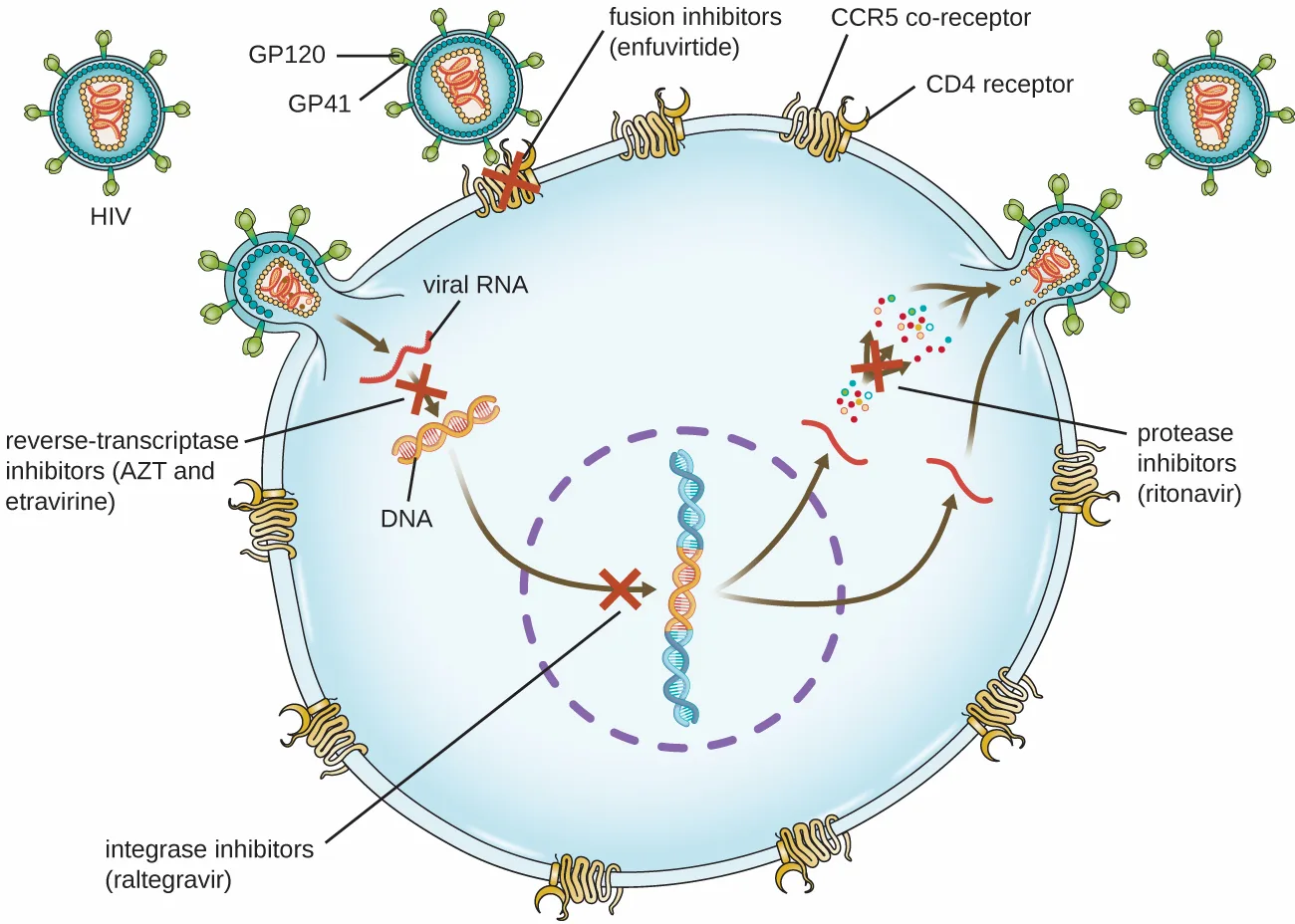
Viruses with complex life cycles, such as HIV, can be more difficult to treat. First, HIV targets CD4-positive white blood cells, which are necessary for a normal immune response to infection. Second, HIV is a retrovirus, meaning that it converts its RNA genome into a DNA copy that integrates into the host cell’s genome, thus hiding within host cell DNA. Third, the HIV reverse transcriptase lacks proofreading activity and introduces mutations that allow for rapid development of antiviral drug resistance. To help prevent the emergence of resistance, a combination of specific synthetic antiviral drugs is typically used in ART for HIV (shown below).
The reverse transcriptase inhibitors block the early step of converting viral RNA genome into DNA, and can include competitive nucleoside analog inhibitors (e.g., azidothymidine/zidovudine, or AZT) and non-nucleoside noncompetitive inhibitors (e.g., etravirine) that bind reverse transcriptase and cause an inactivating conformational change. Drugs called protease inhibitors (e.g., ritonavir) block the processing of viral proteins and prevent viral maturation. Protease inhibitors are also being developed for the treatment of other viral types (B.L. Pearlman. “Protease Inhibitors for the Treatment of Chronic Hepatitis C Genotype-1 Infection: The New Standard of Care.” Lancet Infectious Diseases 12 no. 9 (2012):717–728.). For example, simeprevir (Olysio) has been approved for the treatment of hepatitis C and is administered with ribavirin and interferon in combination therapy. The integrase inhibitors (e.g., raltegravir), block the activity of the HIV integrase responsible for the recombination of a DNA copy of the viral genome into the host cell chromosome. Additional drug classes for HIV treatment include the CCR5 antagonists and the fusion inhibitors (e.g., enfuviritide), which prevent the binding of HIV to the host cell coreceptor (chemokine receptor type 5 [CCR5]) and the merging of the viral envelope with the host cell membrane, respectively. The figure below shows the various therapeutic classes of antiviral drugs, categorized by mode of action, with examples of each.
Extended description
An HIV particle at upper left, labeled with its surface proteins GP120 and GP41, approaches the host cell’s CD4 receptor and CCR5 co-receptor; a red X drawn over this contact point is labeled fusion inhibitors (enfuvirtide). Where the virus has entered at left, its viral RNA is shown converting into DNA, blocked by a red X labeled reverse-transcriptase inhibitors (AZT and etravirine). The new DNA moves toward a dashed circle representing the nucleus, where a red X on the host chromosome is labeled integrase inhibitors (raltegravir), blocking the viral DNA’s integration. New viral RNA and proteins exit the nucleus and assemble at the cell surface at right, where a red X over the budding, unassembled proteins is labeled protease inhibitors (ritonavir), blocking their final processing into two new complete HIV particles shown budding off.
| Mechanism of Action | Drug | Clinical Uses |
|---|---|---|
| Nucleoside analog inhibition of nucleic acid synthesis | Acyclovir | Herpes virus infections |
| Nucleoside analog inhibition of nucleic acid synthesis | Azidothymidine/zidovudine (AZT) | HIV infections |
| Nucleoside analog inhibition of nucleic acid synthesis | Ribavirin | Hepatitis C virus and respiratory syncytial virus infections |
| Nucleoside analog inhibition of nucleic acid synthesis | Vidarabine | Herpes virus infections |
| Nucleoside analog inhibition of nucleic acid synthesis | Sofosbuvir | Hepatitis C virus infections |
| Non-nucleoside noncompetitive inhibition | Etravirine | HIV infections |
| Inhibit escape of virus from endosomes | Amantadine, rimantadine | Infections with influenza virus |
| Inhibit neuraminadase (neuraminidase) | Olsetamivir (oseltamivir), zanamivir, peramivir | Infections with influenza virus |
| Inhibit viral uncoating | Pleconaril | Serious enterovirus infections |
| Inhibition of protease | Ritonavir | HIV infections |
| Inhibition of protease | Simeprevir | Hepatitis C virus infections |
| Inhibition of integrase | Raltegravir | HIV infections |
| Inhibition of membrane fusion | Enfuviritide (enfuvirtide) | HIV infections |
Common Antiviral Drugs
Check Your Understanding
Why is HIV difficult to treat with antivirals?
Show model answer
Did your answer mention:
Link to Learning
To learn more about the various classes of antiretroviral drugs used in the ART of HIV infection, explore each of the drugs in the HIV drug classes provided by the US Department of Health and Human Services at this website.
Summary
- Because fungi, protozoans, and helminths are eukaryotic organisms like human cells, it is more challenging to develop antimicrobial drugs that specifically target them. Similarly, it is hard to target viruses because human viruses replicate inside of human cells.
- Antifungal drugs interfere with ergosterol synthesis, bind to ergosterol to disrupt fungal cell membrane integrity, or target cell wall-specific components or other cellular proteins.
- Antiprotozoan drugs increase cellular levels of reactive oxygen species, interfere with protozoal DNA replication (nuclear versus kDNA, respectively), and disrupt heme detoxification.
- Antihelminthic drugs disrupt helminthic and protozoan microtubule formation; block neuronal transmissions; inhibit anaerobic ATP formation and/or oxidative phosphorylation; induce a calcium influx in tapeworms, leading to spasms and paralysis; and interfere with RNA synthesis in schistosomes.
- Antiviral drugs inhibit viral entry, inhibit viral uncoating, inhibit nucleic acid biosynthesis, prevent viral escape from endosomes in host cells, and prevent viral release from infected cells.
- Because it can easily mutate to become drug resistant, HIV is typically treated with a combination of several antiretroviral drugs, which may include reverse transcriptase inhibitors, protease inhibitors, integrase inhibitors, and drugs that interfere with viral binding and fusion to initiate infection.
Key terms
- imidazoles — class of antifungal drugs that inhibit ergosterol biosynthesis.
- triazole — ergosterol biosynthesis inhibitors used to treat several types of systemic yeast infections; exhibit more selective toxicity than the imidazoles and are associated with fewer side effects.
- fluconazole — antifungal drug of the imidazole class that is administered orally or intravenously for the treatment of several types of systemic yeast infections.
- allylamines — class of antifungal drugs that inhibit ergosterol biosynthesis at an early point in the pathway.
- terbinafine — antifungal drug of the allylamine class that is used topically for the treatment of dermatophytic skin infections.
- polyenes — class of antifungal drugs that bind to ergosterol to form membrane pores, disrupting fungal cell membrane integrity.
- amphotericin B — antifungal drug of the polyene class that is used to treat several systemic fungal infections.
- artemisinin — antiprotozoan and antifungal drug effective against malaria that is thought to increase intracellular levels of reactive oxygen species in target microbes.
- pentamidine — antiprotozoan drug that appears to degrade kDNA in target cells, as well as inhibit protein synthesis.
- quinolines — class of antiprotozoan drugs long used for the treatment of malaria; interferes with heme detoxification.
- benzimidazoles — class of antihelminthic drugs that bind to helminthic β-tubulin, preventing microtubule formation.
- mebendazole — antihelminthic drug of the benzimidazole class that binds to helminthic β-tubulin, preventing microtubule formation.
- albendazole — antihelminthic drug of the benzimidazole class that binds to helminthic β-tubulin, preventing microtubule formation.
- ivermectin — antihelminthic drug of the avermectin class that binds to invertebrate glutamate-gated chloride channels to block neuronal transmission in helminths.
- praziquantel — antihelminthic drug that induces a calcium influx into tapeworms, leading to spasm and paralysis.
- acyclovir — antiviral guanosine analog; inhibits DNA replication.
- amantadine — antiviral drug that targets the influenza virus by preventing viral escape from endosomes upon host cell uptake, thus preventing viral RNA release and subsequent viral replication.
- rimantadine — antiviral drug that targets the influenza virus by preventing viral escape from endosomes upon host cell uptake, preventing viral RNA release and subsequent viral replication.
- pleconaril — an antiviral drug targeting picornaviruses that prevents the uncoating of virus particles upon their infection of host cells.
- reverse transcriptase inhibitors — classes of antiviral drugs that involve nucleoside analog competitive inhibition and non-nucleoside noncompetitive inhibition of the HIV reverse transcriptase.
- protease inhibitors — class of antiviral drugs, used in HIV therapy and hepatitis C therapy, that inhibits viral-specific proteases, preventing viral maturation.
- integrase inhibitors — antiviral drugs that block the activity of the HIV integrase responsible for recombination of a DNA copy of the viral genome into the host cell chromosome.
- fusion inhibitors — antiviral drug that blocks the fusion of HIV receptors to the coreceptors required for virus entry into the cell, specifically, chemokine receptor type 5.
Practice
Explain the differences between modes of action of drugs that target fungi, protozoa, helminths, and viruses
Which of the following is not an appropriate target for antifungal drugs?
Recall which sterol human cell membranes use instead of ergosterol — that is the one antifungal drugs do not need to target.Which of the following drug classes specifically inhibits neuronal transmission in helminths?
Recall which drug class binds glutamate-gated chloride channels specific to invertebrates, blocking neuronal transmission and causing paralysis.Which of the following is a nucleoside analog commonly used as a reverse transcriptase inhibitor in the treatment of HIV?
Recall which of these is a synthetic nucleoside analog specifically used against HIV reverse transcriptase, distinct from the guanosine analogs used against herpes viruses.Which of the following is an antimalarial drug that is thought to increase ROS levels in target cells?
Recall which antimalarial drug is thought to act as a prodrug that is metabolized into reactive oxygen species that damage target cells.Echinocandins, known as “penicillin for fungi,” targetglucan in fungal cell walls.
This item tests whether the echinocandins’ nickname correctly describes their target, the polysaccharide found in fungal cell walls.Antiviral drugs, like Tamiflu and Relenza, that are effective against the influenza virus by preventing viral escape from host cells are called ________.
Name the drug class, exemplified by Tamiflu and Relenza, that blocks the influenza enzyme responsible for releasing new virus particles from infected cells.How does the biology of HIV necessitate the need to treat HIV infections with multiple drugs?
Show model answer
Did your answer mention:
How does the insolubility of niclosamide aid its effectiveness as a treatment for tapeworm infection?
Recall what the module says happens to a drug that is not absorbed into the bloodstream from the gastrointestinal tract.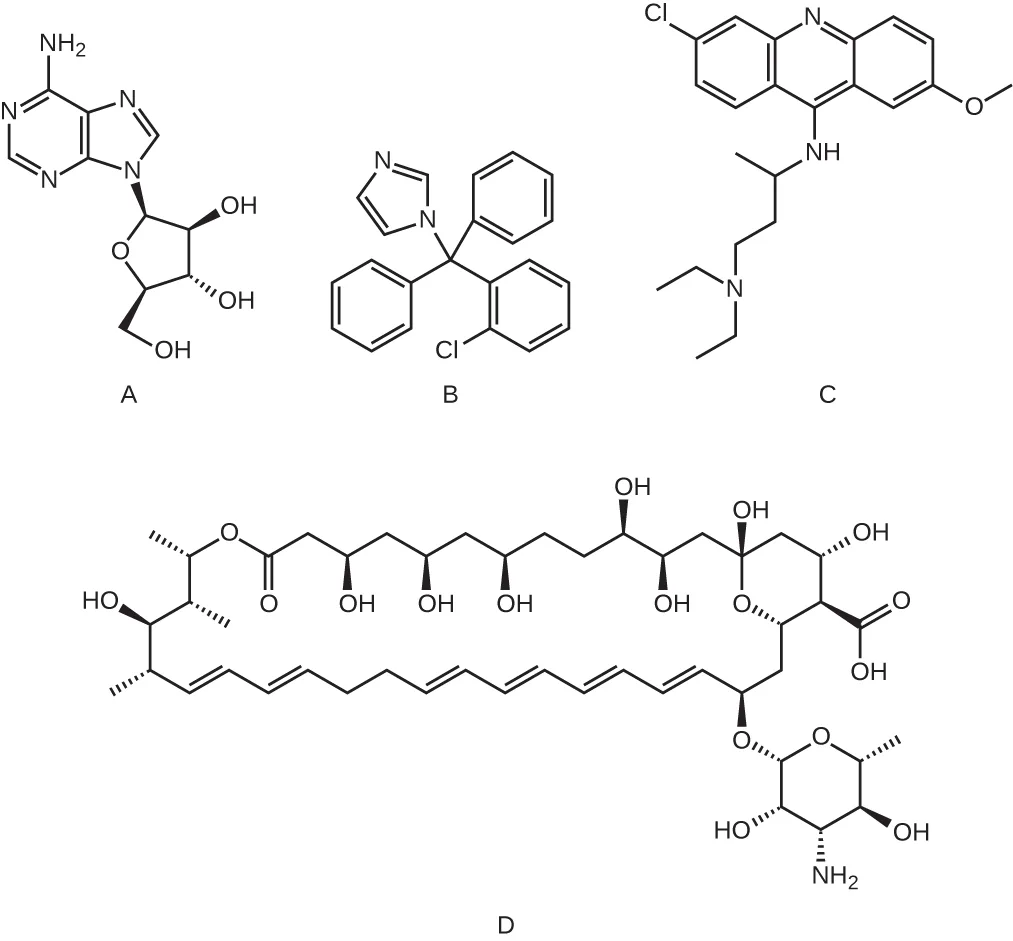
Extended description
A: a bicyclic system of a six-membered and a five-membered ring, both containing nitrogen atoms, joined by a single bond to a separate five-membered ring that carries two hydroxyl groups and one hydroxymethyl group. B: a central carbon atom bonded to a five-membered ring containing two nitrogen atoms and to three six-membered carbon rings, one of which carries a chlorine substituent. C: three fused six-membered rings, one bearing a chlorine substituent and another a methoxy substituent, linked through a nitrogen atom to a four-carbon chain that ends in a nitrogen atom bonded to two ethyl groups. D: a long carbon chain with seven alternating double bonds and several hydroxyl substituents, closed into a large ring through an ester linkage and bearing a carboxylic acid group, with a separate six-membered ring attached by an oxygen bridge and carrying its own hydroxyl and amino substituents.
Which of the following molecules is an example of a nucleoside analog?
A nucleoside pairs a nitrogen-containing ring system with a small ring; compare how many rings each structure has and how they connect, rather than relying on any drug name you may recognize.Why can’t drugs used to treat influenza, like amantadines and neuraminidase inhibitors, be used to treat a wider variety of viral infections?
Show model answer
Did your answer mention:
Sort each drug under the mechanism by which it targets fungal cells, from the Common Antifungal Drugs table above.
Inhibit ergosterol synthesis
Bind ergosterol and create pores
Inhibit cell wall synthesis
Inhibit microtubules and cell division
Sort each drug under the mechanism by which it targets viruses, from the Common Antiviral Drugs table above.
Nucleoside analog inhibition of nucleic acid synthesis
Inhibit neuraminidase
Inhibition of protease
Inhibition of integrase
This section is adapted from Microbiology, Section 14.4: Mechanisms of Other Antimicrobial Drugs by Nina Parker, Mark Schneegurt, Anh-Hue Thi Tu, Philip Lister, Brian M. Forster, and OpenStax, © OpenStax, licensed under CC BY-NC-SA 4.0. Access the original for free at openstax.org. Changes: all six source figures are re-encoded as WebP and rendered as mediafigures; the media manifest guesses kind="photo" for all six (every source file is a JPEG), which is correct only for the P. jirovecii micrograph — the other five (sterols, antifungal-targets, acyclovir mechanism, HIV/ART, and the exercise’s four structures) are explicit kind="diagram" because each is a genuinely drawn diagram; longdescs are added for the antifungal-targets, acyclovir-mechanism, ART, and exercise-structures figures because each is a multi-panel or multi-labeled diagram whose caption does not name every arrow, step, or ring system; the sterols figure’s source alt (“4 fused carbon rigns”) is rewritten from the image rather than corrected in place, and the misspelling is reported as a source-alt defect. Of the source’s seven footnotes, all are rendered as inline parenthetical citations after the sentences they support, with the one bare access URL (the Valley Fever CDC citation) dropped and the rest of each citation kept verbatim; none carries a DOI. The four Check Your Understanding boxes (one per subsection, one question each) are rendered at their note positions: the antihelminthic-difficulty question is graded as a multiplechoice keyed by this section’s own opening sentence, with three wrong-reason distractors built from this section’s own statements about why fungi, protozoa, and viruses are separately hard to target; the other three (the ergosterol-selectivity rationale, the two-antiprotozoan-mechanisms list, and the HIV-treatment-difficulty question) are self-checks with model answers and rubrics assembled only from this module’s own sentences, because each needs either an open-ended list or a multi-sentence synthesis. The Case in Point box is kept with its three paragraphs and figure in document order; it prints no closing questions. The Link to Learning keeps its URL. Of the module’s ten source exercises: all four Multiple Choice keep their source order and keys; the one True/False item is rendered as a two-option multiplechoice (True first); the one Fill in the Blank keeps its two-word key as a plain textin; of the two unkeyed Short Answer questions, the niclosamide-insolubility question is graded as a multiplechoice keyed by this module’s own sentence (“Niclosamide is not absorbed from the gastrointestinal tract, thus it can achieve high localized intestinal concentrations”), with three distractors drawn from this module’s own descriptions of the benzimidazole, avermectin, and praziquantel mechanisms, and the HIV-multiple-drugs question is a self-check whose model answer and rubric are assembled from this module’s HIV reverse-transcriptase and ART sentences — it is not a reword of the body’s “Why is HIV difficult to treat with antivirals?” self-check (that one asks why treatment is hard at all; this one asks specifically why multiple drugs are combined, answered by the module’s mutation-rate/resistance sentence and its ART-combination sentence) and so is kept as its own item rather than folded into the body one; of the two unkeyed Critical Thinking questions, the nucleoside-analog image question is rendered as a mediafigure plus figure-keyed multiplechoice per the parent’s decision — the alt and longdesc describe each structure only by ring count and substituent, naming no drug and none of the words “nucleoside,” “sugar,” “ribose,” “adenine,” “purine,” or “base,” and the key’s derivation (structure A is a fused two-ring nitrogen system on a five-membered ring, matching a nucleoside’s own shape, unlike the imidazole-antifungal, acridine-antiprotozoan, and polyene-macrolide structures B–D) is recorded in the ledger since the multiplechoice shortcode carries no explanation field — and the influenza-breadth question stays a self-check because its honest answer needs synthesizing the separate amantadine and neuraminidase-inhibitor mechanism paragraphs, an inference the module never states as one sentence. Two comparison tables get a sortbins in Practice: the Common Antifungal Drugs table (four mechanisms as bins, its nine specific drugs as items, Amphotericin B and Nystatin split from their shared row) and the Common Antiviral Drugs table (four of its six mechanisms as bins — nucleoside-analog inhibition, neuraminidase inhibition, protease inhibition, and integrase inhibition, per the parent’s decision — omitting the non-nucleoside-inhibition, endosome-escape, and uncoating rows to stay within the four-bin cap, disclosed here); the Common Antiprotozoan and Common Antihelminthic Drugs tables are transcribed as Markdown only, per the parent’s decision, and do not get a sortbins. Four source-alt/table-cell misspellings are corrected with the source spelling kept and the correct name printed beside it in the transcribed table cells only (“Proquanil” for proguanil in the antiprotozoan table; “Olsetamivir” for oseltamivir, “Enfuviritide” for enfuvirtide, and “Inhibit neuraminadase” for neuraminidase in the antiviral table); the same two drug-name misspellings in body prose (olsetamivir, enfuviritide) are silently corrected to the standard spelling as one-word typos, disclosed here and logged as errata, with no inline note; the neuraminadase/neuraminidase misspelling is confined to that one table cell (body prose and the Practice sortbins bin label already read “neuraminidase”) and is likewise logged as an erratum. One factual claim is corrected with a visible Source note: the source calls artemisinin “a plant-derived antifungal,” but this paragraph and the surrounding section discuss it only as an antimalarial/antiprotozoal compound (effective against malaria, metabolized into reactive-oxygen-species-producing prodrugs, used in artemisinin-based combination therapy for malaria); the page reads “antimalarial” with the source’s wording noted beside it, confirmed against both the CNXML and the PDF page, which print the same text. Key terms are compiled from the module’s 23 defined terms and the book’s Glossary appendix; all 23 are taken from the glossary (none sentence-derived), with four headword-number mismatches noted in the ledger, in two directions: the module’s singular body term “triazole” is defined under the appendix’s plural headword “triazoles,” while the module’s three plural body terms “reverse transcriptase inhibitors,” “protease inhibitors,” and “fusion inhibitors” are each defined under the appendix’s singular headword (“reverse transcriptase inhibitor,” “protease inhibitor,” “fusion inhibitor” respectively). No cross-references to other sections appear in this module. The claim pass corrected one drug attribution: the source says patients with glucose-6-phosphate dehydrogenase deficiency experience severe anemia when treated with chloroquine, where the risk belongs to the 8-aminoquinolines such as primaquine, with a Source note; no item, hint, or model answer on the page was built on the source’s version.