Microbial Mechanisms of Pathogenicity
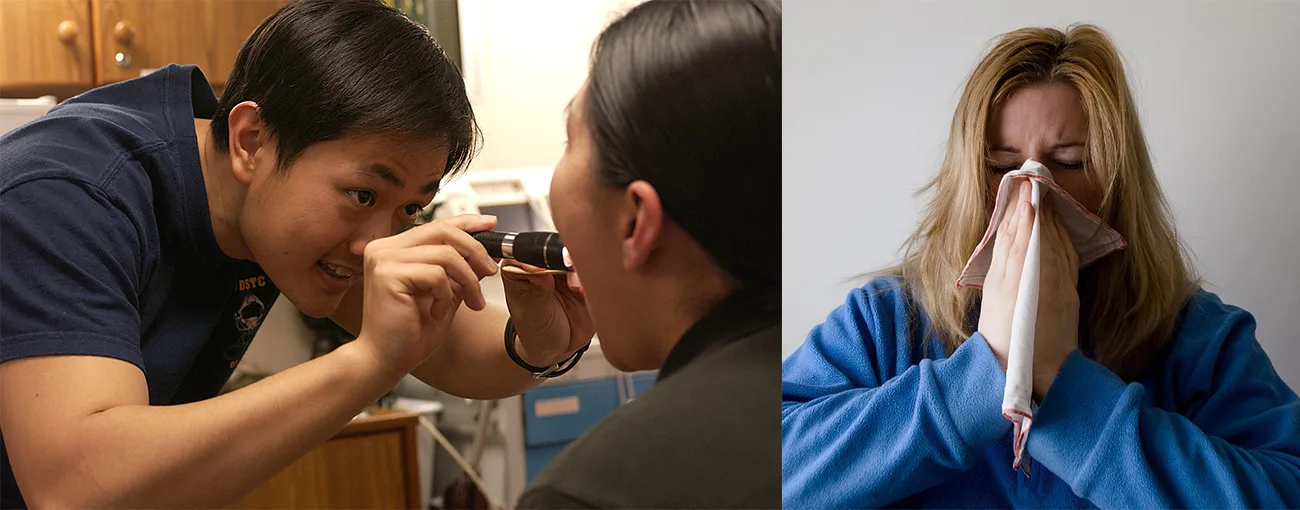
Jane woke up one spring morning feeling not quite herself. Her throat felt a bit dry and she was sniffling. She wondered why she felt so lousy. Was it because of a change in the weather? The pollen count? Was she coming down with something? Did she catch a bug from her coworker who sneezed on her in the elevator yesterday?
The signs and symptoms we associate with illness can have many different causes. Sometimes they are the direct result of a pathogenic infection, but in other cases they result from a response by our immune system to a pathogen or another perceived threat. For example, in response to certain pathogens, the immune system may release pyrogens, chemicals that cause the body temperature to rise, resulting in a fever. This response creates a less-than-favorable environment for the pathogen, but it also makes us feel sick.
Medical professionals rely heavily on analysis of signs and symptoms to determine the cause of an ailment and prescribe treatment. In some cases, signs and symptoms alone are enough to correctly identify the causative agent of a disease, but since few diseases produce truly unique symptoms, it is often necessary to confirm the identity of the infectious agent by other direct and indirect diagnostic methods.
Sections
- Characteristics of Infectious Disease — signs versus symptoms, communicable and noncommunicable disease, iatrogenic, nosocomial, and zoonotic infections, and the incubation, prodromal, illness, decline, and convalescence periods of an acute infectious disease.
- How Pathogens Cause Disease — Koch’s postulates and the molecular Koch’s postulates, pathogenicity and virulence expressed as infectious and lethal dose, primary versus opportunistic pathogens, the stages of pathogenesis, and the portals of entry and exit that mediate transmission.
- Virulence Factors of Bacterial and Viral Pathogens — how virulence factors produce signs and symptoms, the difference between endotoxin and the three classes of exotoxins, the bacterial exoenzymes and immune-evasion factors that aid invasion, and the viral adhesins and antigenic drift and shift that pathogens use.
- Virulence Factors of Eukaryotic Pathogens — virulence factors unique to fungi and parasites and how they compare with bacterial virulence factors, the difference between protozoan parasites and helminths, and how helminths evade the host immune system.
This chapter is adapted from Microbiology, Chapter 15: Microbial Mechanisms of Pathogenicity by Nina Parker, Mark Schneegurt, Anh-Hue Thi Tu, Philip Lister, Brian M. Forster, and OpenStax, © OpenStax, licensed under CC BY-NC-SA 4.0. Access the original for free at openstax.org. Each section page records its own changes from the source. Changes: the chapter-opening figure is the source’s two-panel photo, re-encoded for the web, with its alt text rewritten to describe both panels; the module defines no terms and no footnote.