Modes of Disease Transmission
By the end of this section, you will be able to:
- Describe the different types of disease reservoirs
- Compare contact, vector, and vehicle modes of transmission
- Identify important disease vectors
- Explain the prevalence of nosocomial infections
Understanding how infectious pathogens spread is critical to preventing infectious disease. Many pathogens require a living host to survive, while others may be able to persist in a dormant state outside of a living host. But having infected one host, all pathogens must also have a mechanism of transfer from one host to another or they will die when their host dies. Pathogens often have elaborate adaptations to exploit host biology, behavior, and ecology to live in and move between hosts. Hosts have evolved defenses against pathogens, but because their rates of evolution are typically slower than their pathogens (because their generation times are longer), hosts are usually at an evolutionary disadvantage. This section will explore where pathogens survive—both inside and outside hosts—and some of the many ways they move from one host to another.
Reservoirs and Carriers
For pathogens to persist over long periods of time they require reservoirs where they normally reside. Reservoirs can be living organisms or nonliving sites. Nonliving reservoirs can include soil and water in the environment. These may naturally harbor the organism because it may grow in that environment. These environments may also become contaminated with pathogens in human feces, pathogens shed by intermediate hosts, or pathogens contained in the remains of intermediate hosts.
Pathogens may have mechanisms of dormancy or resilience that allow them to survive (but typically not to reproduce) for varying periods of time in nonliving environments. For example, Clostridium tetani survives in the soil and in the presence of oxygen as a resistant endospore. Although many viruses are soon destroyed once in contact with air, water, or other non-physiological conditions, certain types are capable of persisting outside of a living cell for varying amounts of time. For example, a study that looked at the ability of influenza viruses to infect a cell culture after varying amounts of time on a banknote showed survival times from 48 hours to 17 days, depending on how they were deposited on the banknote (Yves Thomas, Guido Vogel, Werner Wunderli, Patricia Suter, Mark Witschi, Daniel Koch, Caroline Tapparel, and Laurent Kaiser. “Survival of Influenza Virus on Banknotes.” Applied and Environmental Microbiology 74, no. 10 (2008): 3002–3007.). On the other hand, cold-causing rhinoviruses are somewhat fragile, typically surviving less than a day outside of physiological fluids.
A human acting as a reservoir of a pathogen may or may not be capable of transmitting the pathogen, depending on the stage of infection and the pathogen. To help prevent the spread of disease among school children, the CDC has developed guidelines based on the risk of transmission during the course of the disease. For example, children with chickenpox are considered contagious for five days from the start of the rash, whereas children with most gastrointestinal illnesses should be kept home for 24 hours after the symptoms disappear.
An individual capable of transmitting a pathogen without displaying symptoms is referred to as a carrier. A passive carrier is contaminated with the pathogen and can mechanically transmit it to another host; however, a passive carrier is not infected. For example, a health-care professional who fails to wash his hands after seeing a patient harboring an infectious agent could become a passive carrier, transmitting the pathogen to another patient who becomes infected.
By contrast, an active carrier is an infected individual who can transmit the disease to others. An active carrier may or may not exhibit signs or symptoms of infection. For example, active carriers may transmit the disease during the incubation period (before they show signs and symptoms) or the period of convalescence (after symptoms have subsided). Active carriers who do not present signs or symptoms of disease despite infection are called asymptomatic carriers. Pathogens such as hepatitis B virus, herpes simplex virus, and HIV are frequently transmitted by asymptomatic carriers. Mary Mallon, better known as Typhoid Mary, is a famous historical example of an asymptomatic carrier. An Irish immigrant, Mallon worked as a cook for households in and around New York City between 1900 and 1915. In each household, the residents developed typhoid fever (caused by Salmonella typhi) a few weeks after Mallon started working. Later investigations determined that Mallon was responsible for at least 122 cases of typhoid fever, five of which were fatal (Filio Marineli, Gregory Tsoucalas, Marianna Karamanou, and George Androutsos. “Mary Mallon (1869–1938) and the History of Typhoid Fever.” Annals of Gastroenterology 26 (2013): 132–134.). See Eye on Ethics: Typhoid Mary for more about the Mallon case.
A pathogen may have more than one living reservoir. In zoonotic diseases, animals act as reservoirs of human disease and transmit the infectious agent to humans through direct or indirect contact. In some cases, the disease also affects the animal, but in other cases the animal is asymptomatic.
In parasitic infections, the parasite’s preferred host is called the definitive host. In parasites with complex life cycles, the definitive host is the host in which the parasite reaches sexual maturity. Some parasites may also infect one or more intermediate hosts in which the parasite goes through several immature life cycle stages or reproduces asexually.
Link to Learning
George Soper, the sanitary engineer who traced the typhoid outbreak to Mary Mallon, gives an account of his investigation, an example of descriptive epidemiology, in “The Curious Career of Typhoid Mary.”
Check Your Understanding
Sort each example of a reservoir for pathogens by whether it is a living or a nonliving reservoir.
Nonliving
Living
Sort each description under whether it applies to a passive carrier or an active carrier.
Passive
Active
Transmission
Regardless of the reservoir, transmission must occur for an infection to spread. First, transmission from the reservoir to the individual must occur. Then, the individual must transmit the infectious agent to other susceptible individuals, either directly or indirectly. Pathogenic microorganisms employ diverse transmission mechanisms.
Contact Transmission
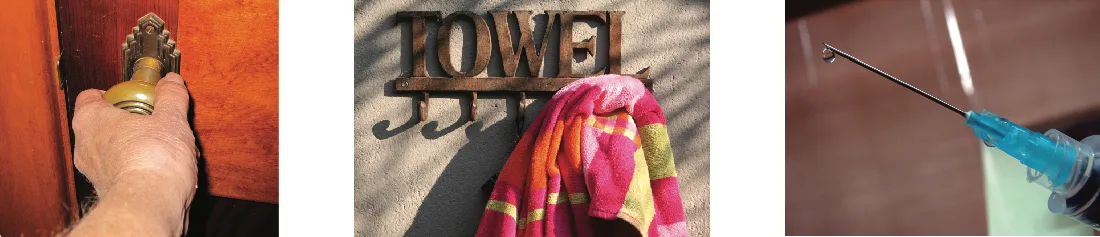
Contact transmission includes direct contact or indirect contact. Person-to-person transmission is a form of direct contact transmission. Here the agent is transmitted by physical contact between two individuals (see the photos below) through actions such as touching, kissing, sexual intercourse, or droplet sprays. Direct contact can be categorized as vertical, horizontal, or droplet transmission. Vertical direct contact transmission occurs when pathogens are transmitted to a fetus or infant during pregnancy, birth, or breastfeeding. Other kinds of direct contact transmission are called horizontal direct contact transmission. Often, contact between mucous membranes is required for entry of the pathogen into the new host, although skin-to-skin contact can lead to mucous membrane contact if the new host subsequently touches a mucous membrane. Contact transmission may also be site-specific; for example, some diseases can be transmitted by sexual contact but not by other forms of contact.
When an individual coughs or sneezes, small droplets of mucus that may contain pathogens are ejected. This leads to direct droplet transmission, which refers to droplet transmission of a pathogen to a new host over distances of one meter or less. A wide variety of diseases are transmitted by droplets, including influenza and many forms of pneumonia. Transmission over distances greater than one meter is called airborne transmission.
Indirect contact transmission involves inanimate objects called fomites that become contaminated by pathogens from an infected individual or reservoir (see the photos below). For example, an individual with the common cold may sneeze, causing droplets to land on a fomite such as a tablecloth or carpet, or the individual may wipe her nose and then transfer mucus to a fomite such as a doorknob or towel. Transmission occurs indirectly when a new susceptible host later touches the fomite and transfers the contaminated material to a susceptible portal of entry. Fomites can also include objects used in clinical settings that are not properly sterilized, such as syringes, needles, catheters, and surgical equipment. Pathogens transmitted indirectly via such fomites are a major cause of healthcare-associated infections (see Controlling Microbial Growth).

Vehicle Transmission
The term vehicle transmission refers to the transmission of pathogens through vehicles such as water, food, and air. Water contamination through poor sanitation methods leads to waterborne transmission of disease. Waterborne disease remains a serious problem in many regions throughout the world. The World Health Organization (WHO) estimates that contaminated drinking water is responsible for more than 500,000 deaths each year (World Health Organization. Fact sheet No. 391—Drinking Water. June 2005.). Similarly, food contaminated through poor handling or storage can lead to foodborne transmission of disease (see the photo below).
Dust and fine particles known as aerosols, which can float in the air, can carry pathogens and facilitate the airborne transmission of disease. For example, dust particles are the dominant mode of transmission of hantavirus to humans. Hantavirus is found in mouse feces, urine, and saliva, but when these substances dry, they can disintegrate into fine particles that can become airborne when disturbed; inhalation of these particles can lead to a serious and sometimes fatal respiratory infection.
Although droplet transmission over short distances is considered contact transmission as discussed above, longer distance transmission of droplets through the air is considered vehicle transmission. Unlike larger particles that drop quickly out of the air column, fine mucus droplets produced by coughs or sneezes can remain suspended for long periods of time, traveling considerable distances. In certain conditions, droplets desiccate quickly to produce a droplet nucleus that is capable of transmitting pathogens; air temperature and humidity can have an impact on effectiveness of airborne transmission.
Tuberculosis is often transmitted via airborne transmission when the causative agent, Mycobacterium tuberculosis, is released in small particles with coughs. Because tuberculosis requires as few as 10 microbes to initiate a new infection, patients with tuberculosis must be treated in rooms equipped with special ventilation, and anyone entering the room should wear a mask.

Clinical Focus. Resolution
After identifying the source of the contaminated turduckens, the Florida public health office notified the CDC, which requested an expedited inspection of the facility by state inspectors. Inspectors found that a machine used to process the chicken was contaminated with Salmonella as a result of substandard cleaning protocols. Inspectors also found that the process of stuffing and packaging the turduckens prior to refrigeration allowed the meat to remain at temperatures conducive to bacterial growth for too long. The contamination and the delayed refrigeration led to vehicle (food) transmission of the bacteria in turduckens.
Based on these findings, the plant was shut down for a full and thorough decontamination. All turduckens produced in the plant were recalled and pulled from store shelves ahead of the December holiday season, preventing further outbreaks.
The case began in The Language of Epidemiologists.
Vector Transmission
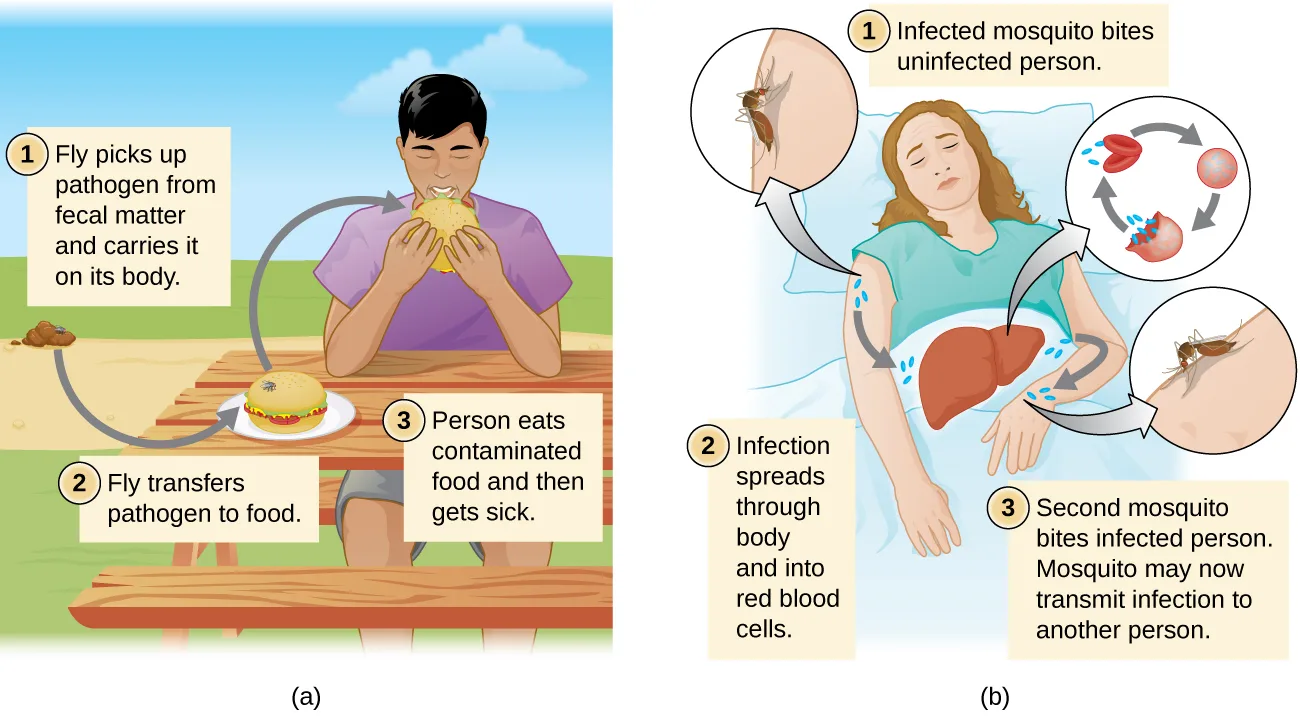
Diseases can also be transmitted by a mechanical or biological vector, an animal (typically an arthropod) that carries the disease from one host to another. Mechanical transmission is facilitated by a mechanical vector, an animal that carries a pathogen from one host to another without being infected itself. For example, a fly may land on fecal matter and later transmit bacteria from the feces to food that it lands on; a human eating the food may then become infected by the bacteria, resulting in a case of diarrhea or dysentery (see the figure below).
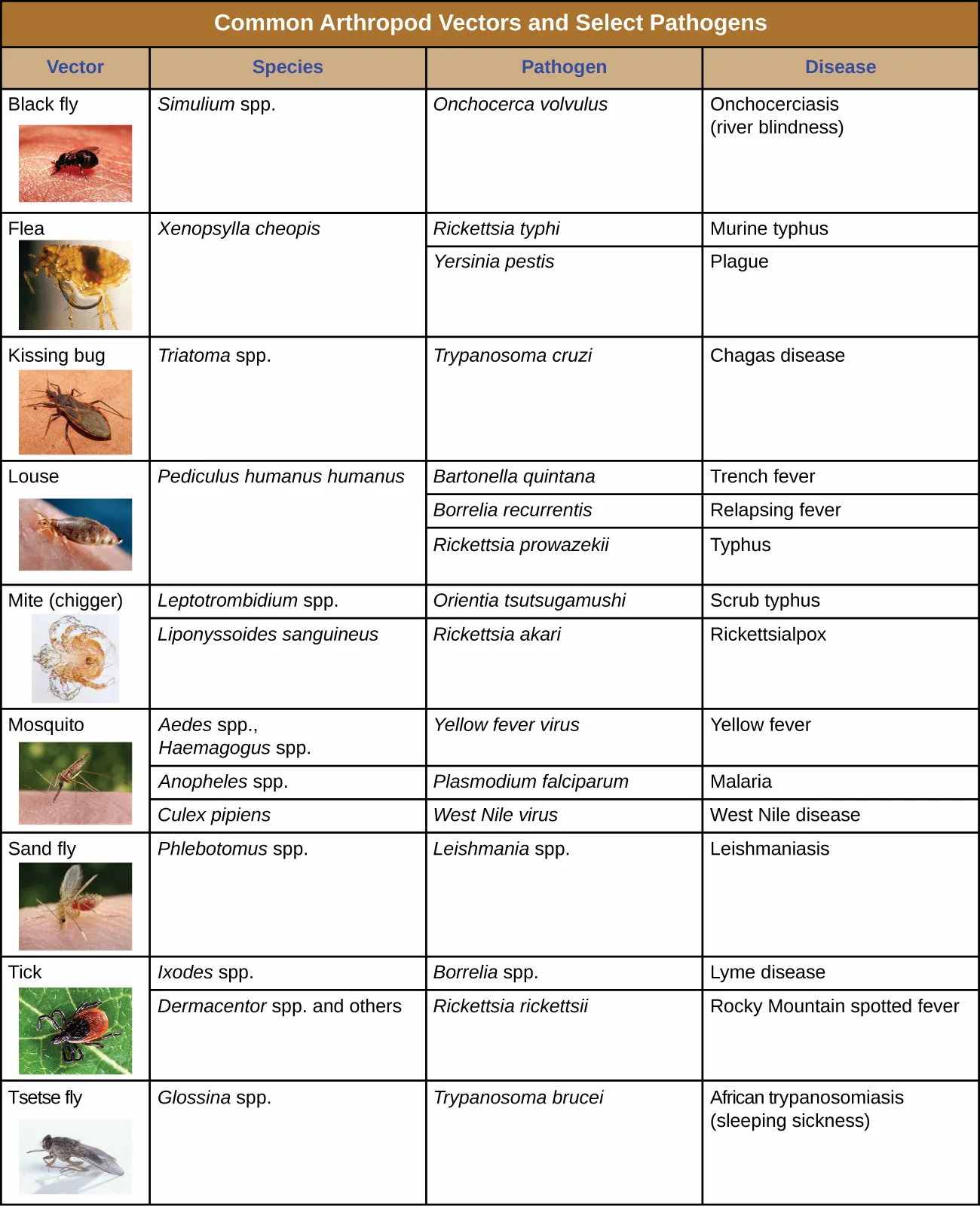
Biological transmission occurs when the pathogen reproduces within a biological vector that transmits the pathogen from one host to another (see the figure below). Arthropods are the main vectors responsible for biological transmission (see the table below). Most arthropod vectors transmit the pathogen by biting the host, creating a wound that serves as a portal of entry. The pathogen may go through part of its reproductive cycle in the gut or salivary glands of the arthropod to facilitate its transmission through the bite. For example, hemipterans (called “kissing bugs” or “assassin bugs”) transmit Chagas disease to humans by defecating when they bite, after which the human scratches or rubs the infected feces into a mucous membrane or break in the skin.
Biological insect vectors include mosquitoes, which transmit malaria and other diseases, and lice, which transmit typhus. Other arthropod vectors can include arachnids, primarily ticks, which transmit Lyme disease and other diseases, and mites, which transmit scrub typhus and rickettsial pox. Biological transmission, because it involves survival and reproduction within a parasitized vector, complicates the biology of the pathogen and its transmission. There are also important non-arthropod vectors of disease, including mammals and birds. Various species of mammals can transmit rabies to humans, usually by means of a bite that transmits the rabies virus. Chickens and other domestic poultry can transmit avian influenza to humans through direct or indirect contact with avian influenza virus A shed in the birds’ saliva, mucous, and feces.
Extended description
Panel (a), captioned ‘A mechanical vector carries a pathogen on its body from one host to another, not as an infection’: step 1, a fly picks up a pathogen from a pile of fecal matter on the ground beside the picnic table and carries it on its body; step 2, the fly transfers the pathogen to a plate of food on the table; step 3, a person eats the contaminated food and gets sick. Panel (b), captioned ‘A biological vector carries a pathogen from one host to another after becoming infected itself’: step 1, an infected mosquito bites an uninfected, sleeping person; step 2, the infection spreads through the person’s body and into her red blood cells, shown by an arrow into her highlighted liver and a cycle of red blood cells beside it; step 3, a second mosquito bites the now-infected person and may transmit the infection to another person.
| Vector | Species | Pathogen | Disease |
|---|---|---|---|
| Black fly | Simulium spp. | Onchocerca volvulus | Onchocerciasis (river blindness) |
| Flea | Xenopsylla cheopis | Rickettsia typhi | Murine typhus |
| Flea | Xenopsylla cheopis | Yersinia pestis | Plague |
| Kissing bug | Triatoma spp. | Trypanosoma cruzi | Chagas disease |
| Louse | Pediculus humanus humanus | Bartonella quintana | Trench fever |
| Louse | Pediculus humanus humanus | Borrelia recurrentis | Relapsing fever |
| Louse | Pediculus humanus humanus | Rickettsia prowazekii | Typhus |
| Mite/chigger | Leptotrombidium spp. | Orientia tsutsugamushi | Scrub typhus |
| Mite/chigger | Liponyssoides sanguineus | Rickettsia akari | Rickettsialpox |
| Mosquito | Aedes spp., Haemagogus spp. | Yellow fever virus | Yellow fever |
| Mosquito | Anopheles spp. | Plasmodium falciparum | Malaria |
| Mosquito | Culex pipiens | West Nile virus | West Nile disease |
| Sand fly | Phlebotomus spp. | Leishmania spp. | Leishmaniasis |
| Tick | Ixodes spp. | Borrelia spp. | Lyme disease |
| Tick | Dermacentor spp. and others | Rickettsia rickettsii | Rocky Mountain spotted fever |
| Tsetse fly | Glossina spp. | Trypanosoma brucei | African trypanosomiasis (sleeping sickness) |
Common Arthropod Vectors and Select Pathogens
Check Your Understanding
Describe how diseases can be transmitted through the air.
Show model answer
Did your answer mention:
Sort each description under whether it distinguishes a mechanical vector or a biological vector.
Mechanical
Biological
Eye on Ethics. Using GMOs to Stop the Spread of Zika
In 2016, an epidemic of the Zika virus was linked to a high incidence of birth defects in South America and Central America. As winter turned to spring in the northern hemisphere, health officials correctly predicted the virus would spread to North America, coinciding with the breeding season of its major vector, the Aedes aegypti mosquito.
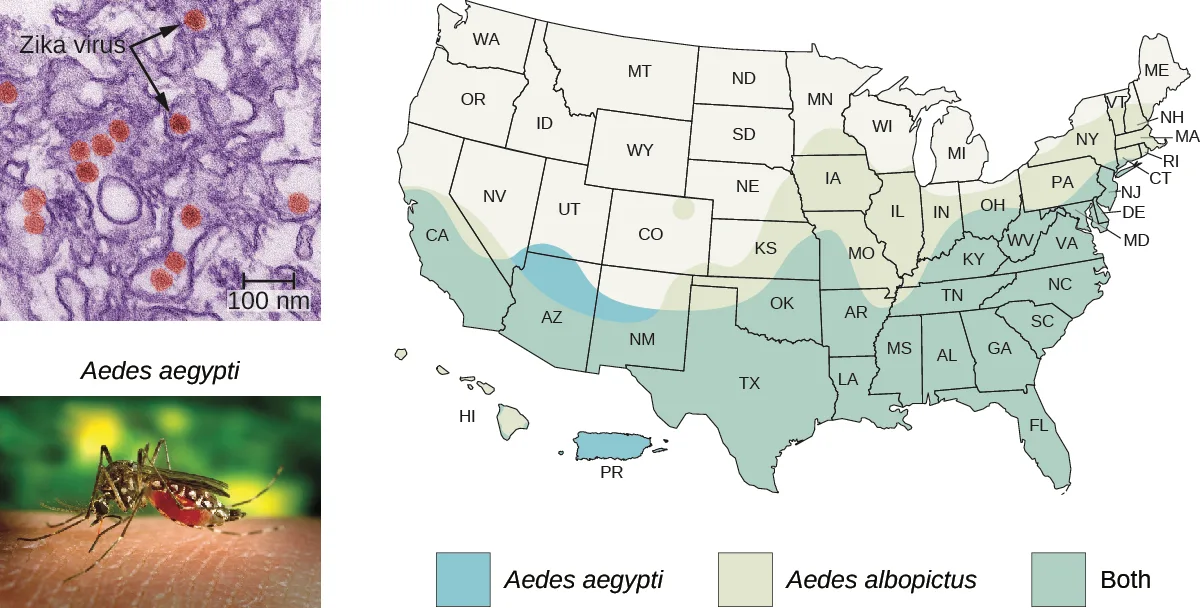
The range of the A. aegypti mosquito extends well into the southern United States (see the figure below). Because these same mosquitoes serve as vectors for other problematic diseases (dengue fever, yellow fever, and others), various methods of mosquito control have been proposed as solutions. Chemical pesticides have been used effectively in the past, and are likely to be used again; but because chemical pesticides can have negative impacts on the environment, some scientists have proposed an alternative that involves genetically engineering A. aegypti so that it cannot reproduce. This method, however, has been the subject of some controversy.
One method that has worked in the past to control pests, with little apparent downside, has been sterile male introductions. This method controlled the screw-worm fly pest in the southwest United States and fruit fly pests of fruit crops. In this method, males of the target species are reared in the lab, sterilized with radiation, and released into the environment where they mate with wild females, who subsequently bear no live offspring. Repeated releases shrink the pest population.
A similar method, taking advantage of recombinant DNA technology (Blandine Massonnet-Bruneel, Nicole Corre-Catelin, Renaud Lacroix, Rosemary S. Lees, Kim Phuc Hoang, Derric Nimmo, Luke Alphey, and Paul Reiter. “Fitness of Transgenic Mosquito Aedes aegypti Males Carrying a Dominant Lethal Genetic System.” PLOS ONE 8, no. 5 (2013): e62711.), introduces a dominant lethal allele into male mosquitoes that is suppressed in the presence of tetracycline (an antibiotic) during laboratory rearing. The males are released into the environment and mate with female mosquitoes. Unlike the sterile male method, these matings produce offspring, but they die as larvae from the lethal gene in the absence of tetracycline in the environment. As of 2016, this method has yet to be implemented in the United States, but a UK company tested the method in Piracicaba, Brazil, and found an 82% reduction in wild A. aegypti larvae and a 91% reduction in dengue cases in the treated area (Richard Levine. “Cases of Dengue Drop 91 Percent Due to Genetically Modified Mosquitoes.” Entomology Today.). In August 2016, amid news of Zika infections in several Florida communities, the FDA gave the UK company permission to test this same mosquito control method in Key West, Florida, pending compliance with local and state regulations and a referendum in the affected communities.
The use of genetically modified organisms (GMOs) to control a disease vector has its advocates as well as its opponents. In theory, the system could be used to drive the A. aegypti mosquito extinct—a noble goal according to some, given the damage they do to human populations (Olivia Judson. “A Bug’s Death.” The New York Times, September 25, 2003.). But opponents of the idea are concerned that the gene could escape the species boundary of A. aegypti and cause problems in other species, leading to unforeseen ecological consequences. Opponents are also wary of the program because it is being administered by a for-profit corporation, creating the potential for conflicts of interest that would have to be tightly regulated; and it is not clear how any unintended consequences of the program could be reversed.
There are other epidemiological considerations as well. Aedes aegypti is apparently not the only vector for the Zika virus. Aedes albopictus, the Asian tiger mosquito, is also a vector for the Zika virus (Gilda Grard, Mélanie Caron, Illich Manfred Mombo, Dieudonné Nkoghe, Statiana Mboui Ondo, Davy Jiolle, Didier Fontenille, Christophe Paupy, and Eric Maurice Leroy. “Zika Virus in Gabon (Central Africa)–2007: A New Threat from Aedes albopictus?” PLOS Neglected Tropical Diseases 8, no. 2 (2014): e2681.). A. albopictus is now widespread around the planet including much of the United States (see the figure below). Many other mosquitoes have been found to harbor Zika virus, though their capacity to act as vectors is unknown (Constância F.J. Ayres. “Identification of Zika Virus Vectors and Implications for Control.” The Lancet Infectious Diseases 16, no. 3 (2016): 278–279.). Genetically modified strains of A. aegypti will not control the other species of vectors. Finally, the Zika virus can apparently be transmitted sexually between human hosts, during pregnancy to a fetus or during birth, and possibly through blood transfusion. All of these factors must be considered in any approach to controlling the spread of the virus.
Clearly there are risks and unknowns involved in conducting an open-environment experiment of an as-yet poorly understood technology. But allowing the Zika virus to spread unchecked is also risky. Does the threat of a Zika epidemic justify the ecological risk of genetically engineering mosquitos? Are current methods of mosquito control sufficiently ineffective or harmful that we need to try untested alternatives? These are the questions being put to public health officials now.
Extended description
Three panels. Top left: a micrograph of purple-stained cell tissue with several small, round, reddish-orange particles; an arrow labeled ‘Zika virus’ points to two of them, and a scale bar reads 100 nm. Bottom left: a close-up photo labeled ‘Aedes aegypti’ of a mosquito feeding on skin. Right: a map of the 48 contiguous states plus Hawaii and Puerto Rico, shaded by a three-part legend — blue for Aedes aegypti, tan for Aedes albopictus, and teal for both. A teal band covers much of the Southeast and south-central states and continues into Texas, Arizona, and California, with blue marking Puerto Rico; the tan shading for A. albopictus extends farther north than the teal band, reaching through the Midwest and into New England and the upper Great Lakes states.
Quarantining
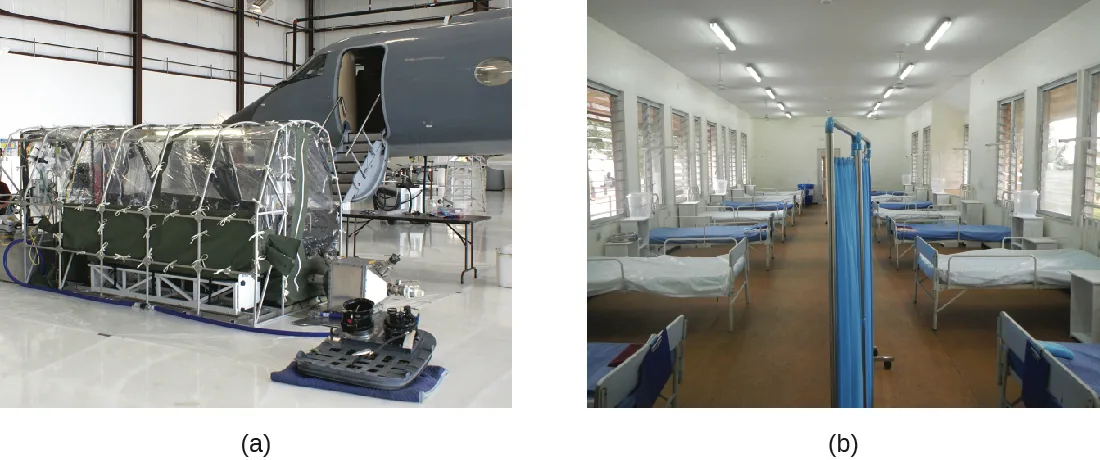
Individuals suspected or known to have been exposed to certain contagious pathogens may be quarantined, or isolated to prevent transmission of the disease to others. Hospitals and other health-care facilities generally set up special wards to isolate patients with particularly hazardous diseases such as tuberculosis or Ebola (see the photos below). Depending on the setting, these wards may be equipped with special air-handling methods, and personnel may implement special protocols to limit the risk of transmission, such as personal protective equipment or the use of chemical disinfectant sprays upon entry and exit of medical personnel.
The duration of the quarantine depends on factors such as the incubation period of the disease and the evidence suggestive of an infection. The patient may be released if signs and symptoms fail to materialize when expected or if preventive treatment can be administered in order to limit the risk of transmission. If the infection is confirmed, the patient may be compelled to remain in isolation until the disease is no longer considered contagious.
In the United States, public health authorities may only quarantine patients for certain diseases, such as cholera, diphtheria, infectious tuberculosis, and strains of influenza capable of causing a pandemic. Individuals entering the United States or moving between states may be quarantined by the CDC if they are suspected of having been exposed to one of these diseases. Although the CDC routinely monitors entry points to the United States for crew or passengers displaying illness, quarantine is rarely implemented.
During the COVID-19 pandemic, quarantine became a common practice, particularly related to international travel. Various countries implemented quarantine and isolation requirements based on the availability of testing and vaccinations. Initially, some nations required that all international travelers remain quarantined for a period after arrival; later on, they instituted quarantine only for those who tested positive.
Healthcare-Associated (Nosocomial) Infections
Hospitals, retirement homes, and prisons attract the attention of epidemiologists because these settings are associated with increased incidence of certain diseases. Higher rates of transmission may be caused by characteristics of the environment itself, characteristics of the population, or both. Consequently, special efforts must be taken to limit the risks of infection in these settings.
Infections acquired in health-care facilities, including hospitals, are called nosocomial infections or healthcare-associated infections (HAI). HAIs are often connected with surgery or other invasive procedures that provide the pathogen with access to the portal of infection. For an infection to be classified as an HAI, the patient must have been admitted to the health-care facility for a reason other than the infection. In these settings, patients suffering from primary disease are often afflicted with compromised immunity and are more susceptible to secondary infection and opportunistic pathogens.
In 2011, more than 720,000 HAIs occurred in hospitals in the United States, according to the CDC. About 22% of these HAIs occurred at a surgical site, and cases of pneumonia accounted for another 22%; urinary tract infections accounted for an additional 13%, and primary bloodstream infections 10% (Centers for Disease Control and Prevention. “HAI Data and Statistics.” 2016. Accessed Jan 2, 2016.). Such HAIs often occur when pathogens are introduced to patients’ bodies through contaminated surgical or medical equipment, such as catheters and respiratory ventilators. Health-care facilities seek to limit nosocomial infections through training and hygiene protocols such as those described in Control of Microbial Growth.
Check Your Understanding
Give some reasons why HAIs occur.
Show model answer
Did your answer mention:
Summary
- Reservoirs of human disease can include the human and animal populations, soil, water, and inanimate objects or materials.
- Contact transmission can be direct or indirect through physical contact with either an infected host (direct) or contact with a fomite that an infected host has made contact with previously (indirect).
- Vector transmission occurs when a living organism carries an infectious agent on its body (mechanical) or as an infection host itself (biological), to a new host.
- Vehicle transmission occurs when a substance, such as soil, water, or air, carries an infectious agent to a new host.
- Healthcare-associated infections (HAI), or nosocomial infections, are acquired in a clinical setting. Transmission is facilitated by medical interventions and the high concentration of susceptible, immunocompromised individuals in clinical settings.
Key terms
- reservoir — a living host or nonliving site in which a pathogenic organism can survive or multiply.
- passive carrier — an individual capable of transmitting a pathogen to another individual without becoming infected.
- active carrier — an infected individual who can transmit the pathogen to others regardless of whether symptoms are currently present.
- asymptomatic carrier — an infected individual who exhibits no signs or symptoms of disease yet is capable of transmitting the pathogen to others.
- definitive host — the preferred host organism for a parasite, in which the parasite reaches maturity and may reproduce sexually.
- intermediate host — a host in which a parasite goes through some stages of its life cycle before migrating to the definitive host.
- contact transmission — movement of a pathogen between hosts due to contact between the two; may be direct or indirect.
- direct contact transmission — movement of a pathogen between hosts by physical contact or transfer in droplets at a distance less than one meter.
- vertical direct contact transmission — transmission of pathogens to a fetus or infant during pregnancy, birth, or breastfeeding.
- horizontal direct contact transmission — direct contact transmission other than the vertical route — transmission between individuals through actions such as touching, kissing, sexual intercourse, or droplet sprays.
- droplet transmission — direct contact transmission of a pathogen transferred in sneezed or coughed droplets of mucus that land on the new host within a radius of one meter.
- indirect contact transmission — transfer of an infectious agent between hosts through contact with a fomite.
- vehicle transmission — transfer of a pathogen between hosts via contaminated food, water, or air.
- mechanical transmission — transfer of a pathogen between hosts by a mechanical vector.
- mechanical vector — an animal that transfers a pathogen from one host to another or from a reservoir to a host without being infected by the pathogen itself.
- biological transmission — movement of a pathogen between hosts facilitated by a biological vector in which the pathogen grows and reproduces.
- biological vector — an animal (typically an arthropod) that is infected with a pathogen and is capable of transmitting the pathogen from one host to another.
- quarantined — isolated to prevent transmission of a disease to others.
- nosocomial infections — an infection acquired in a health-care facility, also called a healthcare-associated infection (HAI).
- healthcare-associated infections (HAI) — an infection acquired in a hospital or other health-care facility unrelated to the reason for which the patient was initially admitted; a nosocomial infection.
Practice
Describe the different types of disease reservoirs
A living host or nonliving site in which a pathogenic organism can survive or multiply is called a ________.
This is the general term this subsection uses for where a pathogen persists between infections.An individual who is contaminated with a pathogen and can mechanically transmit it to another host, without being infected, is called a ________.
Recall the term for a carrier who is contaminated but not infected, unlike the carrier type discussed right after it.The preferred host organism for a parasite, in which the parasite reaches sexual maturity, is called the ________.
This is the host type paired in this subsection with a host where the parasite only goes through immature stages.Compare contact, vector, and vehicle modes of transmission
A mosquito bites a person who subsequently develops a fever and abdominal rash. What type of transmission would this be?
Recall which vector-transmission type requires the pathogen to reproduce inside the vector before the bite can pass on an infection.Cattle are allowed to pasture in a field that contains the farmhouse well, and the farmer’s family becomes ill with a gastrointestinal pathogen after drinking the water. What type of transmission of infectious agents would this be?
Recall which transmission type this section names for a pathogen carried by a contaminated substance such as water.A blanket from a child with chickenpox is likely to be contaminated with the virus that causes chickenpox (Varicella-zoster virus). What is the blanket called?
Recall this section’s term for an inanimate object that becomes contaminated by pathogens from an infected individual.Differentiate between droplet vehicle transmission and airborne transmission.
Recall the specific distance this section uses to separate the two.Many people find that they become ill with a cold after traveling by airplane. The air circulation systems of commercial aircraft use HEPA filters that should remove any infectious agents that pass through them. What are the possible reasons for increased incidence of colds after flights?
Show model answer
Did your answer mention:
Identify important disease vectors
Which is the most common type of biological vector of human disease?
Recall which group of animals dominates the table of vectors and pathogens above.A ________ is an animal that can transfer infectious pathogens from one host to another.
This is the general term for such an animal, broader than the mechanical/biological distinction discussed above.According to the table of arthropod vectors above, which vector transmits the pathogen that causes Lyme disease?
Recall which arthropod’s table row lists Borrelia species as its pathogen and Lyme disease as the resulting illness.Explain the prevalence of nosocomial infections
A patient in the hospital with a urinary catheter develops a bladder infection. This is an example of a(n) ________ infection.
This section gives two names for an infection acquired in a health-care facility; either one is accepted here.According to this section, what percentage of the 2011 HAIs in United States hospitals were urinary tract infections?
Recall the one percentage in this section’s HAI statistics that is not shared by another category.According to this section, what must be true for an infection to be officially classified as an HAI?
Recall the one requirement this section states as necessary for the HAI classification, as distinct from what it says HAIs are merely often connected with.This section is adapted from Microbiology, Section 16.3: Modes of Disease Transmission by Nina Parker, Mark Schneegurt, Anh-Hue Thi Tu, Philip Lister, Brian M. Forster, and OpenStax, © OpenStax, licensed under CC BY-NC-SA 4.0. Access the original for free at openstax.org. Changes: all seven source figures are re-encoded as WebP and rendered as mediafigures; the media manifest guesses kind="photo" for all seven (every source file is a JPEG), which is correct for five of them (Contact, Indirect, Food, Isolate, and the VectorTab image, which is kept for its per-vector photo insets exactly as the chapter-2 stain tables were) but wrong for the Vector and Mosquito figures, which are explicit kind="diagram" because each is a genuinely drawn cartoon (Vector) or contains a genuinely drawn, labeled map (Mosquito); longdescs are added for the Vector and Mosquito figures because each is a multi-panel or multi-labeled diagram whose caption does not name every step or region. The OSC_Microbio_16_03_VectorTab figure is a table printed as an image with no CNXML <table summary=…> markup; its sixteen rows are transcribed as a Markdown table, checked against the PDF page and the image (correcting the source alt’s “Moquito,” “Cutex,” “Rickettsi rickettsia,” and “sleepting sickness” spellings, none of which reach the page since the table is transcribed from the image, not the alt), and the vendored figure is kept immediately after it for its photo of each vector. Of the source’s nine footnotes, all are rendered as inline parenthetical citations after the sentences they support, with every bare access URL dropped and the rest of each citation kept verbatim; none carries a DOI. The link to “Eye on Ethics: Typhoid Mary” (m58933) is left as plain text because that module is not yet authored; the two links to “Controlling Microbial Growth” (m58853) and “Control of Microbial Growth” (m58852) are rendered as absolute site-root links because both already exist (chapter 13’s section 13.1 and its chapter landing, respectively). The Clinical Focus box (Resolution, this chapter’s turducken Salmonella case) keeps its title and document order; its closing “go back to the previous Clinical Focus box” link is replaced with “The case began in The Language of Epidemiologists,” an absolute site-root link to 16.1 per the run’s convention that every page of this run is linked even before it lands on disk. The five Check Your Understanding bullets (two per box in the first two boxes, one in the third) are rendered at their note positions: the nonliving/living-reservoir and passive/active-carrier bullets, and the mechanical/biological-vector bullet, are graded as sortbins built from this module’s own defining and example sentences (bins are the classification word alone, per the microbiology convention); the air-transmission and HAI-reasons bullets stay self-checks because each needs several of this module’s sentences assembled into one answer. Of the module’s eight source exercises: all four Multiple Choice keep their source order and keys; the fill-in-the-blank ________-vector item keeps its one-word key as a plain textin; the nosocomial/healthcare-associated key is graded as a textin keyed nosocomial that also accepts healthcare-associated, HAI, and hospital-acquired; the unkeyed Short Answer question (differentiate droplet vehicle transmission from airborne transmission) is graded as a multiplechoice keyed by this module’s own one-meter distance sentence, with three distractors built from this module’s own concepts (a reversed distance, food/water vehicle transmission, and fomite-based indirect contact); the unkeyed Critical Thinking question (colds after air travel despite HEPA filters) stays a selfcheck because the honest answer synthesizes several of this module’s sentences about incubation-period carriers, droplet distance, and fomites, none of which the module states as a single fixing sentence. Two filler items (a table-keyed multiple choice on the vector-to-disease table and two multiple choices built from this module’s own HAI statistics and classification sentence) and three key-term textin recall items round out the Practice floor. Key terms are compiled from the module’s 20 defined terms and the book’s Glossary appendix; 16 are taken from the glossary, and 4 are sentence-derived (vertical direct contact transmission, horizontal direct contact transmission, quarantined, and nosocomial infections all lack a matching glossary entry); the Key terms block lower-cases the bold headword for “contact transmission,” “vertical direct contact transmission,” “indirect contact transmission,” “mechanical transmission,” and “biological transmission” because none is a proper noun, even though each is capitalized in the body at its sentence-initial defining occurrence, which is transcribed as printed. No source item was dropped. The source alt for the vector table also lists a cat flea, Bartonella henselae, cat-scratch disease row that the printed table does not carry; the transcription follows the image (erratum 620).